The Living Planet Index, compiled by the Zoological Society of London, draws in its 2026 edition on 35,803 population trends of 5,790 vertebrate species from 1970 to 2022. The WWF released the accompanying report on October 8, 2026. The figure of 73% describes not the proportion of lost animals, but the average proportional change in population sizes at monitored locations worldwide from 1970 to 2022.
What the number does not say
According to the WWF, approximately half of the populations in the index are stable or increasing, while the other half decline. Because the declines outweigh the gains in magnitude, the global index shows an average 73% decline. Our World in Data further explains that invertebrates and plants are not included in the count. Claims that 73% of wildlife is lost, 73% of species are extinct or declining, represent misinterpretations of the index. The strongest average declines occurred in Latin America and the Caribbean at 95% and in Africa at 80%, while North America showed 28% and Europe and Central Asia 23% declines. The WWF attributes the less negative trend in Europe and North America to widespread impacts on nature already visible before 1970.
Tigers, turtles, and tuna: the recovery stories
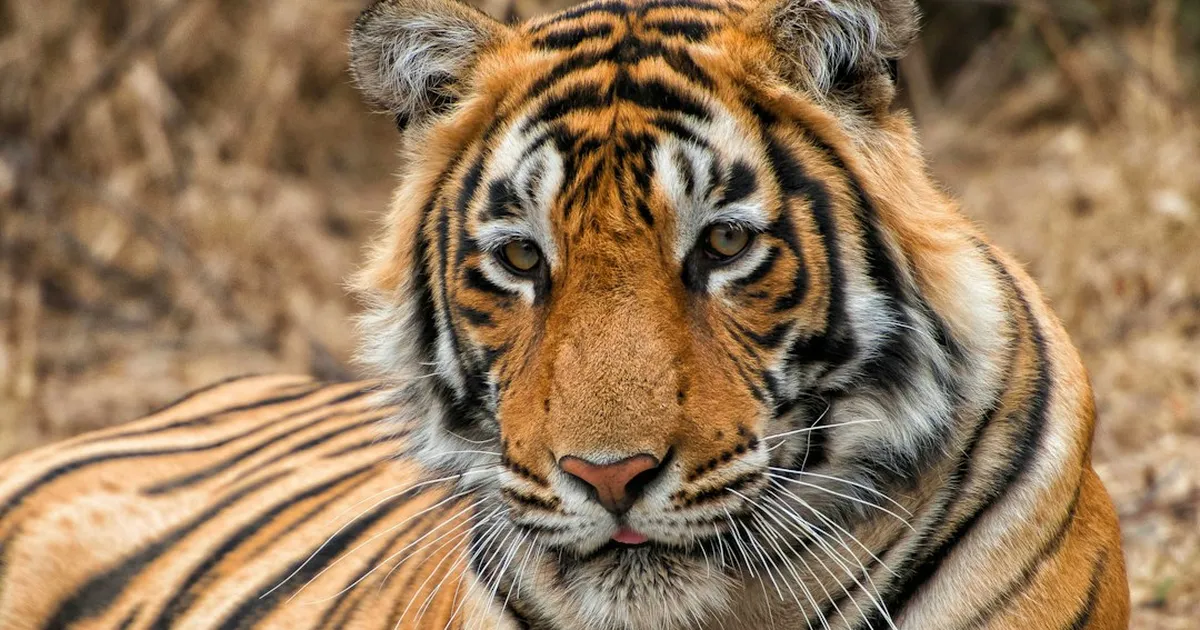
The wild tiger population increased by over 70% between 2010 and 2025, from 3,200 to approximately 5,700 animals. The WWF points to national tiger recovery plans, international commitments through the Global Tiger Initiative, professionalized ranger units, expansion of protected areas, cross-border work against illegal trade, and campaigns to reduce demand as drivers.
The green sea turtle was downlisted in 2025 as the first sea turtle on the IUCN Red List from vulnerable to not threatened. The WWF attributes the recovery to 50 years of coordinated work across approximately 80 nesting countries, including protection of nesting females and their eggs, beach management, lighting regulations, turtle excluder devices, and other measures against bycatch.
In bluefin tuna recovery, Atlantic bluefin tuna populations had fallen 80% by 2010 compared to the mid-20th century and the species was listed as endangered, while Pacific bluefin tuna had collapsed to 2% of unfished stock levels and was listed as vulnerable. After campaigns for sustainably sourced fish, lower catch quotas, and enhanced monitoring, neither species was considered overfished or a species of concern at the time of reporting.
African savanna elephants continue to decline across much of their range and remain overall critically endangered. However, in southern Africa some populations are growing in some locations. Southern African nations have created legal frameworks that engage local communities directly in responsibility for elephants through community-based natural resource management, supplemented by work against illegal trade, judicial reform, and reduced corruption.
In context
In the reintroduction of European bison, extinct in the wild, captive breeding and reintroductions returned them to 10 countries within slightly more than 50 years. In the United Kingdom, otters driven nearly to extinction have become relatively common nationwide, while previously completely absent species such as beavers and white-tailed eagles have been successfully reestablished.
The gap between harm and protection remains stark: in 2023, approximately US$7.3 trillion flowed into activities that harm nature, while US$220 billion was invested in its protection or restoration. This amounts to a ratio of more than 30-to-1 against nature, according to TechTimes referencing the UNEP report State of Finance for Nature 2026.
Criticism of the index calculation
A 2024 study published in Nature Communications by researchers from Charles University concluded that several mathematical problems in LPI calculation create an imbalance between detected increasing and declining trends, thereby overestimating population declines. The authors emphasize that their findings do not mean vertebrate populations are not changing substantially; rather, they see a need for better measures for a balanced picture of biodiversity changes. ZSL and WWF acknowledge the methodological debate but maintain that the index is a relative trend indicator, not a census. The signal of sustained long-term decline aligns with independent measures such as the IUCN Red List Index.
What could endanger recovery
The WWF warns that the described recovery successes remain fragile and conservation alone is insufficient. The challenge is no longer finding solutions, but implementing them at the necessary speed and scale. Global recovery depends on ending activities that drive nature destruction. The most commonly reported driver of biodiversity loss is habitat loss and degradation, driven by agricultural expansion for food production.
The WWF assesses government progress to date as insufficient and calls on negotiators in Yerevan to expand renewable energy, end environmentally harmful subsidies, and stop deforestation.