According to a decision issued by Vietnam's Ministry of Agriculture and Environment in March 2026, 480,278 households nationwide lived below the national poverty line in 2025, while a further 608,873 households were classified as near-poor. The figures are based on reports reviewing poor and near-poor households from 34 provinces and cities. According to Vietnam News, this put the nationwide multidimensional poverty rate at 2.9 percent, compared with 4.06 percent the previous year. In a report dated October 2026, the World Bank put the share of the population below the international poverty line of $3.00 a day at 1.6 percent for the survey year 2022.
In comparison: from 80 percent to around 3 percent
According to Duane Morris Vietnam, around 80 percent of Vietnam's population still lived below the poverty line in 1990, while the share of people in severe poverty had fallen to about 3 percent by the early 2020s. FEE describes Vietnam in 1980 as the poorest country in the world, poorer than Somalia, Ethiopia and Madagascar; it says hunger was pervasive for many people in the 1980s and early 1990s. According to FEE, Vietnam began opening up to a market economy with the Đổi Mới reform policy launched in 1986; at the same time, billions in aid failed to materialize in the 1980s and early 1990s because of the Soviet Union's economic collapse. According to Vietnam's statistics office, the economy grew by an estimated 8.02 percent in 2025 compared with the previous year, with estimated gross domestic product per capita of US$5,026, compared with US$4,700 in 2024.

Poverty remains regionally concentrated
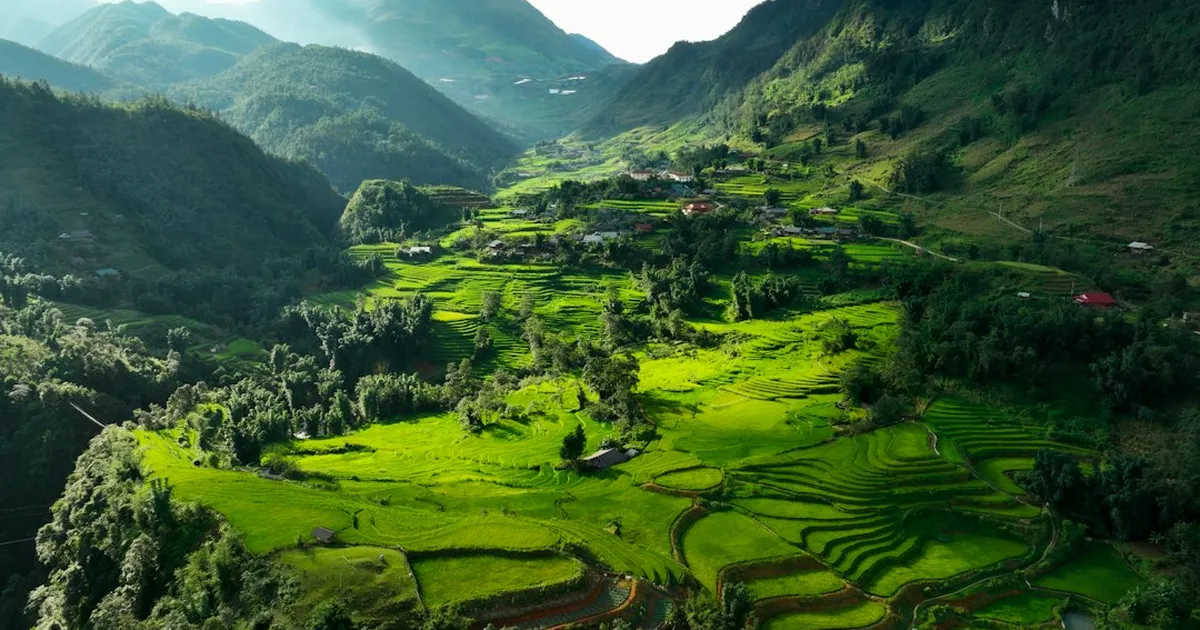
However, the multidimensional poverty rate in the northern midlands and mountainous region was 13.3 percent in 2025, compared with 0.3 percent in the southeastern region. According to the World Bank, poverty is increasingly concentrated among ethnic minorities and in remote mountainous regions, where access to good jobs, services and markets remains limited. The United Nations country analysis from August 2026 also notes that poverty remains high in ethnic minority areas, although nationwide multidimensional poverty had fallen to an estimated 1.3 percent.
Different measures
The national and international figures are not directly comparable: Vietnam's government measures poverty using a standard comprising an income-based dimension and, according to the World Bank, ten nonmonetary dimensions, while the Vietnamese government portal lists six service dimensions with twelve indicators alongside the income criterion for the 2022-2025 national standard. In addition, the World Bank's international rates are based on household expenditure per capita. Even at the higher World Bank comparison threshold of $8.30 a day, the share of the population below it was still 21.5 percent in 2022. The new poverty line of $3.00, in effect since June 2025, replaces the previous threshold of $2.15 and is based on 2021 purchasing power parities; according to the World Bank, such revisions do not change the daily lives of those affected, even though they can shift the reported rates. According to a World Bank forecast, the share of the population below this line is projected to decline further from 1.5 percent in 2023 to 1.1 percent by 2028, with the figures for 2023 to 2025 being estimates and those for 2026 to 2028 being forecasts. According to the UN country analysis, Vietnam's own goal is to reduce poverty by 1 to 1.5 percentage points annually.

According to the government portal, the existing multidimensional standard from 2022 to 2025 remains in force until the end of 2026. From 2027, income thresholds of 2,200,000 dong in rural areas and 2,800,000 dong in urban areas per person per month will apply. The underlying decree for the 2026 to 2030 national multidimensional standard took effect on February 15, 2026.
Informal jobs, climate risks and higher prices
According to the World Bank, nearly two-thirds of employment in Vietnam is informal, as is almost half of employment in manufacturing. According to the World Bank, climate change is exacerbating risks to livelihoods, productive assets and food security, particularly in the Mekong Delta and other coastal and lowland areas. The World Bank also estimates that fewer than 18 million people still live below the $8.30 threshold, with higher prices for essential goods disproportionately burdening poorer and economically insecure households.