
Ninety-seven percent of global tuna catch today comes from stocks with healthy population sizes. When the International Seafood Sustainability Foundation began systematically measuring this figure in 2011, it stood at 70 percent. The jump of 27 percentage points in fifteen years is the result of a unique international experiment: five regional fishing bodies that learned to listen to science.
From crisis to record value
The figures come from two independent sources. ISSF published its status report on global tuna stocks in January 2026: 97 percent of global tuna catches come from stocks with healthy population sizes, nearly 100 percent from stocks without active overfishing. Both are the highest values since records began. Independently, the June 2026 FAO food security report SOFIA confirms: 91 percent of assessed tuna stocks are biologically sustainable, 99 percent of landings stem from sustainable sources. Global tuna catch totals nearly six million tons annually with a market value of roughly twelve billion dollars.
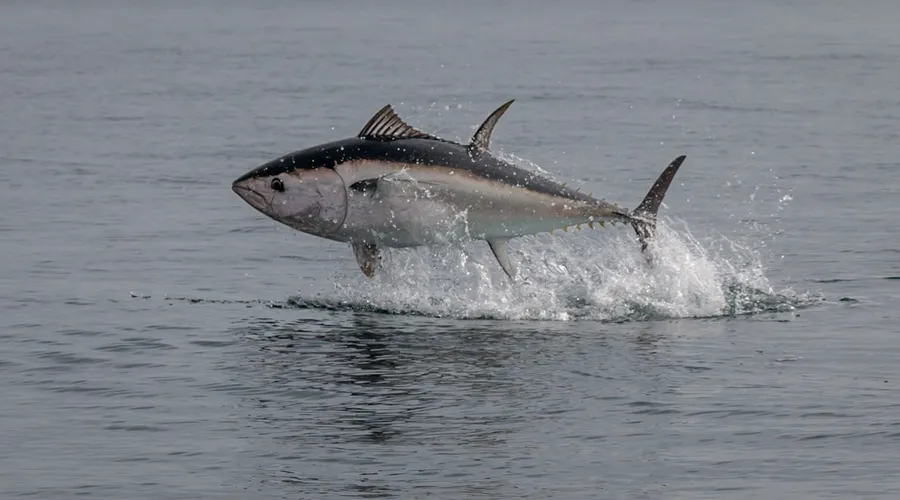
The starting situation was different. In the 1990s, Atlantic bluefin tuna stocks were fished to collapse threshold, with catches exceeding 50,000 tons annually, far beyond regenerative capacity. The International Commission for the Conservation of Atlantic Tuna set a quota of roughly 30,000 tons in 1998, which many member states ignored for years. Between 2014 and 2019, the number of tuna stocks classified as overfished nonetheless fell worldwide from 13 to 5.
Five bodies for seven species
Five Regional Fisheries Management Organizations (RFMOs) manage global tuna stocks. The oldest is ICCAT, founded 1969. It is followed by the Inter-American Tropical Tuna Commission (IATTC), the Indian Ocean Tuna Commission (IOTC, effective since 1996, secretariat in Seychelles), the Western and Central Pacific Fisheries Commission (WCPFC), and the Commission for the Conservation of Southern Bluefin Tuna (CCSBT, established 1994). Together they manage the seven commercially significant tuna species.
Their central instrument: science-based management procedures with catch quotas based on annual stock estimates. How effective this can be is shown by yellowfin tuna in the Indian Ocean. This stock was considered overfished for nearly a decade. In February 2026, ISSF lifted its specific conservation measure for this stock after the scientific committee of IOTC confirmed the stock is no longer overfished and no longer in poor condition.
The system's limits remain apparent. A 2026 ISSF analysis of at-sea transshipment controls shows no single RFMO fully complies with voluntary FAO guidelines. At-sea transshipments are a known loophole for illegal fishing, as catches can be transferred to other vessels undetected. That some member states exceeded agreed quotas in past years shows: rulebook and compliance are two different things.
In comparison: What fisheries management can and cannot do
North Sea herring is a close parallel. Excessive catches brought the stock to collapse's edge in the 1960s, leading to a complete fishing ban. After a second overfishing phase in the 1990s, a management plan took effect in 1997. In 2008, spawning biomass reached its highest level since 1988, a result of consistent stock stewardship over more than a decade. Germany's Thünen Institute, which scientifically accompanies German fish stocks, has tracked this development since as a lesson in effective catch-limit management.

Atlantic bluefin tuna itself demonstrates what is possible. After ICCAT introduced significantly stricter quota controls from 2006 onward, the stock recovered. At its November 2025 annual meeting, ICCAT raised the total catch quota for the Atlantic by 19.3 percent to 48,400 tons. According to NOAA, stocks now fall within the green quadrant of the Kobe Matrix, the zone for sustainably managed, non-overfished stocks.
The broader contrast highlights the uniqueness. Global fish stocks overall stand at 62.4 percent sustainable per FAO SOFIA 2026, well below tuna's 91 percent. That one of the most commercially intensive fish sectors outperforms the global average lies in RFMOs' structured management framework, lacking in many other fisheries.
What climate warming and control deficits still risk
The FAO report names a central risk factor for coming decades: in several ocean regions, marine biomass could decline by over ten percent by 2050, driven by rising water temperatures and changing current patterns. For tuna, whose migration routes are temperature-dependent, this presents concrete risks to spawning grounds and stock density.
WCPFC holds its 23rd annual meeting in autumn 2026. For the Western Pacific, the world's most productive tuna region with the highest share of global tuna catch, it will show whether management gains translate into sharper control mechanisms. Particularly the recently recovered yellowfin tuna in the Indian Ocean needs above all one thing: that member states durably maintain agreed catch volumes.
The 97 percent record is real and confirmed by independent FAO data. How stable it proves depends in coming years on climate development and the discipline of states committed to RFMO catch quotas.