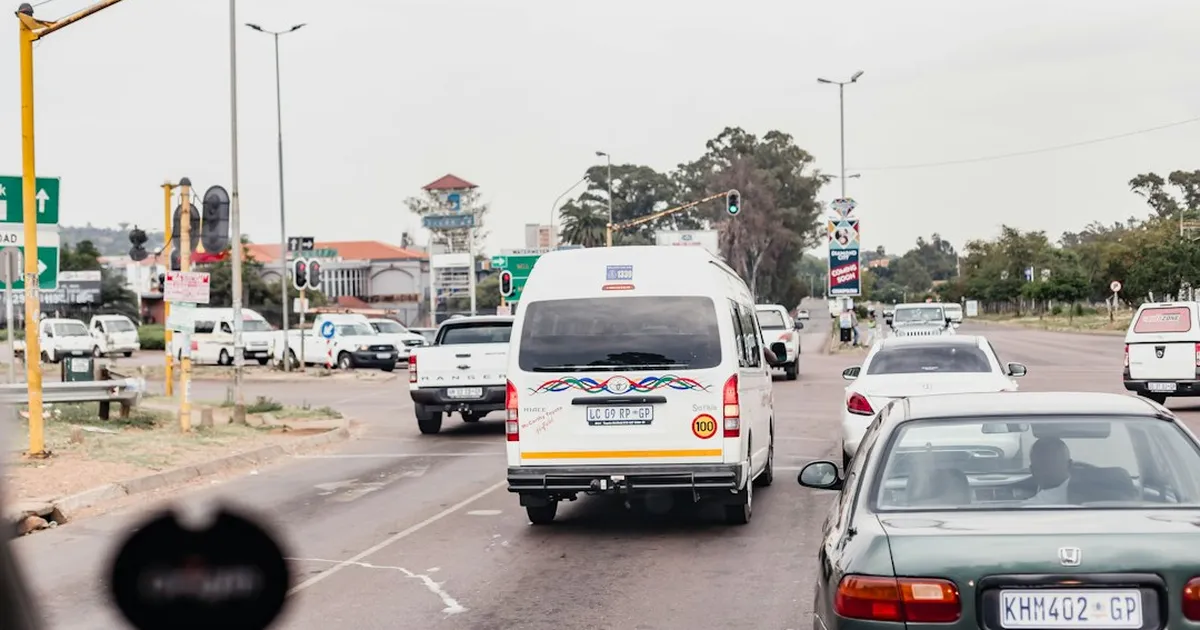
m-mama emergency driver Said Japhari Machemba took Lucy Mafwele around 35 kilometres to Tumbi Regional Hospital, where emergency treatment saved her life and that of her son. According to the Vodafone Foundation, it was the 150,000th journey by the m-mama emergency transport programme in Tanzania since nationwide recording began in 2016.
According to the Tanzanian Health Ministry, how proven health programmes like this one can be financed and expanded in the future was the subject of a discussion on September 30, 2026, at the African Conference on Health Technologies in Kigali, where Dr. Samizi represented Tanzanian Health Minister Mohamed Mchengerwa.

How the dispatch centre organises emergency transport
According to the Vodafone Foundation, m-mama connects a digital dispatch system with existing ambulance networks and volunteer drivers from communities so that pregnant women and newborns can quickly reach appropriate care, even in remote areas. The programme aims to secure access to urgent emergency transport for life-threatening complications in underserved communities. According to Touch Health, a former implementation partner, a government dispatch centre connects callers from anywhere in the country with a network of drivers and ambulances through a toll-free number. Touch Health was an implementation partner in Tanzania from 2014 to 2024 and in Lesotho from 2021 to 2024.
From pilot project to national system
m-mama began in 2013 as a pilot project in the Shinyanga region, implemented by the Tanzanian government together with Pathfinder International, the Touch Foundation and the Vodafone Foundation. From 2014 to 2016, the programme was implemented in stages in two districts and expanded to all districts in the region in 2017. By December 2021, community taxis there had transported more than 9,000 women; according to Pathfinder International, an expansion to 14 districts within six years was planned at the time. In 2022, following the success of the pilot programme, Tanzanian President Samia Suluhu Hussein said m-mama should become the national emergency transport system for pregnant women; the subsequent expansion by Touch Health was intended to bring it to all 184 districts within 18 months. According to the Vodafone Foundation, the programme also reached nationwide coverage in Lesotho in 2024.
Who pays the costs today
Financing was gradually transferred to the government: in Shinyanga, the programme still covered 80% of transport costs in 2019, the programme and the government split the costs equally in 2020, and from 2021 the government took over all costs. According to Touch Health, partner governments own and operate m-mama; philanthropic partners finance its introduction, while driver payments, dispatch centre operations and the IT platform are gradually incorporated into the government budget. The Vodafone Foundation described m-mama as a fully government-owned national emergency transport system with ongoing government funding.

Successes cited by those involved
Vodafone Foundation CEO Lisa Felton said m-mama had provided emergency transport in Tanzania on more than 150,000 occasions and saved more than 6,300 lives. According to a March 2026 report by Angels in Medicine, the programme now serves all 63 million residents of Tanzania and is intended to transport around 50,000 women and newborns annually; in hard-to-reach areas, it saves the lives of 300 mothers and babies each month. Around 58% of the women transported ultimately needed a caesarean section, compared with 10% to 15% in the general population, which the report says shows that the system reaches high-risk cases. For the pilot region of Shinyanga, a 2023 cost-effectiveness analysis found that ambulances and community taxis combined were less expensive, at US$170.4 per completed referral, than an ambulance-only system, at US$472.2; the authors counted every completed referral as effective.
What the audit report and studies qualify
Tanzania's National Audit Office painted a different picture in its audit report on maternal health, published on April 7, 2026: the general referral system was not working effectively, only 607 of the 1,245 ambulances needed were available, and most were inadequately equipped and concentrated in urban areas. According to the audit office, a lack of communication between facilities and limited training in emergency obstetric care delayed decisions, transfers and emergency care; inadequate equipment also worsened delays in referrals. During the period audited, 85% of maternal deaths in regional referral hospitals and 70% in district hospitals involved referred cases. Nationwide, maternal mortality recorded by the Tanzania Demographic Health Survey fell from 556 to 104 per 100,000 live births between 2015/2016 and 2022, while neonatal mortality fell slightly from 25 to 24 per 1,000 live births; in this context, the Health Ministry cites measures addressing three delays in seeking and receiving care. For 2022, the UN IGME counted Tanzania among the ten countries most affected worldwide in terms of the estimated number of stillbirths and neonatal deaths.
A study on the sustainability of the programme published in 2023 recommended early government involvement, coordinated partnerships, ongoing training and public awareness efforts to ensure its continuation. According to the study's authors, in 2023 it was not known how the results observed in Shinyanga could be maintained and sustained in other parts of Tanzania and in countries with similar conditions.