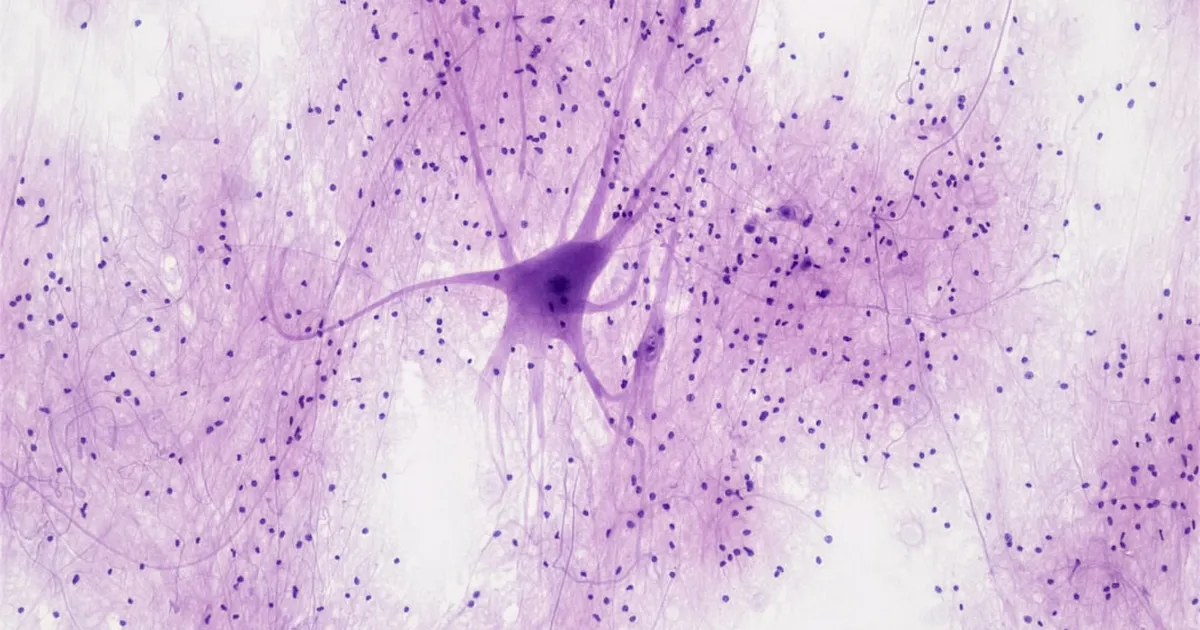
Some people over 80 retain the memory of people in their 50s. A study published in Nature on February 28, 2026, by researchers at Northwestern University and the University of Illinois Chicago now offers the most precise explanation yet: these so-called SuperAgers produce at least twice as many new nerve cells as their healthy peers, and roughly two and a half times more than Alzheimer's patients.
Who Are SuperAgers?
SuperAgers are people over 80 who score as well on episodic memory tests as average individuals in their 50s. Episodic memory is the ability to recall specific experiences and events. The Northwestern SuperAger Research Program, which has studied these exceptional individuals for more than a decade, sets a high bar: candidates must score at least as well as the average 50-to-60-year-old on standardized memory tests.
For the new study, researchers Tamar Gefen and Changiz Geula analyzed postmortem donated brain tissue from SuperAgers, healthy older adults, and Alzheimer's patients. Their method: multiomic single-cell sequencing of 355,997 individual cell nuclei from the hippocampus, the brain region central to memory and one of the earliest to be affected in Alzheimer's disease. The number of analyzed cell nuclei makes this the most extensive single-cell analysis of the aging human hippocampus to date.
Two Protective Mechanisms
The study identified two distinct ways in which SuperAger brains preserve their function.
The first is resistance: some SuperAgers show no Alzheimer's-typical deposits at all. Their brains remain free of amyloid plaques and tau tangles, the molecular hallmarks of the disease.
The second and more surprising mechanism is resilience: other SuperAgers have these deposits but sustain no damage from them. Their nerve cells function even though the molecular preconditions for Alzheimer's are present. Astrocytes and CA1 neurons in the hippocampus play key roles here. In SuperAger brains, the genetic programs governing cell survival and neuronal communication remain active. In Alzheimer's patients, these programs are shut down.
The most striking quantitative finding: SuperAger brains continuously generate new nerve cells, a process scientists call adult neurogenesis. Compared with healthy peers, they produce at least twice as many new neurons; compared with Alzheimer's patients, roughly two and a half times more. In Alzheimer's patients, hippocampal neurogenesis has nearly stopped entirely.
The team has named the observed combination of active genetic programs a "Resilience Signature," an identifiable cellular marker that distinguishes SuperAgers from normally aging brains.
Implications for Alzheimer's Research
The findings could shift Alzheimer's research in a new direction. Much of the existing therapy development has focused on preventing or reducing amyloid plaques and tau tangles. Many of these approaches have delivered only modest clinical improvement: lecanemab and donanemab measurably reduced amyloid but offered limited functional benefit to patients.
The new study suggests the more decisive question may be different: why do some brains survive the same deposits unscathed while others fail? Anyone who can mimic or activate the "Resilience Signature" may not need to eliminate amyloid at all, requiring a fundamentally different therapeutic approach.
The researchers also point to observed lifestyle factors: SuperAgers tend to have a positive outlook, remain cognitively active, exercise regularly, and maintain strong social connections. Whether these factors actively promote neurogenesis or simply accompany healthy brain aging cannot be resolved by cross-sectional studies of postmortem tissue.
Next Steps
Changiz Geula of Northwestern University announced that the next research phase will focus on identifying the underlying molecular pathways and testing whether they can be influenced pharmacologically. The goal is to find compounds that can activate the genetic programs active in SuperAgers in vulnerable brains as well.
The "Resilience Signature" could serve as a biomarker, a benchmark for whether a therapy actually shifts brain biology toward the SuperAger profile. Clinical trials on this basis are expected no earlier than three to five years from now.