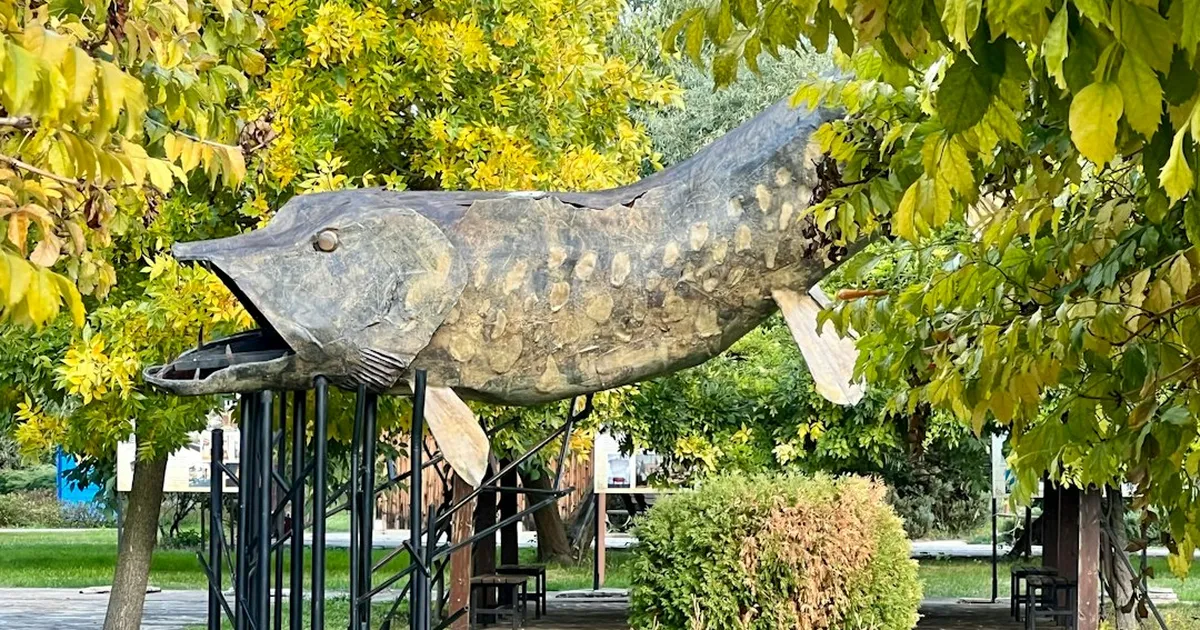
The Federal Ministry of Agriculture and Forestry, Climate and Environmental Protection, Regions and Water Management (BMLUK) reported on June 15, 2026, that the conservation project LIFE-Boat4Sturgeon had achieved the first successful breeding of stellate sturgeon. According to the ministry, the project partners are BMLUK, BOKU, viadonau and the City of Vienna. Representatives from politics, science and water infrastructure presented the breeding success to the media to mark Danube Day.
Four threatened sturgeon species, one joint breeding programme
The EU's LIFE programme is funding the project, which runs from 2022 to 2030 and, according to the LIFE project database, aims to establish a genetically diverse breeding stock of all four sturgeon species remaining in the Danube: sterlet, Russian sturgeon, also known as waxdick, stellate sturgeon and beluga sturgeon. According to the project database, two of the original six Danube sturgeon species are already extinct, while earlier conservation efforts were unsuccessful or lasted too briefly to allow populations to recover. Overfishing and river engineering have taken a toll on the remaining species, according to a report by wien.ORF.at. According to the same report, stellate sturgeon can weigh more than 50 kilograms and grow to around two metres long.

Why breeding stellate sturgeon is so difficult
Breeding stellate sturgeon is considered particularly challenging because females of this species develop eggs only every two to four years. Researchers therefore monitor the parent fish for months to determine the right time for reproduction, as each breeding attempt requires precise knowledge of the animals' development and maturity.
The attempt a year earlier had failed
The project's 2025 activity report states that only one female stellate sturgeon was ready to spawn the previous year and that her eggs failed to develop despite very high-quality sperm from three males. The project suspected that breeding had taken place one to two weeks too early and that the eggs were not yet fully mature. The female was subsequently moved in with the female Russian sturgeon, while the remaining sexually mature female stellate sturgeon underwent ultrasound examinations in early November 2025 for the planned breeding in spring 2026.

The floating breeding station at Danube Island
According to viadonau Managing Director Hans-Peter Hasenbichler, the MS Negrelli, a ship converted into a rearing station, has been stationed at Vienna's Danube Island since spring 2025. The ship was used to rear 150,000 Russian sturgeon released into the Danube. The overall project is led by BOKU University and has a budget of 11.8 million euros, of which the EU's LIFE programme covers 67 percent.
In comparison: progress with sterlet, waxdick and beluga sturgeon
A young sterlet that was caught provides a possible indication of natural reproduction in the wild, according to a report by science.ORF.at dated October 28, 2026, although genetic confirmation is still pending. For waxdick, more than 30,000 juveniles from the international conservation breeding programme were released in Bulgaria in May 2026, according to a statement from FFG, with an overall target of 1.6 million fish released by 2030. For beluga sturgeon, the largest of the four species, the first breeding successes were achieved this year, and the first fish could possibly be released next year. Environment Minister Norbert Totschnig also cited a figure of more than 150,000 young sturgeon already released into the Danube.
What still threatens this success
According to a report by science.ORF.at dated October 28, 2026, sturgeon currently cannot pass a single hydropower plant on the Danube because they live on the riverbed in the middle of the river and cannot find their way to existing fish passes. Aquatic ecologist Heidi Eichhorn explained that, because of sturgeon's long life cycle, the project's success could only be assessed once several generations of a species had become established. BOKU biologist Thomas Friedrich estimated the survival rate of very small sterlet fry at probably less than one percent, and that of larger juveniles of this species at thirty to forty percent. Eichhorn and Friedrich therefore hope for suitable fish passes once the released waxdick, stellate sturgeon and, in future, beluga sturgeon reach sexual maturity. In June 2026, power plant operator VERBUND submitted a fish pass at the Ybbs-Persenbeug power plant for approval and announced plans to make the Danube and Inn passable for fish from Romania to Rosenheim by 2027. VERBUND lists nase, barbel, grayling and sterlet as examples of target species for its project to make the Danube and Inn passable; stellate sturgeon does not appear in this list.