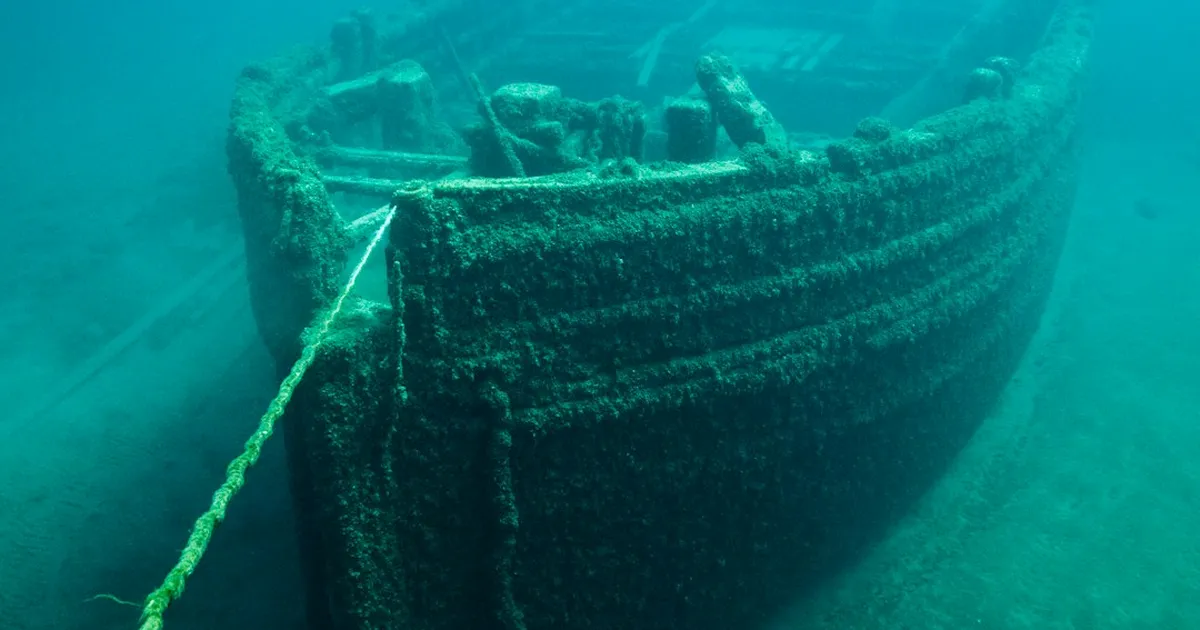
The ship is 990 feet long, according to the Woods Hole Oceanographic Institution, and sank about 22 nautical miles off the coast of Destin-Fort Walton Beach in the Gulf of Mexico. Okaloosa tourism director Jennifer Adams said the ship had come to rest within a few feet of its intended location. Tourism officials expect tens of thousands of visitors. The wreck is intended to create new marine habitat for the region and boost the diving and fishing industries.
From the threat of the scrapyard to a reef project
After being taken out of service in 1969, the SS United States spent decades in Philadelphia; according to Okaloosa County, it faced being sold for scrap after almost 30 years at the same location. In 2024, Okaloosa County bought the ship for US$1 million, as Interesting Engineering reported. This followed a rent dispute with pier operator Penn Warehousing, which, according to the SS United States Conservancy, led to a court order requiring the ship to be removed from its berth at short notice; despite an intensive search, no suitable and available new location had been found within the allotted time.
Cleaned, 99 percent PCB removal claim not independently verified
Before the sinking, workers removed toxic materials from the hull, took out more than 400 portholes and cut large openings in the decks so the ship would flood without explosives. The county says it removed 99 percent of materials containing PCBs; according to Outside magazine, there has been no independent verification of that figure. The old zinc chromate primer containing hexavalent chromium also remains controversial: preservation advocates warn of leaching, the county says the substance converts into a less toxic form underwater, and an oceanographer at Drexel University considers the risk somewhat overstated but nevertheless supports mitigation measures. The SS United States Preservation Foundation therefore sued the Army Corps of Engineers on November 3 over an inadequate assessment of the toxic coatings; a judge denied the emergency motion to halt the sinking three days later.
In comparison
The region's largest sunken reef until now was the USS Oriskany, an aircraft carrier deliberately sunk off Pensacola in 2006: it became a thriving reef, but monitoring also found elevated PCB levels in some of its fish. Okaloosa County itself has already sunk more than 20 large ships as artificial reefs in recent years. The tourism director put the annual economic benefit of the county's reefs at about US$10 million to US$12 million. With the SS United States and the USS Oriskany, the region is now set to host the world's largest and second-largest artificial reefs, according to NPR.
What could threaten the new reef's success
Whether elevated pollutant levels will later be found in fish around the SS United States, as happened with the Oriskany, remains an open question. A team from the Woods Hole Oceanographic Institution plans to take water samples at about 132 locations around the wreck over several years to document metal release and the development of the ecosystem. University of Florida economist Andrew Ropicki also warned that excessive investment in additional artificial reefs could yield lower returns in the long term if visitor interests shift or visitors are overwhelmed by the range of options.