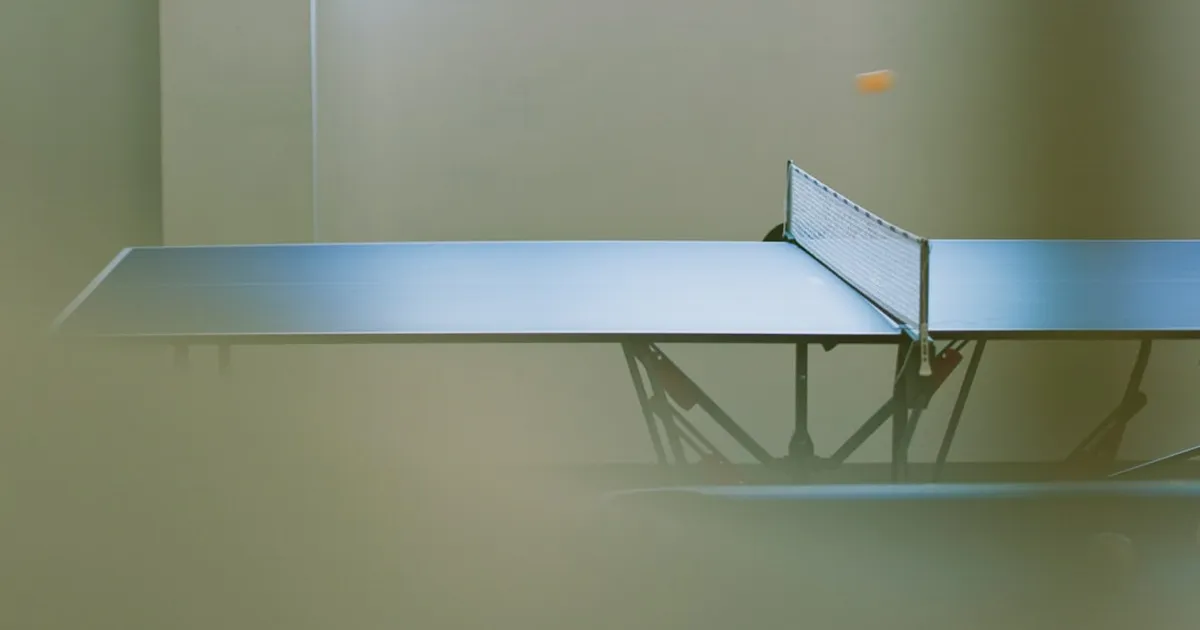
For the first time, a robot has beaten professionals in a recognized sport. Sony's research robot Ace defeated all three professional table tennis players it competed against in March 2026 in at least one match, reaching a milestone that robotics researchers have pursued for decades. The study was published on April 23 in the journal Nature and is considered the first proof that an autonomous system can achieve expert level in a competitive, physical contest.
Why Table Tennis Is Particularly Hard for AI
Artificial intelligence long ago mastered chess and Go, as well as video games like StarCraft and complex strategy titles. Those successes, however, took place in digital environments where complete information is available and no physical response is required. The real-time physics of the physical world pose a different challenge: a table tennis ball can travel across the table at up to 19.6 meters per second, players generate spin at up to 450 radians per second, and the remaining reaction time falls far below the threshold of human perception.
Elite human players react in roughly 230 milliseconds. Ace operates with a real-time latency of 20.2 milliseconds, about eleven times faster. The system uses nine active pixel sensors and event-based image sensors running at up to 700 hertz that capture ball spin precisely. A six-joint robotic arm with model-free reinforcement learning then translates those calculations into accurate strokes. Ace plays on control rather than power: across all spin types, the robot achieved a return rate of over 75 percent.
Earlier table tennis robots, such as Omron's Forpheus, could train beginners but failed against professional players. They were specialized for certain stroke techniques or game situations and lacked the adaptability to handle the variability of real matches. Ace is the first to combine high-resolution event-based sensing with model-free reinforcement learning on high-speed hardware to address the problem of physical real-time interaction at its root.
Three Years of Development, Three Test Phases
Development began in 2020 and proceeded through several stages. In early tests, Ace played exclusively against amateurs and collected training data to improve the learning process. In December 2025, the first test against professionals followed: Ace played matches against four new players, including two elite players and two professionals. It did not lose to either of the elite players or one of the professionals.
In March 2026, Ace played against three more professional players who had no prior experience against it. That is methodologically important: a player who faces the same system repeatedly learns its patterns and can deliberately exploit weaknesses. Ace defeated all three new professionals at least once. Overall, the robot completed 13 matches and won seven of them along with three full match sets. Notably, Ace scored 16 direct points after serve, while all human elite opponents combined scored only eight.
A Milestone for Physical AI Systems
The significance of the breakthrough does not lie in robots dominating table tennis tournaments. Ace has clear limits: it cannot build complex, rally-based tactics the way experienced professionals can, and it fails against stroke techniques outside its training. Players from the upper world rankings would currently still defeat the robot.
The significance lies elsewhere. Previous AI milestones in the physical world, such as robotic arms in factory automation, operated under strictly defined conditions with known parameters. Ace operates in a real sports contest with variable ball trajectories, unpredictable opponent behavior, and physical uncertainty in real time. The Sony AI team describes in the paper potential applications in surgical assistance systems, logistics robots, and rehabilitation devices that require similar combinations of fast perception and precise motor control.
Comparable breakthroughs in the digital world had far-reaching consequences: AlphaGo transformed professional Go theory and set new benchmarks for learning under uncertainty. Whether Ace provides a similar impetus for physical robotics will become clear in the years ahead.
Next Steps
Sony AI plans to pit Ace against players from the upper world rankings before the end of this year. The research team is also working on transferring the underlying algorithms for real-time perception and motor control to other physical disciplines. The Nature paper includes open benchmarks so other research groups can reproduce and build on the results.