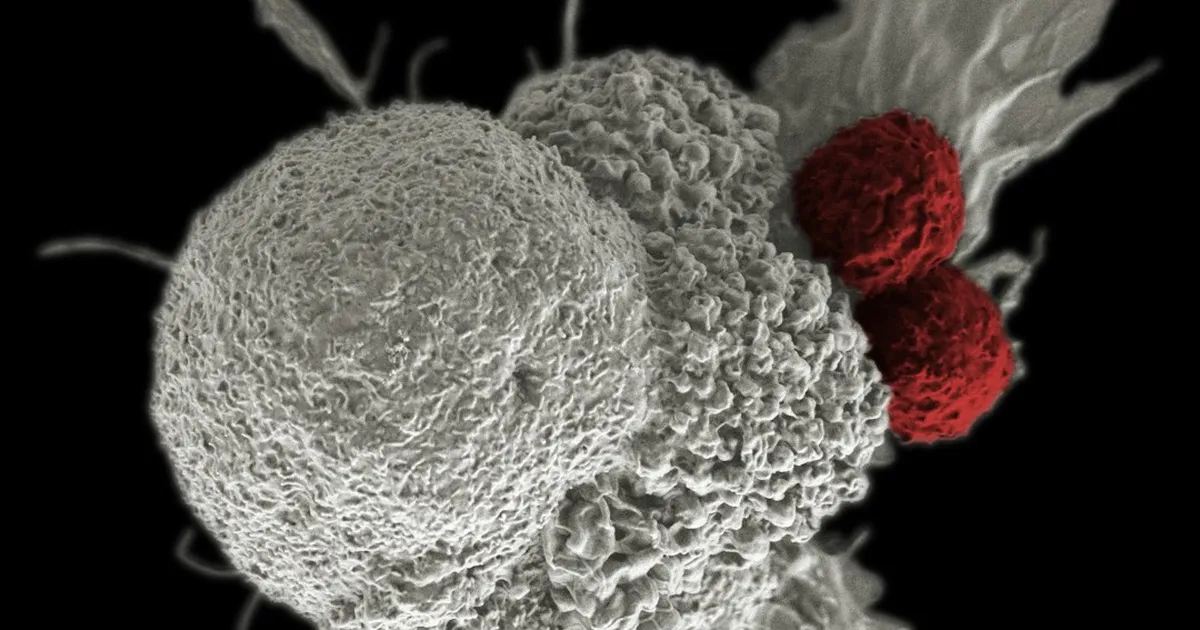
Researchers at the RIKEN Pioneering Research Institute in Japan, led by Katsunori Tanaka, have described an albumin-palladacycle complex in Nature Communications that detects elevated levels of carbon monoxide in cancer cells. According to the authors, the resulting cytotoxicity is moderate, but cancer cell growth is nevertheless inhibited. So far, the method has been tested in cultured cells, not in animals or patients.
How the protective complex works
Carbon monoxide reacts slowly with other substances. To protect the palladium catalyst, the researchers enclosed it in albumin, a protein abundant in blood, according to a statement from the RIKEN institute. A coumarin anchor directs the palladium center into a hydrophobic pocket in the albumin, protecting it from inactivation by thiols while also facilitating uptake into cells through endocytosis.
Test on four cancer types and a healthy comparison cell line
For the experiment, the researchers exposed human liver cancer cells, cervical cancer cells, breast cancer cells and lung cancer cells, as well as the normal fibroblast cell line TIG3, to the complex at a concentration of 50 micromoles per liter for 48 hours. They then detected the reaction product phenanthridinone in the cell lysates using high-performance liquid chromatography and mass spectrometry. For normal TIG3 cells, the primary study reports negligible product formation, while ScienceDaily reports no detection in normal cells. The researchers conclude that even small flows of carbon monoxide produced by the body can serve as a building block for synthesis directly inside the cell. In a further, separate step, they modified the system so that the reaction product detached from the carrier complex and could move freely within the cell. According to ScienceDaily, further modifications enabled the production of a particularly toxic phenanthridinone derivative. In tests on a liver cancer cell line, they observed the active compound forming inside the cells, which subsequently showed damage caused by the toxic substance.
Why carbon monoxide in particular
Carbon monoxide is produced naturally in the body: according to a review of gasotransmitters in tumor biology, enzymes called heme oxygenases break down heme in this process, producing, alongside the gas, ferrous iron and biliverdin, from which bilirubin is later formed. According to the same review, carbon monoxide can have both cancer-promoting and cancer-inhibiting effects depending on its concentration, source and environment within the tumor, although the underlying molecular mechanisms are not yet fully understood. If detectable, carbon monoxide could serve as a biological marker for identifying cancer cells.

One of several approaches in a young research field
A review in Nature Reviews Chemistry published in October 2026 describes intracellular synthesis, the construction of active molecules directly inside the cell from inactive precursors, as a relatively recent approach to drug discovery. According to the review, this approach could increase selectivity and reduce toxicity outside the target site, but drug discovery generally often faces a trade-off between potency and selectivity. Alongside transition-metal-catalyzed reactions, the strategies listed in the review include artificial metalloenzymes, bioorthogonal metal-free reactions and processes driven by stimuli originating within the body. The present summary does not specify in detail which limitations these methods still need to overcome overall. The authors of the current study themselves also describe their work as progress toward demonstrating the feasibility of so-called therapeutic synthetic chemistry in living systems.
What is still needed before the principle becomes a therapy
The researchers say they intend to move from the cell culture stage to animal models. It also remains unclear how much the cytotoxicity, so far described as moderate, can be increased without losing selectivity for cancer cells.