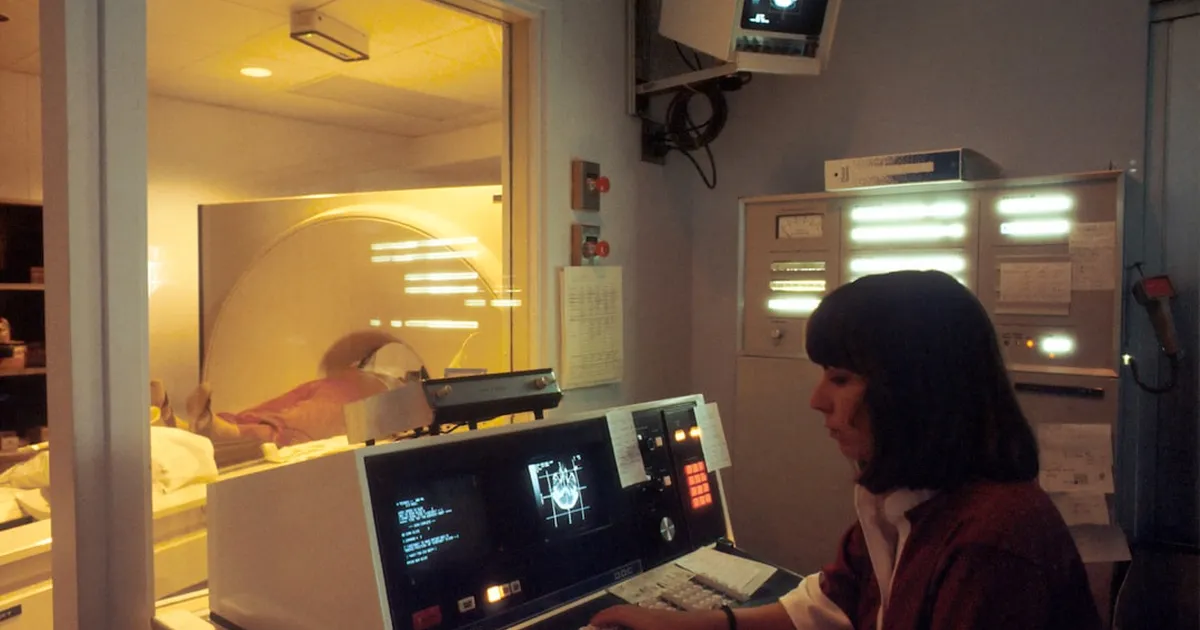
Conventional radiation therapy irradiates a tumour from the outside and inevitably damages healthy tissue along the way. Radioligand therapy works on a different principle. A carrier molecule that binds specifically to cancer cells delivers a radioactive isotope directly to the tumour. Surrounding healthy tissue remains largely untouched. Two therapies are already approved in the US, and hundreds of clinical trials aim to extend the principle to further cancers.
The Principle of Theranostics
The term theranostics describes a technology that combines diagnosis and therapy. The same carrier molecules used for imaging can, with slightly different isotopes, also be used for treatment. Oncologists can first check whether a tumour carries the target molecule, then treat with the same ligand.
The best-known target in radioligand therapy is PSMA, a protein on the surface of prostate cancer cells. Pluvicto (active ingredient 177Lu-PSMA-617) binds to PSMA and delivers radiation directly at the tumour. The pivotal VISION trial showed a median overall survival of 15.3 months in metastatic castration-resistant prostate cancer, versus 11.3 months on standard therapy alone. The US FDA granted approval in 2022.
As early as 2018, Lutathera (177Lu-DOTA-TATE) had been approved for gastroenteropancreatic neuroendocrine tumours. This drug targets somatostatin receptors, carried in high density by many neuroendocrine tumours. Both therapies are marketed by Novartis, which opened a second US production site in Carlsbad, California in late 2025.
What Is in the Pipeline
Research activity in this field is unusually high. ClinicalTrials.gov lists studies on a range of new target molecules, including FAP (fibroblast activation protein), GRPR (gastrin-releasing peptide receptor) and CAIX. These molecules appear on the surface of breast, lung and kidney cancers.
Particular interest surrounds 177Lu-rosopatamab (TLX591) from Telix Pharmaceuticals, a further PSMA-targeted candidate in phase 3. Results are expected in 2026. In parallel, researchers are exploring alternative radionuclides beyond lutetium-177. Lead-212 and thorium-227 have shown activity in early trials in neuroendocrine tumours and, depending on their decay characteristics, allow tissue penetration at different depths.
Limits and Challenges
Radioligand therapy is not a universal remedy. It works only on tumours that carry the target molecule at sufficient density, which must be confirmed individually for each patient. Manufacturing radiopharmaceuticals requires specialized infrastructure and short transport times because of the limited half-life of the isotopes. That sharply constrains global availability.
Cost is another barrier. A course of Pluvicto costs roughly 42,000 dollars per cycle in the US, and usually up to six cycles are given. That effectively excludes access in low-income countries.
What Comes Next
The Dana-Farber Cancer Institute and the US National Cancer Institute count radioligand therapy among the most important cancer breakthroughs of the current decade. With the phase 3 results on TLX591 and the first data on FAP-targeted candidates, 2026 will set the direction for which cancers benefit from this approach next.