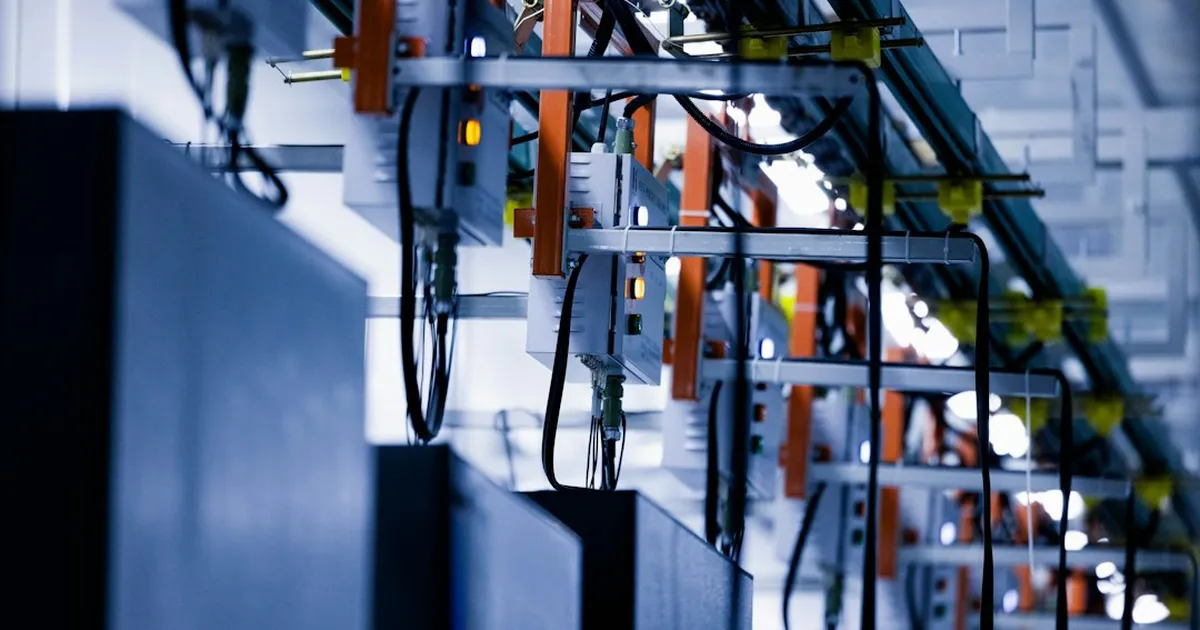
QuantumScape has officially inaugurated its new Eagle Line pilot production facility for solid-state battery cells as of February 4, 2026. Representatives of the Volkswagen Group were also invited to the event. According to Electrek from October 8, 2025, the automaker aims to launch its first electric vehicle with solid-state batteries in 2027 or 2028.
What Makes Solid-State Batteries Different
Unlike today's liquid-based batteries with electrolyte solutions, Toyota's solid-state batteries consist of a cathode, anode, and solid electrolyte, which according to Toyota could enable smaller form factors, higher performance, and longer lifespan. QuantumScape's cells are anode-free lithium metal cells with a specialized ceramic separator, according to InsideEVs. This design is intended to enable extraordinary energy density, fast charging, and a robust safety profile, according to a statement from the Volkswagen Group from July 11, 2024.

According to Toyota, production was certified for next-generation batteries in performance versions at Prime Planet Energy & Solutions and Primearth EV Energy, as well as research and production of solid-state batteries.
QuantumScape reached an agreement with the Volkswagen Group in July 2024 to license production, under which VW's battery subsidiary PowerCo may manufacture cells using QuantumScape's technology in series if sufficient technical progress is achieved and license fees are paid. QuantumScape sees itself as a licensor rather than a manufacturer: automakers and other companies should move into mass production using QuantumScape's intellectual property. The charge level increases from 10 to 80 percent, which the cell requires 12.2 minutes to complete. QuantumScape CEO Siva Sivaram called the launch of pilot production his company's "Kitty Hawk moment" according to InsideEVs.

Toyota's planning was certified in September 2024 according to its own statement. QuantumScape's July 2024 license agreement with PowerCo was followed by the Eagle Line's opening in February 2026. QuantumScape did not disclose how many cells the Eagle Line actually produces, according to InsideEVs from February 8, 2026.
A Discontinued Model
Toyota had initially planned the solid-state battery for the Lexus LF-ZC, which was supposed to achieve shorter charging times compared to lithium-ion cells and a range of approximately 1,000 kilometers per charge. According to Nakajima, the technologies and manufacturing methods developed for it remain production-ready and will be used in a successor model in the future, the development of which Toyota has decided to pursue, according to Electrek. According to The Japan Times from May 30, 2026, Toyota had planned to discontinue the development of a next-generation electric vehicle against the backdrop of a weak global EV market and, according to the report, was particularly struggling in the USA with a sharp decline after the Trump administration ended tax incentives for electric vehicles.
According to InsideEVs from February 8, 2026, QuantumScape wanted to carefully monitor the output, yield, and operating time of the Eagle Line, as well as battery quality. According to the Volkswagen Group from July 11, 2024, PowerCo is to receive a license for up to 40 gigawatt-hours of annual capacity with an expansion option to up to 80 gigawatt-hours if technical progress is satisfactory and certain license fees are paid.