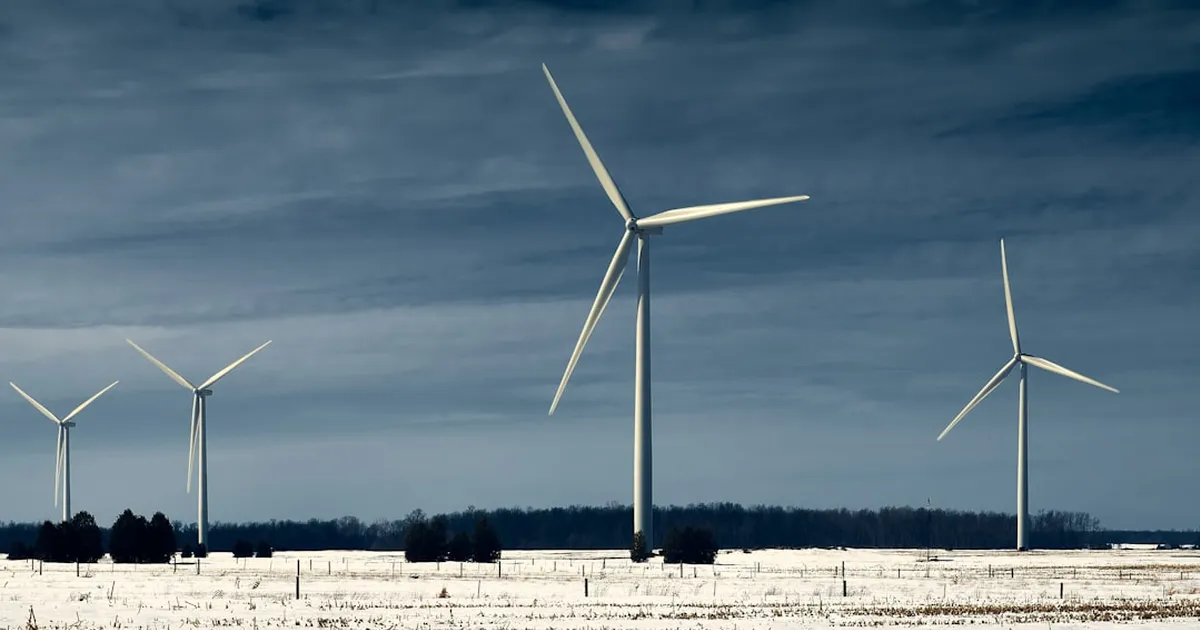
In January 2026, Portugal generated 80.7 percent of its electricity from renewable sources. In 210 non-consecutive hours, hydropower, wind and solar covered the country's entire electricity demand without a single hour of natural gas. In Europe, Portugal ranks second, behind Norway at 96.3 percent and ahead of Denmark at 78.8 percent.
A Decade of Groundwork: 2016 to 2026
Portugal's energy strategy did not begin with January 2026. In February 2016, the country generated its entire electricity from renewables for four consecutive days, an early proof of concept. In 2020, the renewable share still stood at just under 60 percent; by 2024, Portugal had reached an annual average of 87 percent.
The foundation is hydropower, which contributed 36.8 percent in January 2026, the single largest source. Wind added 35.2 percent, solar 4.4 percent. Solar has the steepest growth curve: since 2017, installed solar capacity has increased by 440 percent according to The Portugal News, tripling between 2020 and 2023 alone.
That matters because Portugal had traditionally been heavily dependent on energy imports. The country has neither significant oil deposits nor its own natural gas, and imported nearly all of its primary energy well into the 2000s. Renewables in this context represent not just climate policy but energy security policy.
210 Hours of Full Coverage from Renewable Sources
What appears in the statistics as a monthly average conceals a more striking detail: in those 210 non-consecutive hours in January 2026, renewable generation was sufficient to cover the country's entire electricity demand. Euronews and the energy analysis portal Noticias Ambientales put the cost savings compared to a fully gas-powered month at around 703 million euros.
This figure illustrates the economic logic of the energy transition: Portugal is saving money not despite renewable energy but because of it. With high natural gas prices in recent years, the cost gap between fossil and clean electricity is particularly wide in winter months with good rainfall, because hydropower delivers electricity with almost no operating costs.
In Comparison: What 80 Percent Means in Europe
The EU average for renewable electricity stood at around 42 percent in late 2024. Portugal generates almost twice as much clean electricity as the European average. Germany reached around 53 percent in the first quarter of 2026 according to the Fraunhofer Institute for Solar Energy Systems, with a mix of wind (27 percent) and solar (18 percent).
The gap is largely explained by grid structure: Portugal's hydropower is a storable, dispatchable energy source that delivers electricity even when the wind is not blowing and the sun is not shining. Germany has no comparable hydropower base; where Portugal draws on reservoirs, Germany relies on gas storage.
A wider comparison: Costa Rica generated 98.6 percent of its electricity from renewables in 2025 according to the Instituto Costarricense de Electricidad, almost entirely from hydropower and geothermal. The country has demonstrated for over a decade that near-complete decarbonization of the power sector is technically feasible when geography cooperates. Portugal shows that a similar level can be approached with a mix of water, wind and solar.
The 93 Percent Target and the End of Gas by 2040
Portugal's National Energy and Climate Plan PNEC 2030 sets a target of 93 percent renewable electricity by 2030. For total final energy consumption, including heat and transport, the target is 51 percent. In the transport sector, 29 percent of energy is to come from renewable sources.
The roadmap for natural gas is more ambitious: by 2040, Portugal aims to end all electricity generation from gas. That would make it one of the few countries in the EU with a binding national gas exit plan for power generation. Full climate neutrality is targeted for 2045. The path from today's 80 percent to 93 percent by 2030 will run mainly through further solar expansion, which falling module prices have made the most economically obvious option in recent years.