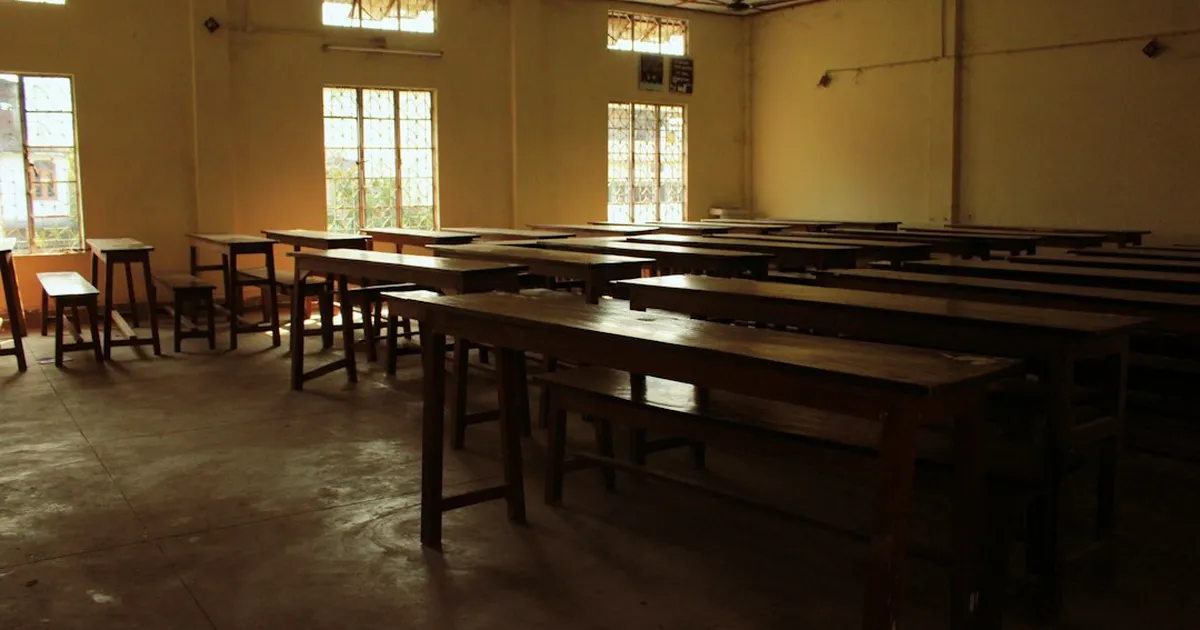
According to Dawn, Pakistan's parity score in the World Economic Forum's Global Gender Gap Report 2026 was almost three percent higher than the previous year's figure. Pakistan ranked 143rd out of 145 economies covered, according to The Express Tribune. Pakistan's education parity was more than six percentage points higher than in the previous edition, according to the report.
In 2025, Pakistan had ranked last among 148 economies in the same index, after a second consecutive decline from 57.7 percent in 2023. A World Bank report dated April 30, 2024 had previously noted that a gender gap remained despite rising enrollment rates: At age 14, 56 percent of girls were still attending school, while the rate for boys remained above 70 percent. In rural areas, 37 percent of girls aged 5 to 16 had never attended school, according to the same report. According to the UNICEF annual report, 729,000 children, adolescents and young adults in Pakistan gained access to inclusive and climate-resilient learning and skills development opportunities in 2025, 51 percent of them girls.
H2 Education and economic participation
Pakistan's education parity rose from 70.6 to 91.7 percent since 2006, an increase of 21 points. That gave the country a ranking of 130th in education. According to the World Economic Forum, increased parity in primary, secondary and tertiary education enrollment was the main driver of Pakistan's progress in the overall index; it rose by around 20 points over two decades. According to Dawn, primary school enrollment was 83.01 percent for boys and 81.08 percent for girls, while secondary school enrollment was 49.99 percent compared with 46.48 percent. According to Asia News Network, the report described the overall year-on-year improvement in gender parity as Pakistan's strongest in a decade, mainly because of progress in education. According to Dawn, 10.71 percent of women and 11.01 percent of men were enrolled in tertiary education.
A Business Recorder editorial notes that despite the progress, Pakistan remains the weakest country among the 38 lower-middle-income economies covered and among all seven South Asian countries. In economic participation, Pakistan's weakest subindex according to the report, the country stands at just 36.4 percent, with men's labor force participation at 81.46 percent compared with 28.21 percent for women. The editorial says near parity in school enrollment is less impressive when too many children remain outside the education system, especially as literacy among women remains low at 48.52 percent compared with 69.14 percent among men.
Why educational achievement may not yield its full economic returns
According to Business Recorder, a country can hardly seriously pursue higher productivity while most women remain outside the labor force. Educational gains also do not yield their full economic returns when qualified women face obstacles entering employment or advancing to leadership positions. The editorial warns that improvements from an exceptionally low starting point are significant because progress in education, employment or representation affects real lives, but celebrating rises in rankings without considering the scale of exclusion would be dangerously complacent. The 2024 World Bank report identified poverty, too few middle and secondary schools for girls, a lack of trained teachers in rural areas, societal views on gender roles and a low-quality educational environment as key barriers to girls' education in Pakistan.