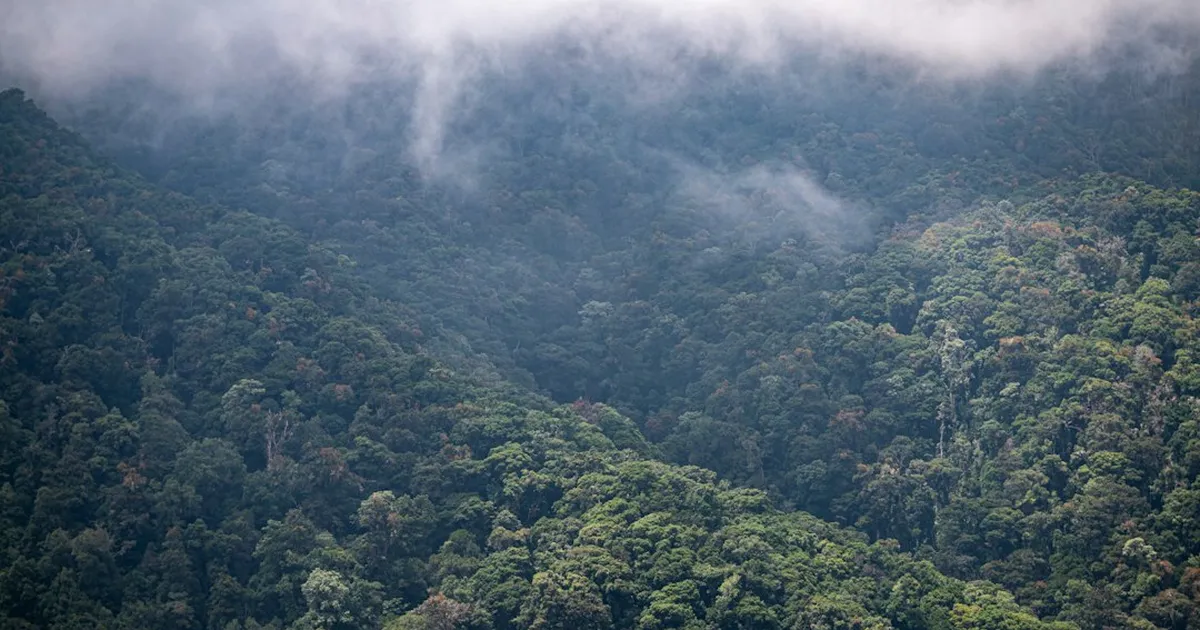
¶ According to the announcement of Oct. 26, 2026, the Tropical Forest Forever Facility is a new investment fund for the long-term conservation of tropical forests. Minister Sjoerd Sjoerdsma, responsible for foreign trade and development cooperation, described the conditions for the planned capital contribution in a letter to the Tweede Kamer, the Dutch parliament's lower house. Reuters also reported, according to the Jakarta Post of Oct. 27, that The Hague intended to pledge this maximum amount over a decade.
How the fund is intended to pay for forests
Forest conservation is essential to combating climate change and preserving biodiversity, the government said: Without financial rewards, deforestation quickly becomes more attractive than conservation. Countries are to receive ongoing payments for forest conservation from the net returns of an investment fund, following checks using satellite data, with a nonbinding indicative rate of approximately $4 per hectare per year. Part of that is to go directly to Indigenous peoples and local communities, who play a major role in forest management. The TFFF requires at least 20% of forest payments to go to them, June Rubis, co-founder of the organization Building Initiatives in Indigenous Heritage, said in a TFFF statement; this sets a new standard for inclusion and credibility. In the long term, the aim is to establish a permanent investment fund of $125 billion, including $100 billion from the private sector; Dutch institutional investors have already expressed interest.
Part of an international coalition
The Netherlands is joining a coalition that includes Brazil, Norway, Indonesia, Germany, France and the United Kingdom, among others, all of which have announced investments. When the TFFF launched at the climate summit in Belém in November 2025, announced pledges stood at more than $5.5 billion and 53 countries supported it; the initiative now has political support from 66 countries and the EU, according to the COP30 website, and pledges total $7.8 billion. Government contributors include Norway with $3 billion, Germany with 1 billion euros, and Brazil and Indonesia with $1 billion each; the United Kingdom had announced an investment of 400 million pounds, equivalent to around $540 million, about a month before the Netherlands. The Netherlands was already part of the interim board that adopted the TFFF charter on July 22, paving the way for the establishment of the Financial Intermediary Fund at the World Bank.
The model has also drawn criticism: Environmental economist Bard Harstad of Stanford University told Mongabay that in his view the TFFF had serious flaws. He doubts that the fund can generate enough profit in the long term to satisfy investors and pay tropical forest countries at the same time. He fears that pledged funds may fail to materialize, potentially damaging willingness to finance tropical forest protection for decades. He also warns that governments could withdraw their commitment to protect TFFF-funded forests if, for example, someone like Flávio Bolsonaro were to return to power in Brazil in the future. Harstad instead recommends instruments such as bonds tied to sustainability targets, which Mongabay says are used in Uruguay to lower interest rates and attract investment when deforestation is low. Environmentalists nevertheless view the project positively: Merijn van Leeuwen, director of nature conservation at WWF-Netherlands, called the Dutch pledge a significant breakthrough for the protection of tropical forests worldwide, but also called for more countries, companies and investors to participate so that the fund reaches the necessary scale, according to Carbon Pulse.
According to Paul van de Logt, head of the climate team at the Dutch foreign ministry, the formal announcement is to be made by the prime minister only during COP31 in Antalya. The Dutch parliament must first approve the contribution. Several conditions have also yet to be finalized, including whether the contribution qualifies as official development assistance, how robust the fund's structure is, the stages in which the money is to be disbursed and on what terms. These details about pending parliamentary approval and the outstanding conditions come from a Carbon Pulse report. Third, TFFF chairs Norway and Brazil continue to aim for the $10 billion threshold, which is a prerequisite for Norway's own pledge to be disbursed at all.