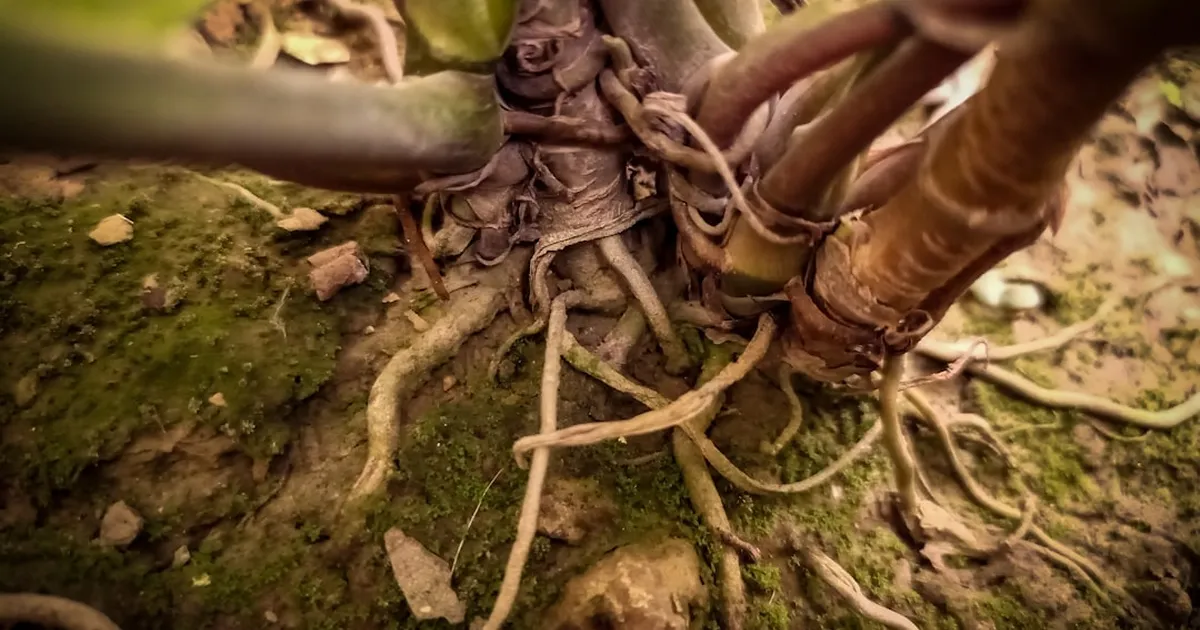
Underground fungal networks receive 13 billion tons of carbon dioxide from plants each year, equivalent to a third of all emissions from burning fossil fuels. Evolutionary biologist Dr. Toby Kiers of the Vrije Universiteit Amsterdam spent two decades mapping this invisible system and was awarded the 2026 Tyler Prize for Environmental Achievement, widely regarded as the world's leading environmental prize.
The Network Beneath Our Feet
Mycorrhizal fungi form symbiotic connections with roughly 90 percent of all land plants. Their fine threads, called mycelium, spread through the soil and supply plants with nutrients and water that roots alone cannot reach. In return, the fungi receive carbon from plant photosynthesis. What was long regarded as simple mutualism turns out, under Kiers' analysis, to be one of the planet's largest carbon management systems.
Kiers' team developed measurement techniques to quantify, for the first time, how much carbon plants channel into underground networks rather than storing in their own tissue. The results challenged a widespread assumption: in climate discussions, trees are routinely treated as the primary carbon sinks. Kiers shows that a substantial share of that sequestration happens invisibly below ground, inside fungal networks that appear in neither existing climate models nor most conservation law.
Mapping and Defending
Kiers operates simultaneously as a basic scientist and as a conservationist. In 2022, she co-founded the Society for the Protection of Underground Networks (SPUN), a nonprofit building the first global inventory of mycorrhizal networks. The Underground Atlas uses soil samples and algorithms to identify the biodiversity-richest fungal sites worldwide and nominate them for protection programs.
In January 2026, SPUN launched a training program called Underground Advocates, together with the More-than-Human Life program at New York University School of Law. The initiative trains scientists to make the legal and political case for protecting fungal networks, in the same way lawyers advocate for human rights or conservation organizations campaign for endangered species. According to SPUN, the first legal protection case for a mycorrhizal network in a national park is in preparation.
Kiers received the Tyler Prize as the youngest woman in the award's history. The prize carries $250,000, administered by the University of Southern California. The ceremony took place on April 23, 2026, in Amsterdam.
What Is at Stake
The urgency of this research is rooted in a global trend. The Food and Agriculture Organization of the United Nations estimates that about one-third of the world's soils are degraded, primarily through intensive agriculture, monoculture farming and fungicide use, all of which damage mycorrhizal networks directly. When these networks collapse, soils lose not only their carbon-binding capacity but also their ability to retain water, worsening droughts and erosion.
For restoration programs, including the EU Nature Restoration Law, which requires member states to restore degraded ecosystems, protecting underground fungal networks may be an underestimated lever. Without intact mycorrhizal systems, restored areas grow more slowly and store less carbon than expected, according to early studies from reforestation projects in Central Africa and South America.
What Comes Next
Kiers has announced plans to expand the Underground Atlas to all continents by the end of 2027. Data coverage is currently most dense across parts of Europe, North America and Southeast Asia. For climate science, the decisive question is whether the carbon flows she has identified will be incorporated into future Earth system models. The Intergovernmental Science-Policy Platform on Biodiversity and Ecosystem Services (IPBES) has appointed Kiers as an expert for its next major assessment report, due in 2027.