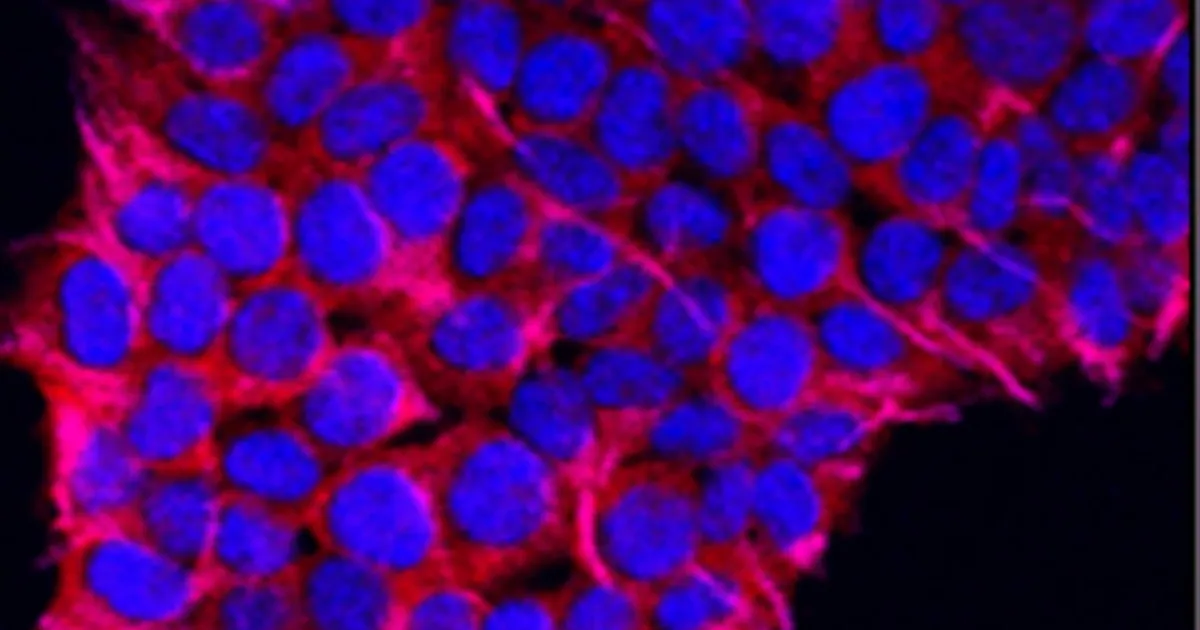
Five years after treatment, patients are still protected. New long-term data from the KEYNOTE-942 trial show that melanoma patients treated with the personalised mRNA vaccine Intismeran Autogene had a 49% lower risk of cancer recurrence or death compared to a control group receiving immunotherapy alone. It is the first time an individually tailored mRNA cancer vaccine has demonstrated lasting protection over such an extended follow-up, bringing a fundamentally new treatment approach for one of the world's deadliest skin cancers within reach.
What the Vaccine Does
Melanoma accounts for roughly nine in ten skin cancer deaths. In stages III and IV, when the tumour has spread to lymph nodes or other organs, the five-year survival rate remains below 50% even with the best available immunotherapy. The new vaccine was developed specifically for this high-risk group after surgical tumour removal.
Intismeran Autogene, previously known as mRNA-4157, is not a conventional vaccine: it is manufactured individually for each patient. Scientists sequence the DNA mutations in the removed tumour tissue and encode up to 34 of them into a synthetic mRNA sequence. This mRNA trains the immune system to recognise exactly the proteins that define that patient's cancer. The vaccine is given alongside pembrolizumab, the immunotherapy sold as KEYTRUDA, which is already standard of care for melanoma.
What the Data Show
The long-term results come from the phase 2b KEYNOTE-942 study conducted jointly by Moderna and Merck. Of 107 participants, one group received the combination of Intismeran Autogene and pembrolizumab, the other received pembrolizumab alone. After five years, patients in the combination group had a 49% lower risk of recurrence or death, expressed as a hazard ratio of 0.51. Among patients in the highest-risk stages IIIB to IV, the difference was even more pronounced.
"These data confirm the durability of the signal," said Eliav Barr, Merck's head of vaccine development, following the presentation of results. The trial is too small for a definitive efficacy verdict, which is why the follow-on study INTerpath-001 is now running to validate the findings at broader scale.
The Breakthrough in Context
Intismeran Autogene is part of a fundamental shift in cancer treatment. Unlike classical chemotherapy, which attacks all rapidly dividing cells, this approach targets the specific vulnerabilities of each patient's individual tumour. The concept is not new, but mRNA technology has made the production of such personalised vaccines practically feasible for the first time. Manufacturing time now stands at roughly six weeks per patient.
Intismeran Autogene should not be confused with the mRNA vaccine developed by BioNTech and Genentech, which has been trialled against pancreatic cancer since 2023. Both share the mRNA platform but come from different companies and target different cancer types. Moderna and Merck are now testing Intismeran Autogene in non-small cell lung cancer in phase 3, and in bladder cancer and renal cell carcinoma in phase 2. The personalised mRNA vaccine concept may therefore serve as a platform applicable across many cancer types.
What Comes Next
The INTerpath-001 phase 3 trial has enrolled approximately 1,089 patients with melanoma stages IIB to IV and is fully recruited according to ClinicalTrials.gov. Primary data are expected in 2029. In parallel, Moderna and Merck have announced plans to seek accelerated regulatory approval based on the existing phase 2b data, naming Q2 2027 as their target launch date.
If the FDA and EMA consider the current evidence sufficient, a personalised mRNA vaccine against melanoma could be available in routine clinical practice in fewer than two years. The decisive question that INTerpath-001 must then answer is no longer whether the principle works, but for which patients it delivers the greatest benefit.