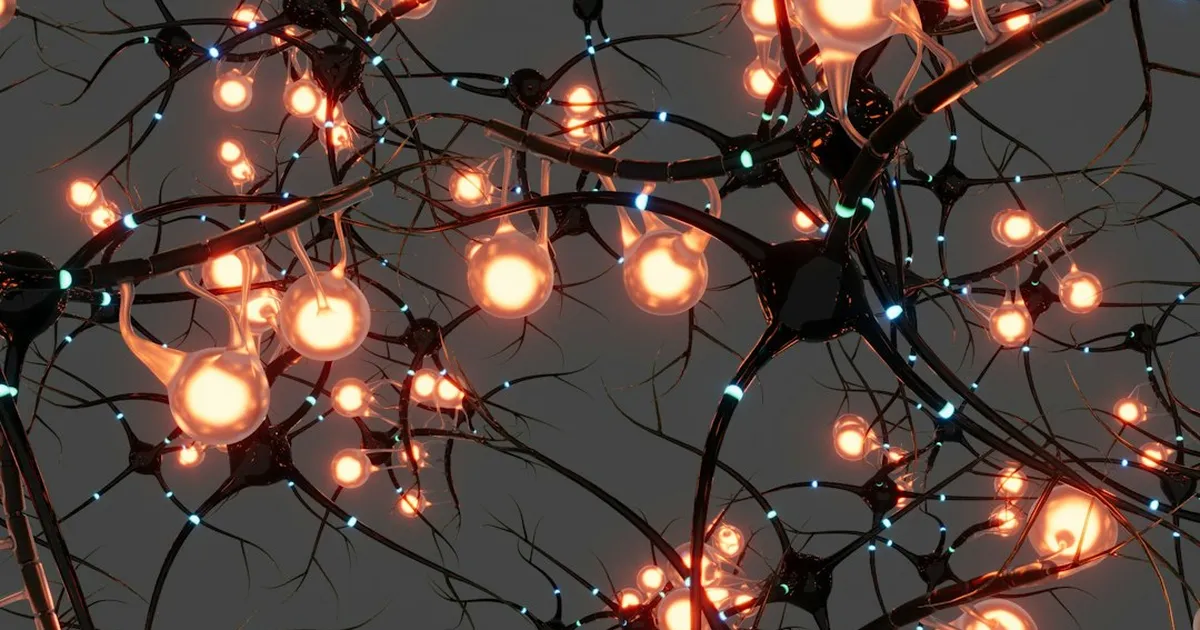
Psilocybin promotes the formation and maturation of new synapses in mice while also accelerating the breakdown of existing connections, according to a study by the University of California, Santa Cruz published on October 15, 2026, in Nature Neuroscience. Signaling through serotonin receptors of the 5-HT2A type in certain pyramidal neurons in the cerebral cortex was sufficient for this structural remodeling in the animals, but was not necessary for the head-twitch response used as a model of hallucinations in rodents.
Dendritic spines, small protrusions on nerve cells, receive signals from neighboring cells and thus form synapses, as the EurekAlert! release on the study describes. Following a single dose of psilocybin, according to Pharmazeutische Zeitung, 29.3 percent of newly formed spines remained after 21 days in the control group, compared with 48 percent after treatment; the proportion of mushroom-shaped spines, considered particularly stable, rose from 2.2 to 28.4 percent. At the same time, the compound also promoted the breakdown of older, existing spines, which the researchers interpreted as evidence of more extensive remodeling of neural networks. In healthy control mice, the increased formation of new connections was temporary: it returned close to baseline within three weeks. According to the supplementary study protocol, groups in behavioral experiments and in vivo imaging included 5 to 16 mice, depending on the experiment, the mice were randomly assigned, and behavioral and imaging data were analyzed under blinded conditions. According to EurekAlert, the work was funded by the National Institute of Mental Health and the National Institute on Aging, the psilocybin used was supplied by the National Institute on Drug Abuse, and the authors declared no competing interests.

Stronger effect in the stressed brain
Mice in a stress model designed to reproduce features of human depression through varying mild stressors responded markedly differently. In these animals, psilocybin increased the formation of new dendritic spines particularly strongly and at the same time stopped the excessive loss of existing connections typical of chronic stress. A review published in Nature Medicine describes a similar underlying pattern: according to the review, acute neural desynchronization that destabilizes entrenched network patterns is accompanied by a window of subacute neuroplasticity for psychological and behavioral changes.
Separate signaling pathways for remodeling and the head-twitch response
When the researchers restored serotonin receptors of the 5-HT2A type exclusively in pyramidal neurons in layer 5 of the cerebral cortex, psilocybin continued to trigger the formation of new synapses and their stabilization, but the mice did not show the characteristic head-twitch response. Conversely, when the researchers selectively removed the receptor from these cells, structural synaptic growth did not occur, while the head-twitch response remained fully intact. According to the study, this double dissociation shows that receptor signaling in these cells is necessary and sufficient for structural remodeling, but not for the behavioral response.

In comparison: behavioral effects and open questions
A study from five independent laboratories published in November 2026, involving around 200 mice per experiment, confirmed robust acute behavioral effects of psilocybin but found no replicable reduction in anxiety-like or depression-like behavior 24 hours after administration; the authors consider some previously reported lasting effects in mice to be potentially small or inconsistent. This is a different study from the October study on structural remodeling and does not refute its finding, but it shows how individual effects of psilocybin in mice vary in robustness. The review in Nature Medicine also identifies an unresolved tension: preclinical evidence that non-hallucinogenic psychedelic analogues activate putative therapeutic mechanisms exists alongside clinical evidence of a link between subjective experience and therapeutic response in humans. According to this review, questions about study design, scalability and regulatory approval also remain open.
Prospects for non-hallucinogenic drug analogues
According to ScienceDaily, Zuo sees this as a possible blueprint for developing non-hallucinogenic drug analogues because therapeutic remodeling and hallucinogenic effects occur through different cellular pathways.