Microplastics are now virtually everywhere: in rivers, tap water, sea salt, and increasingly in human blood. Affordable, easy-to-produce filtration methods are especially lacking in regions without complex water infrastructure. Researchers at the Institute of Science and Technology of Universidade Estadual Paulista (ICT-UNESP) in Brazil have shown that an extract from moringa seeds can remove more than 98 percent of microplastic particles from drinking water. The study was published in April 2026 in ACS Omega, a peer-reviewed journal of the American Chemical Society.
Why Microplastics Are So Hard to Filter
Microplastic particles carry a negative electrical charge on their surface. This charge causes them to repel each other, preventing them from clumping together and being captured by conventional filters. Modern water treatment plants therefore use chemical coagulants, most commonly aluminum sulfate. These substances neutralize the charge on the particles, causing them to bind together and settle out of the water as larger flocs.
The problem: aluminum sulfate leaves residues and generates toxic sludge that must be disposed of. For small communities in developing countries, managing this waste is often barely feasible. This is precisely the gap that the moringa approach addresses.
How Moringa Seeds Take Over Coagulation
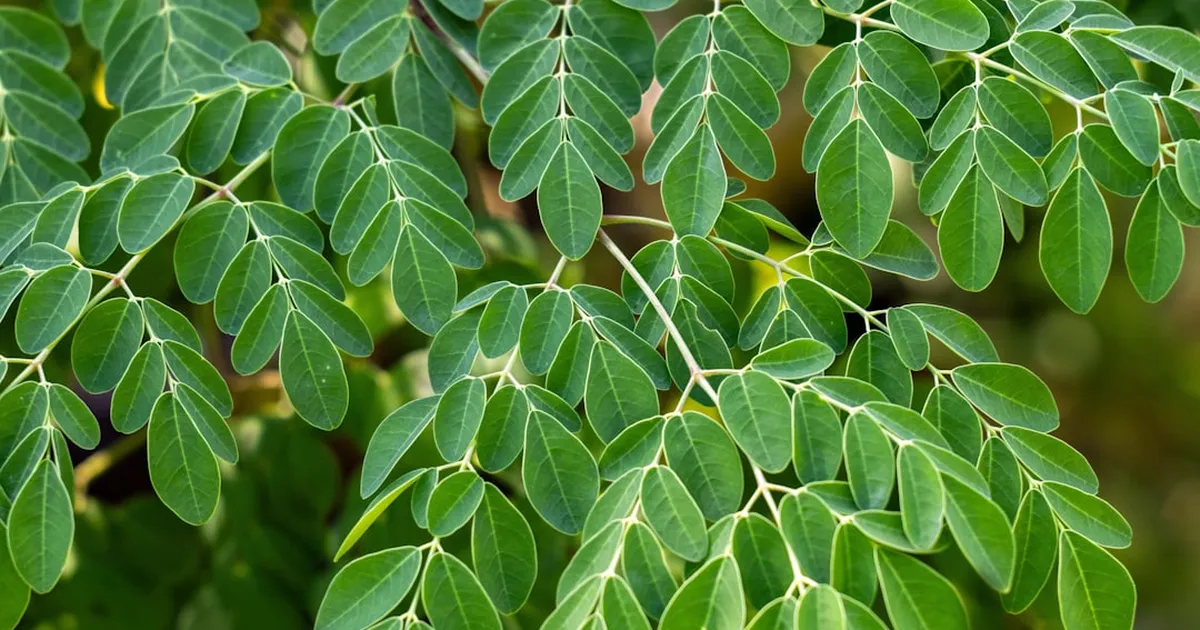
The moringa tree (Moringa oleifera), sometimes called the drumstick tree, is native to India and grows today across much of the tropics. Its seeds contain proteins that carry a positive charge and therefore produce the same effect as chemical coagulants: they bind to the negatively charged microplastic particles, neutralize their charge, and enable the formation of filterable flocs.
The researchers from São José dos Campos prepared an aqueous salt solution from the seeds and tested it against PVC particles, one of the most common microplastic types. The result: moringa extract removed more than 98 percent of the particles from the test water. In a head-to-head comparison it performed as well as aluminum sulfate. In alkaline water the plant-based extract was even more consistent and reliable.
The Key Advantage: Biodegradability
The moringa extract is fully biodegradable and, according to current evidence, non-toxic. This makes it particularly attractive for regions where chemical disposal facilities are unavailable. Producing the extract is relatively straightforward: the seeds are ground, dissolved in salt water, and filtered. No specialized laboratory equipment is strictly required.
Lead researcher Thiago Lemos of ICT-UNESP emphasized in a university press release that the approach is especially promising for communities relying on decentralized water treatment. Field tests are underway in São José dos Campos using water from the Paraíba do Sul River, one of the region's main water sources.
What the Study Has Not Yet Shown
The study has methodological limitations that the researchers themselves acknowledge. So far, only PVC particles have been tested, not other common plastic types such as polyethylene, polypropylene, or polystyrene. Whether moringa extract works equally well against these variants has not yet been demonstrated. The experiments were also conducted in a laboratory setting, not at the scale of a full water treatment plant; industrial tests are still pending.
The approach also depends on access to the moringa tree. In tropical regions of Asia, Africa, and Latin America the plant is widely available. In temperate climates it does not grow and would need to be imported. For the regions most affected by inadequate water infrastructure, however, that is not a limitation.
Outlook
The researchers plan next to run pilot tests at a municipal water treatment plant in São José dos Campos, with results expected by the end of 2026. Parallel experiments are underway to test the extract against other microplastic types. If the field tests confirm the laboratory findings, the research group believes the technology could be integrated into existing water treatment facilities with relatively modest effort.