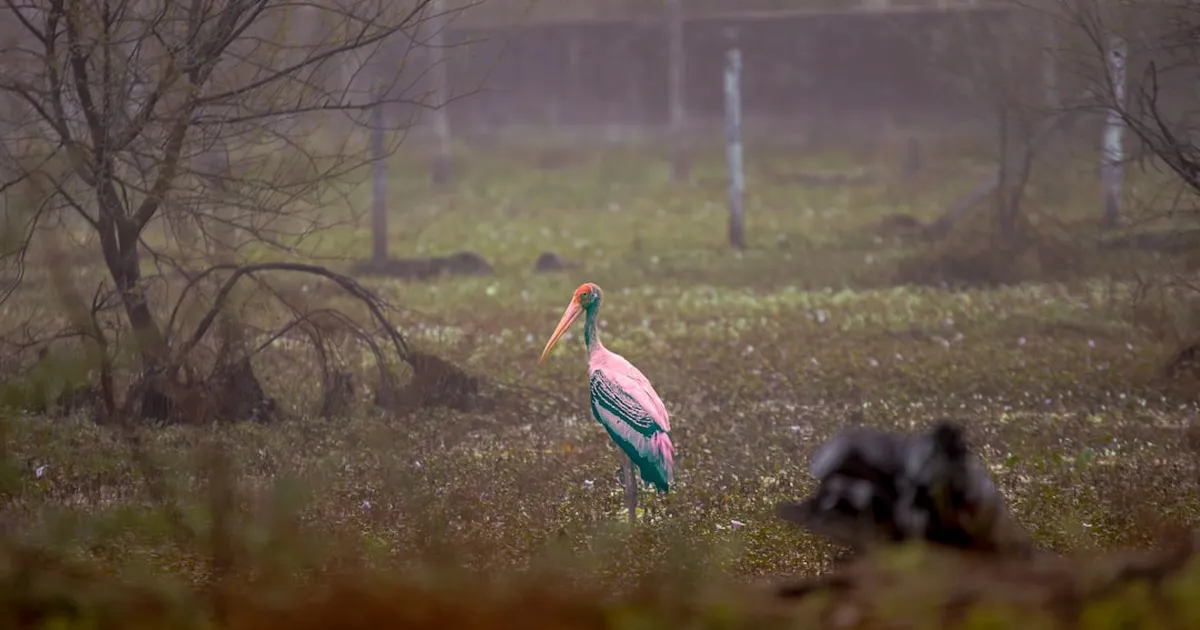
At the 15th Conference of the Convention on Migratory Species (CMS COP15) in Campo Grande, Brazil, 105 countries added 40 animal species and subspecies to international protection lists. That is three times the number added at the previous conference in 2024, and according to conference president João Paulo Capobianco, it represents a 10 percent expansion of the world's protected migratory species in a single meeting.
Why Migratory Animals Need an International Treaty
The Convention on the Conservation of Migratory Species of Wild Animals — CMS for short — was founded in 1979 under the United Nations. Its core problem is straightforward: no single country can protect migratory animals alone. A cheetah strictly protected in Zimbabwe has no legal standing once it crosses a border. Migratory birds that breed in one country can be shot in dozens of others on their journey south.
The CMS works with two protection lists. Appendix I covers migratory species threatened with extinction, for which any commercial exploitation is prohibited. Appendix II covers species for which coordinated cross-border measures are recommended. Listing creates binding protection obligations for all 133 contracting states. Most Appendix I species are already classified as endangered or critically endangered by the IUCN; the CMS listing adds concrete protection along migration routes themselves.
Cheetahs, Hammerhead Sharks and Giant Otters Under New Protection
Among the 40 newly listed species, the cheetah stands out: Zimbabwe's population was added to both Appendix I and Appendix II simultaneously, the highest level of protection available. Also newly protected are the giant otter from the Amazon basin, the striped hyena and the snowy owl.
In the marine realm, several hammerhead shark species received Appendix I status, including the great hammerhead and the scalloped hammerhead. Sharks are particularly threatened by finning: fishing fleets cut off the fins and discard the animals at sea, because only the fins fetch a profitable price. Appendix I listing means that catch bans and trade restrictions must apply across all contracting states.
The new listings also include 25 petrel species from the genera Pterodroma and Pseudobulweria, as well as several shorebirds: the lesser yellowlegs, the Hudsonian godwit and the Eskimo curlew. The ornithological organization BirdLife International had lobbied intensively for these additions since the previous conference.
Seabird Protection on the Open Ocean: The Marine Flyway Framework
The most consequential decision from Campo Grande is less spectacular than a species list, but has greater long-term impact according to the IUCN: the Marine Flyway Framework. It divides the world's oceans into six corridors along which 151 pelagic seabird species migrate. Nearly half of these species are considered globally threatened.
Until now, there was effectively no coordinated international protection for seabirds on the open ocean. The new framework identifies 1,332 so-called Key Biodiversity Areas — critical points along the routes including breeding sites, stopover areas and feeding grounds. Governments receive 15 concrete recommendations, among them combating invasive species on island stations and building national capacity for route monitoring. The framework is not designed to protect entire ocean corridors, but rather a network of smaller, manageable protection points along the routes.
In Comparison: What International Species Protection Can Achieve
To put COP15 in perspective: COP13 in India in 2020 added 10 species, COP14 in Samarkand in 2024 added fourteen. In Campo Grande in 2026: forty. The leap is partly explained by the new Samarkand Strategic Plan 2024 to 2032, which for the first time links CMS decisions directly to the UN Biodiversity Convention's Kunming-Montreal framework, which sets a 30 percent protected-area target for 2030.
How effective coordinated species protection can be is shown by the Iberian lynx. In 2002, fewer than 100 of these cats existed worldwide, after habitat loss and poaching had nearly wiped out the population in Spain and Portugal. Following coordinated breeding and reintroduction programs supported by EU conservation funds, the IUCN counted more than 2,000 Iberian lynxes in the wild by 2024. The European bison follows a similar trajectory: extinct in the wild in 1925, it now numbers more than 8,000 individuals in the Bialowieza Forest and other protected areas following international reintroduction programs.
Toward COP16 in 2029: Pantanal Declaration Calls for Funding the Global South
COP16 is planned for 2029. By then, all contracting states must transpose the Campo Grande decisions into national law. The conference also adopted 15 new Concerted Actions — coordinated single-species programs for chimpanzees, dolphins, bats and sharks — as well as ten new or revised action plans.
The Pantanal Declaration, adopted at the ministerial meeting, will be decisive. It calls for concrete financial transfers: developing countries that maintain migratory corridors but rarely benefit economically from them should receive targeted support. Without such compensation, the final document states, every protection list will remain ineffective.