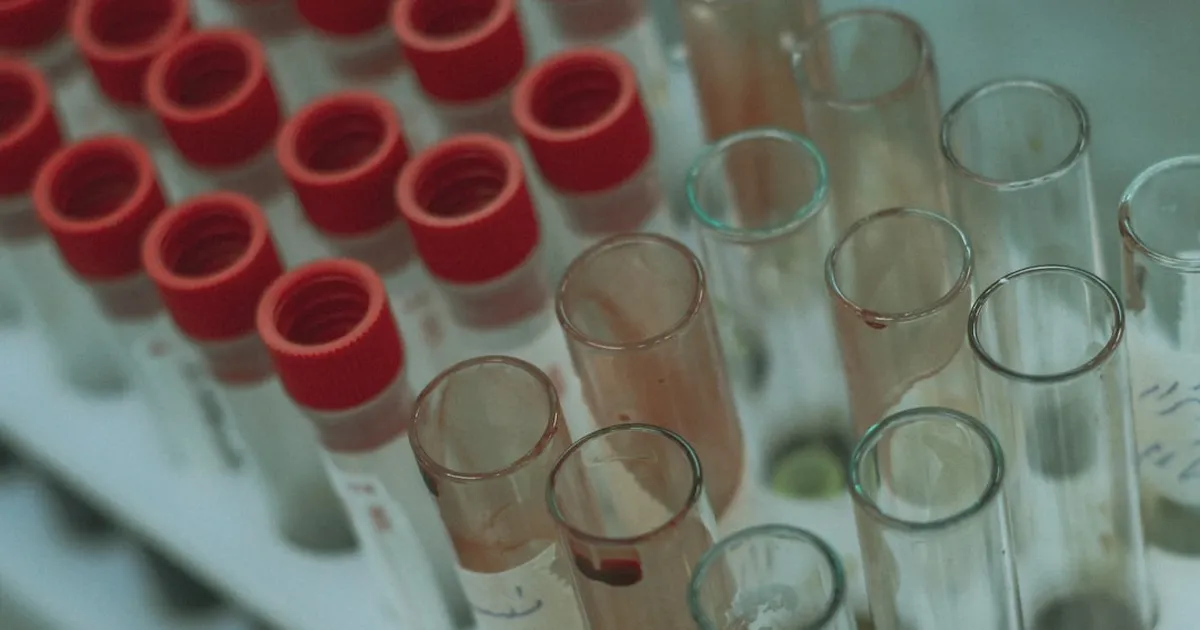
One blood sample, four cancer types, a test that is meant to cost under twenty dollars. With MethylScan, researchers at the University of California, Los Angeles have developed an approach that could fundamentally change cancer screening. The study was published in April 2026 in the Proceedings of the National Academy of Sciences. For comparison, the only multi-cancer test commercially available so far, Grail Galleri, costs roughly 950 US dollars and is not yet covered by most insurers.
How MethylScan Works
The method analyzes so-called cell-free DNA, released into the blood from dying cells. Instead of searching for gene mutations, as other approaches do, MethylScan examines DNA methylation: chemical markers on the DNA that regulate which genes are active. These methylation patterns differ by cell type and change characteristically when cells become cancerous. The test can therefore identify from which tissue the DNA originates and whether disease processes are occurring there.
The algorithm needs only five gigabytes of sequencing data per sample to make a call. At current sequencing costs of under four dollars per gigabyte, that translates to material costs below twenty dollars.
What the Study Shows
The UCLA team tested MethylScan on 1,061 people, including cancer patients with a range of diagnoses, healthy controls and patients with liver disease. At 98 percent specificity, meaning only two in 100 healthy people receive a false positive, the test detected 63 percent of all cancer cases across stages. In early stages the detection rate was 55 percent.
Performance was particularly strong in high-risk patients. In people with liver cirrhosis or chronic hepatitis B infection, MethylScan detected 80 percent of liver cancer cases at over 90 percent specificity. The study focused on liver, lung, ovarian and stomach cancers.
What the Numbers Mean
A 63 percent detection rate may sound like more than a third of cases missed. In the context of cancer screening, however, the yardstick is different. For many of the tested cancer types, there is currently no systematic screening programme at all. Ovarian cancer, for example, is typically diagnosed only in advanced stages because no broadly available early detection exists. A test that catches even half of such cases earlier can save lives.
The 98 percent specificity matters equally. A test with a high false-positive rate creates anxiety, unnecessary follow-up exams and costs. MethylScan keeps that rate low.
What Is Still Missing
MethylScan is a research result, not an approved diagnostic. The study describes a technical proof of concept that must now be developed further in larger clinical trials. How long that path takes depends on regulators like the FDA in the US and the EMA in Europe. Typical clinical phases and approval processes take several years.
The UCLA researchers have announced plans to extend the platform to further diseases. The study already describes results in differentiating various liver diseases, pointing to a broader application scope beyond cancer diagnostics.