The University of Arkansas said on November 10, 2026, that a team led by Cole McCallum and Wan Shou had shown that lunar regolith simulant can be sintered directly into reconfigurable building blocks using a comparatively low-powered light source and no binder. The results appeared in the journal NPJ Advanced Manufacturing, with then-student Cole McCallum as first author and Wan Shou as senior author. According to ScienceDaily, a binder-free process could help produce building materials directly on the Moon, reducing the amount of equipment and supplies that must be transported from Earth.
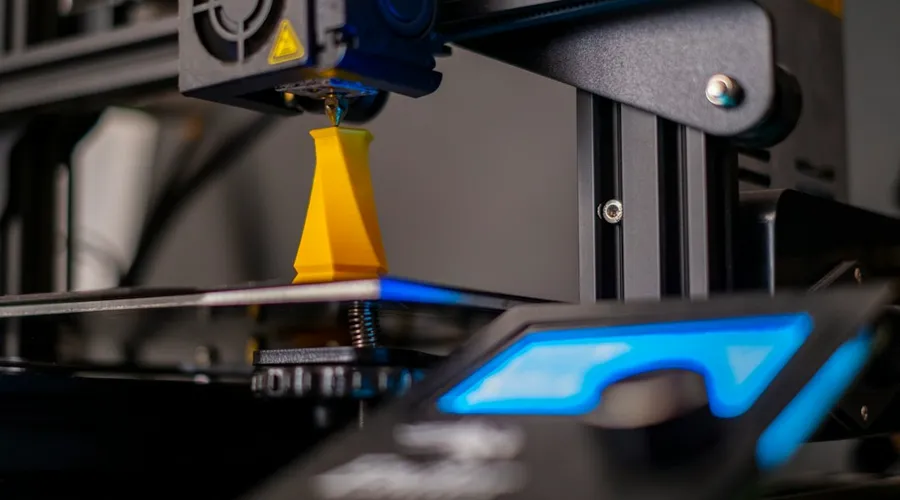
The researchers printed cross-shaped and H-shaped blocks several centimeters wide that could be joined together like Lego bricks to form larger structures. They used a process called Laser Powder Bed Fusion, in which fine powder is spread over a bed and sintered by a light source before the bed is lowered for the next layer. For the experiments, the team used commercially available Lunar Highlands Regolith Simulant (LHS-1), which is intended to mimic samples collected during the Apollo missions in the 1960s and early 1970s.
According to the University of Arkansas, the pure regolith blocks are more porous and structurally weaker than objects printed with binders. According to Popular Science, further research is needed to understand their behavior in a vacuum or under microgravity.
On October 12, 2023, a study in Scientific Reports had already shown that lunar regolith simulant can be fused into interlocking samples measuring about 250 by 250 millimeters using a high-powered CO2 laser. The ESA project PAVER used this to investigate whether melting regolith with concentrated light is suitable for paving lunar roads and landing pads, because stirred-up dust can otherwise impair the systems of exploration vehicles. Another approach is described by the NASA project REACT, which, according to a poster from the space agency, aims to develop polymer-bound regolith composites for additive construction applications on the Moon and print a scaled-down structure under simulated lunar conditions. According to ScienceDaily, some earlier attempts to 3D-print lunar regolith into structures used binders that can improve strength but would have to be brought from Earth, a logistical difference from the binder-free approach from Arkansas.
According to Shou, the mechanical performance of the blocks would need to be optimized for practical use.