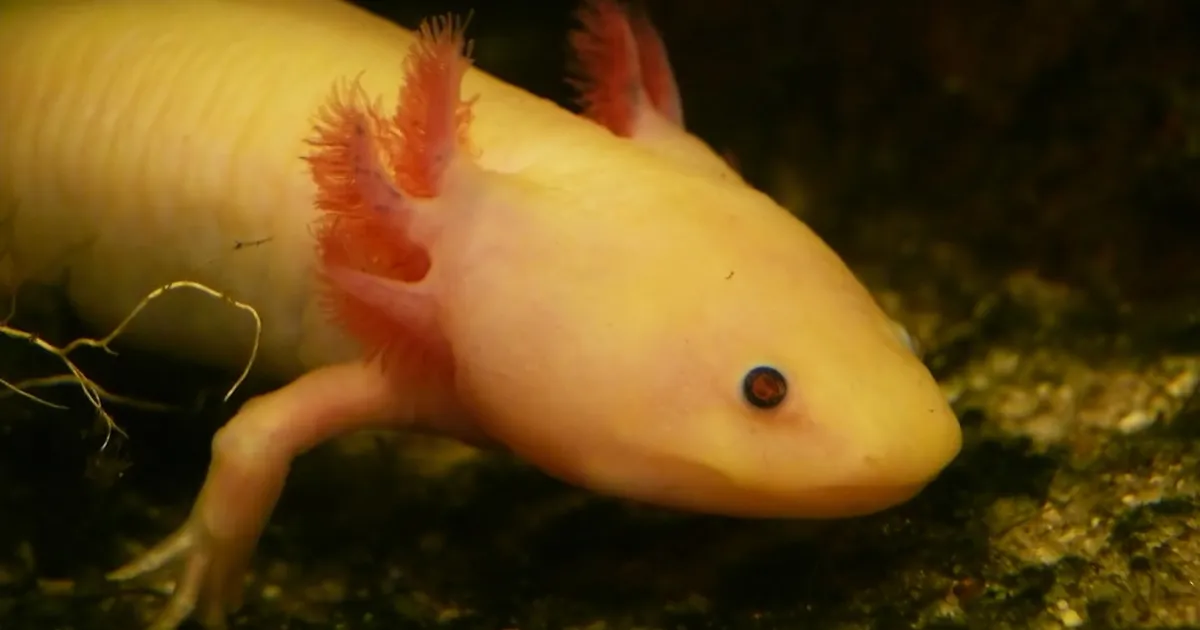
Axolotls and newts can regrow whole legs, tails and even parts of the heart. Humans and other mammals cannot. Why this biological gap exists has long been unclear. A team led by Can Aztekin at EPFL and the Friedrich Miescher Laboratory of the Max Planck Society has now identified a central mechanism in the journal Science: a single cellular oxygen sensor decides whether regeneration programmes start at all. The results were published on 9 April 2026.
What Amphibians Do Differently
After a limb is amputated in axolotls, a complex biological programme begins. Specialized cells de-differentiate into so-called blastema cells, form a biological repair bud, and rebuild the limb layer by layer, including bone, muscle, blood vessels and nerves. In mice and humans, this programme does not start after an amputation.
Aztekin and his team compared amputated limbs from frog tadpoles and embryonic mice. The result: the decisive difference is not a radically different genetics but the sensitivity of a single protein, HIF1A. This protein acts as a cellular oxygen sensor. It registers how much oxygen is present in tissue and then regulates genes that respond to oxygen shortage.
The Mechanism in Detail
Immediately after an injury, tissue oxygen levels drop. In amphibians, HIF1A keeps regeneration genes active even once oxygen rises again. Their cells are less sensitive to rising oxygen levels because genes that normally shut HIF1A down are expressed at lower levels.
Mammalian cells, in contrast, react sensitively to rising oxygen. As soon as tissue is well-perfused again after an injury, HIF1A switches off, and with it the regeneration programmes. The tissue heals, but it does not regenerate.
The surprising finding: mammalian cells latently possess the basic equipment for regeneration. It simply switches off too early. When the researchers artificially stabilized HIF1A in mouse tissue, regeneration mechanisms activated. The barrier between mammals and amphibians is therefore less genetically fundamental than previously assumed.
What This Could Mean for Medicine
The results open a new line of research in regenerative medicine. The question is no longer only how amphibians regrow limbs, but how HIF1A could be selectively stabilized in human tissue without triggering side effects such as uncontrolled cell growth. That is not a trivial question: in tumour cells, HIF1A is often permanently active and drives tumour growth.
A therapy that activates HIF1A locally and temporarily in wounded tissue would be a considerable biomedical balancing act. Clinical applications in humans are still far off. The study does, however, provide a precise molecular target for regeneration research. Aztekin's team has announced that further work will test whether targeted stabilization of HIF1A in mammalian tissue can trigger partial regenerative responses.