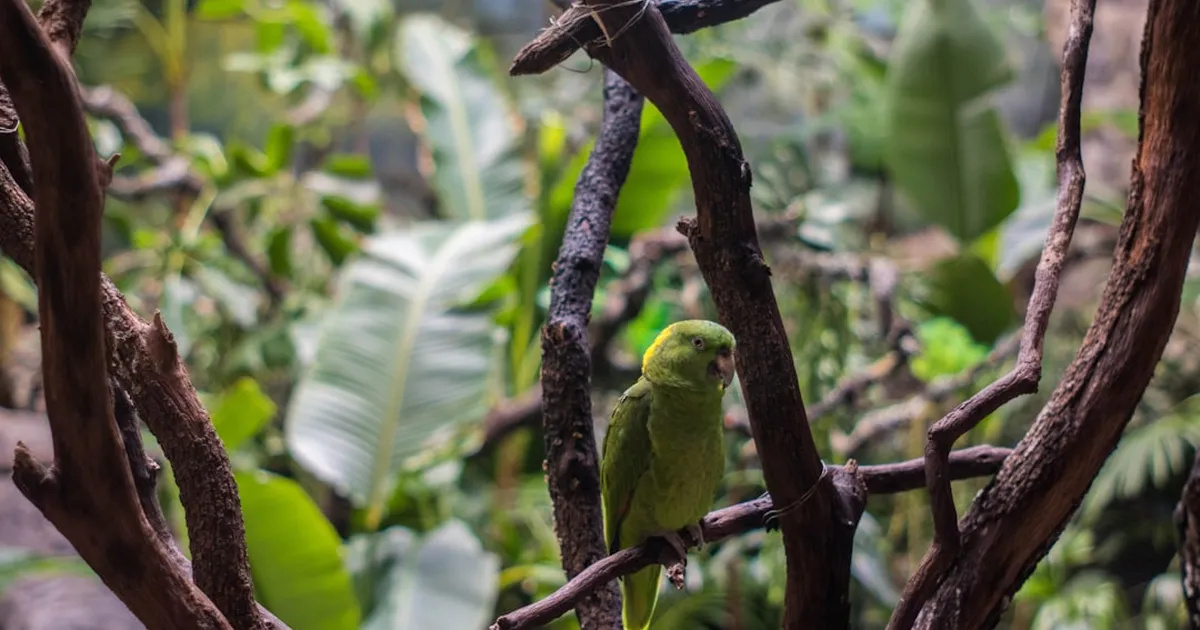
New Zealand's kākāpō long seemed like a living obituary for a lost fauna. Now the conservation programme reports the most successful breeding season on record: 106 chicks hatched in 2026, 93 survived. The previous record, set in 2019, was 85 chicks.
On the Brink of Extinction
Weighing up to four kilograms, the kākāpō is the world's heaviest parrot. It cannot fly, is nocturnal, lives exclusively in New Zealand, and breeds only when food is abundant, typically every two to four years. The combination of ground-dwelling habits, slow movement, and trustfulness made it easy prey for introduced predators. After European settlement, rats, cats, and stoats decimated the population. By 1995, only 51 birds remained in the wild, a number so small that any subsequent season could have been the last.
New Zealand's Department of Conservation (DOC) launched a radical rescue programme: all remaining kākāpō were captured and relocated to three predator-free islands, Whenua Hou, Te Kākahu, and Anchor Island. Rangers monitor nests around the clock, provide supplementary feed to ailing chicks, and fit every bird with a transmitter tracking its movements in real time. Each chick is now genotyped so that pairings can be managed genetically, preventing inbreeding depression.
Rīmu Harvest Drives Record Season
The kākāpō does not breed on a fixed calendar. It responds to the abundance of rīmu berries: only when the harvest is plentiful on the sanctuary islands do females begin nesting. In 2026, an exceptional rīmu crop created a rare situation in which all 78 females bred simultaneously. The result was unprecedented. DOC told Radio New Zealand that 106 chicks hatched and 93 survived the critical first weeks, surpassing the 2019 record by nearly 25 percent.
Rangers went well beyond the ordinary to reach that figure. When a female had nested in a rock crevice on the Fiordland coast accessible only by tunnelling through stone, staff did exactly that to rescue the trapped chick. That final chick brought the season total to 106. With 93 survivors, the overall adult kākāpō population has exceeded 235 for the first time. For comparison: in 2016 the population stood at 154; after the 2019 record season it climbed to just under 200.
Compared with Other Wildlife Comebacks
The kākāpō joins a short list of spectacular species rescues. The bearded vulture was extirpated from the Alps in 1913. From 1986, the Vulture Conservation Foundation and national wildlife authorities began reintroduction. Today more than 300 bearded vultures live freely in the Alps, one of the most successful reintroductions in Europe according to the VCF. The Iberian lynx had fewer than 100 individuals in 2002. Through a targeted breeding programme and habitat protection in Spain and Portugal, the population exceeded 2,000 animals by 2024 according to the IUCN, the fastest recovery rate of any endangered cat species worldwide.
The California condor fell even further: in 1987 only 27 birds existed, all in captivity. An intensive breeding programme brought the number to over 500 by 2024, with more than 300 living in the wild, according to the US Fish and Wildlife Service. The common thread across all successful wildlife comebacks is active management: protecting habitat alone is not enough without simultaneous attention to genetic diversity, disease, and predators.
Two Risks on the Road to 300
Despite the record, the population remains fragile. Two concrete risks preoccupy the DOC team. The first is disease: in 2019 an Aspergillus fungal infection killed a number of chicks from that record season. A similar outbreak at a total population of fewer than 250 birds could have devastating consequences. Rangers now monitor chicks more intensively during their first weeks and intervene earlier with veterinary support.
The second is climate change. Rīmu trees flower irregularly, and shifting rainfall patterns could disrupt the sequence of productive rīmu years that trigger breeding seasons. Researchers at Victoria University of Wellington are examining which climate scenarios might alter rīmu phenology over the coming decades. DOC scientists cite 300 birds as the first stable population threshold. When the population reaches that number, an expansion to additional sanctuary islands is planned. With 235 adults and 93 surviving chicks from the 2026 season, that milestone is within reach.