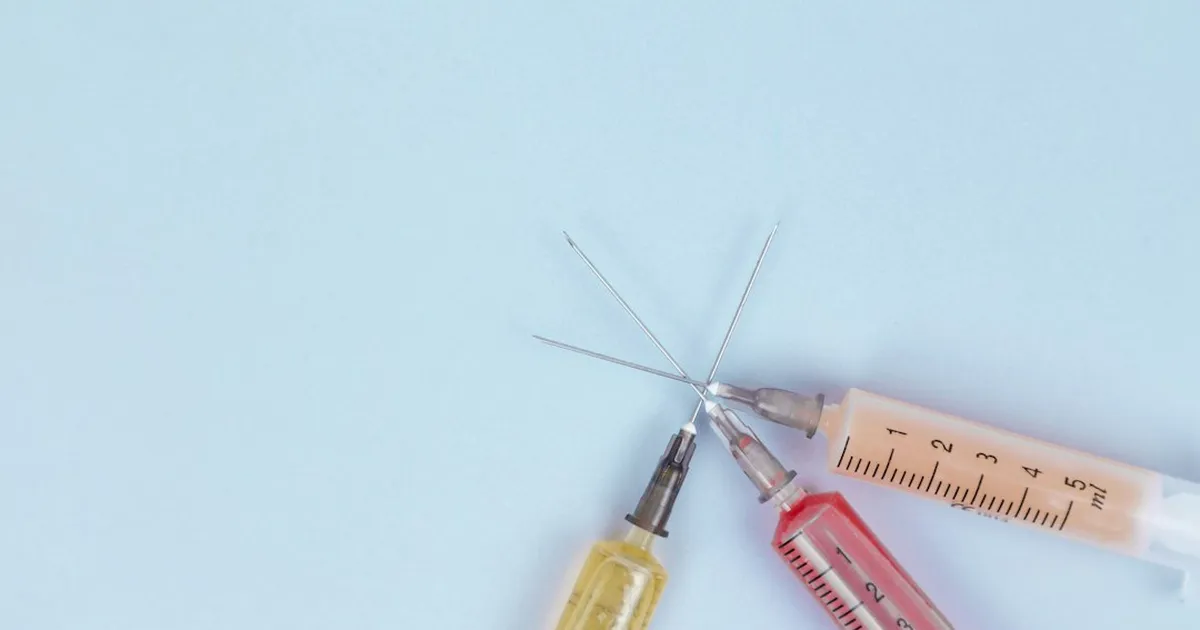
Researchers at New York University Abu Dhabi, together with Cleveland Clinic Abu Dhabi, have developed an injectable, battery- and lead-free device called SEED that controls nerve activity, according to statements from the involved institutions, without requiring surgery, batteries, or wires. The implant measures 1.4 millimeters in diameter and 9 millimeters in length and can be inserted through a standard 14-gauge needle without surgical intervention. The National describes the device as roughly the size of a seed, designed to provide relief to people with chronic neurological diseases. The underlying study was published on June 12, 2026, in the journal Science Advances.
How the Implant Works
SEED stands for "Stimulating Electrode for Electroceutical Delivery" and uses resonant inductive coupling at 65 kilohertz, according to the study. The stimulation waveform is generated and controlled externally, while the implant itself operates without active electronics. Inside are a receive coil for wireless energy harvesting, a tuning capacitor, and a micro-LED that signals activation. Two helically wound platinum-iridium electrodes form the interface with the nerve. After assembly, the circuit is enclosed in a printed polymer shell and sealed with medical epoxy resin. Under a scanning electron microscope, the study showed a uniform profile without visible cracks, voids, or delamination. Because the orientation of an injected device relative to the target nerve cannot be actively controlled after placement, researchers compared multiple electrode geometries through computer simulation and selected the spiral design for its field alignment, amplitude, and spatial confinement. The authors emphasize that these simulations were not intended to predict activation thresholds or efficacy in living organisms, but rather to demonstrate differences in field alignment and spatial confinement between electrode geometries. SEED draws power wirelessly through an external transmit coil and the miniaturized receive coil in the implant. Additionally, according to the study, it is clearly visible with ultrasound and computed tomography, supporting image-guided neuromodulation.

What Initial Tests Show
Percutaneously placed SEED implants triggered motor responses in rat sciatic nerves in time with the stimulation frequency and could be regulated in a graded manner, according to the study. Bench and ex vivo tests under conditions intended to simulate those in the body also demonstrated precise, programmable control of stimulation frequency, pulse width, and amplitude. A report on the project appeared on October 10, 2026, at ScienceDaily. The team successfully activated nerves in a living organism, which the source describes as an early step toward testing possible medical applications. The ScienceDaily article is based on material from New York University. Whether the implant can relieve chronic pain or improve movement disorders in humans had not yet been demonstrated at that time, according to ScienceDaily.

Senior author Khalil Ramadi, assistant professor of bioengineering at NYU Abu Dhabi and NYU Tandon, explained in a statement from the involved institutions that using an injectable rather than surgically implanted device makes these therapies simpler, safer, and more accessible while maintaining precise control of nerve activity. The expected therapeutic benefits, according to ScienceDaily, depend on further research confirming safety and efficacy. First author Mohamed Elsherif, research scientist at NYU Abu Dhabi, stated that the technology could bridge the gap between noninvasive therapies and conventional implants, enabling treatments that are both effective and easy to deliver.
Comparison: TENS Devices and Spinal Cord Stimulators
Existing neuromodulation approaches have their own limitations, as Pain News Network describes. TENS devices are noninvasive and easy to use but can cause uncomfortable tingling and also activate nerves and muscles that need no treatment. Spinal cord stimulators, by contrast, require invasive surgery near the spine as well as implanted wires and batteries that can fail, require replacement, and cause infections, according to Pain News Network. SEED, according to the study, operates without surgical implantation and can be placed with a standard needle and controlled via an external coil, without an implanted battery.