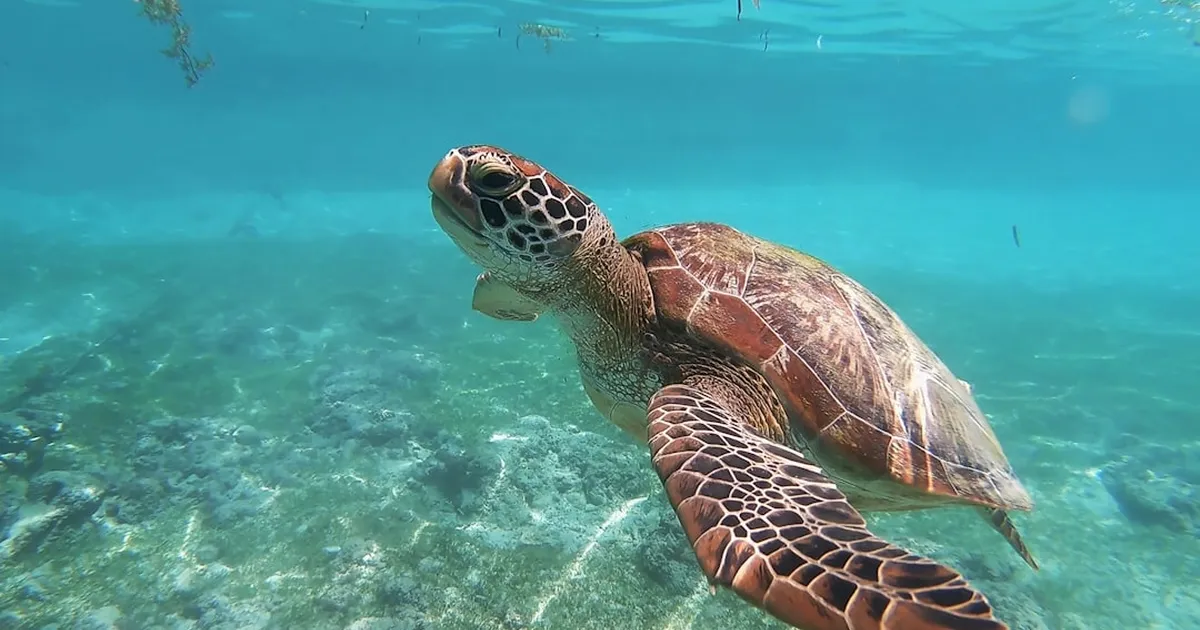
Fifty years of conservation have paid off. The International Union for Conservation of Nature (IUCN) downlisted the green sea turtle (Chelonia mydas) in October 2025 from "Endangered" to "Least Concern," the first time in Red List history that any sea turtle species has received this global upgrade.
From Mass Slaughter to Recovery
In the 1960s and 1970s, green sea turtles were killed by the millions: for their meat, eggs and oil. Coastal development destroyed nesting beaches; trawl nets killed animals as bycatch. The Convention on International Trade in Endangered Species (CITES) of 1975 halted international trade. In the United States, the Endangered Species Act of 1973 mandated binding protections for all nesting beaches. Similar laws followed in Australia, Costa Rica, Brazil and Indonesia, the world's most important nesting nations.
A key technical advance was the widespread adoption of Turtle Excluder Devices in trawl nets, which give captured turtles an escape hatch while fishing continues. Alongside this, community-based protection programs emerged: local communities guarding nesting beaches, moving eggs to hatcheries and securing hatchlings as they emerge.
28 Percent More, But Not Everywhere
The result: the global population has recovered by roughly 28 percent since the 1970s, according to the IUCN's reassessment. For a species whose females do not reach sexual maturity until age 25 to 35 and that retain decades-long memories of their own nesting beaches, this is a remarkably fast reversal.
The picture is not uniform. Some subpopulations, including those in Hawaii and parts of the eastern Pacific, remain classified as threatened under US federal law. The IUCN's "Least Concern" rating reflects the global average: where protective measures have been intensive, populations are stable or growing. Where they have been absent or illegal hunting continues, some subpopulations remain under pressure.
The main remaining threats are climate change (warmer sand produces more female hatchlings, skewing sex ratios over time), plastic pollution (turtles mistake plastic bags for jellyfish) and coastal light pollution (hatchlings navigate by moonlight and are disoriented by beachside lighting).
What Turtles, Whales and Lynxes Have in Common
Green sea turtles are not the first animal to show significant recovery after drastic decline. The humpback whale is the best-known example: after decades of commercial whaling, the global population fell below 10,000 animals. Following the International Whaling Commission's moratorium in 1986, the species has recovered to over 80,000 individuals, as documented by the IUCN. The Iberian lynx stood on the brink of extinction in 2002 with fewer than 100 individuals. Today the IUCN counts over 2,000 wild animals in Spain and Portugal, after targeted breeding and reintroduction programs.
The connecting element in all three cases is the same: consistent legal protection, international cooperation and the involvement of local communities. Without the fishermen who kept nesting beaches free, the rangers who protected eggs from poachers and the governments that enforced protective laws, the IUCN report would have looked different. IUCN conservation ecologist Neil Cox called the sea turtle recovery "perhaps the most compelling global evidence that conservation works when there is sufficient political will."
The Risks That Remain
The downlisting to "Least Concern" must not be read as a signal to ease protection. Climate change threatens nesting beaches through rising sea levels and warming sand. On some beaches in Florida and Australia, researchers already observe clutches from which over 90 percent of hatchlings are female, a long-term demographic risk to reproductive capacity.
On 9 October 2025, the IUCN officially announced the new classification, based on a December 2024 assessment. The next regular reassessment is planned for 2030. Between now and then, what matters is whether protective measures for nesting beaches can be maintained despite growing tourism development in key coastal regions. The success is real, and it is fragile.