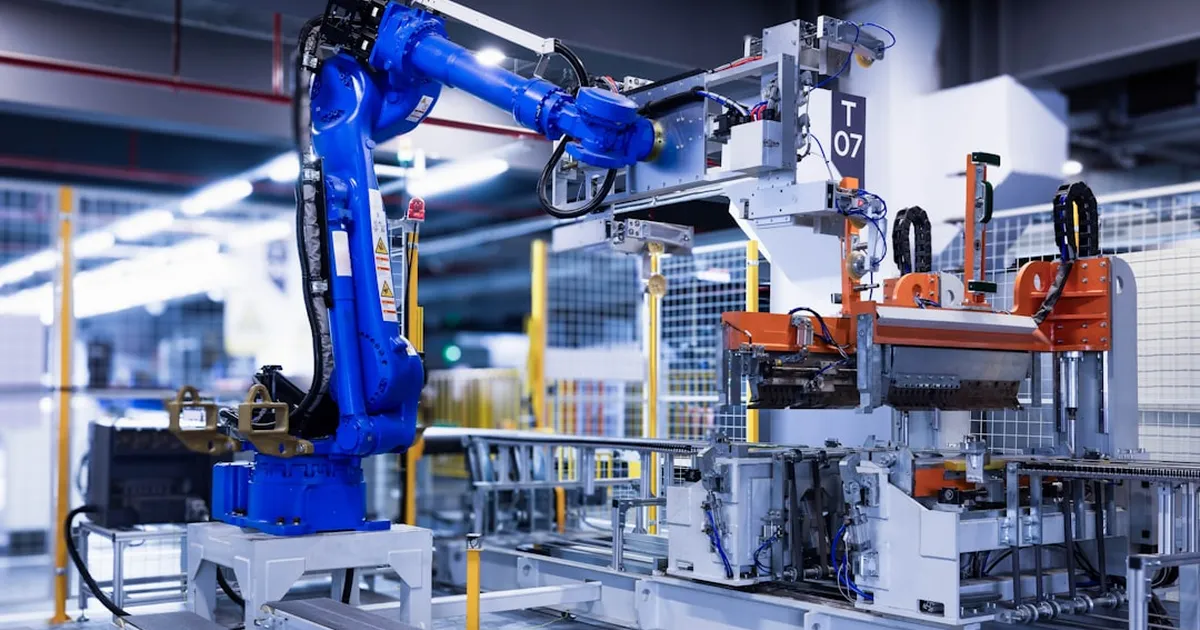
More than 20,000 robotic systems worldwide, a Munich startup and Google's strongest AI research lab: Agile Robots SE has signed a strategic partnership with Google DeepMind and is now integrating Google's Gemini Robotics Foundation Models into its industrial systems. For manufacturers in electronics, automotive and logistics that means the step from rigidly programmed to adaptively learning robot systems, and it puts a European manufacturer into the global network of AI-driven industrial robotics.
What the Partnership Delivers in Practice
The collaboration was formally announced on 24 March 2026. Agile Robots SE operates more than 20,000 industrial robot systems worldwide and specializes in manipulation-intensive systems: machines that can grasp, assemble and sort. The company is headquartered in Munich.
Until now, such systems had to be programmed for specific tasks. Any change in the manufacturing process required extensive reprogramming, which according to industry estimates averages twelve months. Google's Gemini Robotics Foundation Models are large AI models pre-trained on broad datasets. In robotics, they can enable a system to learn new tasks from a few demonstrations instead of thousands of hard-coded rules. That can cut the timeline down to weeks. For manufacturers that frequently retool their lines, that is a considerable cost advantage.
Agile Robots in the Global AI Robotics Race
Google DeepMind has closed multiple robotics partnerships since 2024, including with US startups Apptronik and Kepler Robotics. Agile Robots is the first significant European manufacturer in this network. The partnership's focus areas are electronics assembly, automotive manufacturing, logistics automation and data-centre operations. In all these fields, robotic systems have shared one weakness so far: they can only do what they were explicitly programmed for.
Classical industrial robot manufacturers such as ABB, KUKA and Fanuc still dominate the global market with systems that are precise and reliable but largely rigid in their programming. AI-driven systems like those of Agile Robots aim to open this market through adaptability. With access to Google's foundational research, Agile Robots now has a resource that even large manufacturers like ABB cannot easily replicate. Google says it has gathered several billion hours of robot operational data for Gemini Robotics.
The Feedback Loop
The economic foundation of the partnership follows a feedback loop. Robot installations generate operational data. That data improves the AI models. Better models enable broader deployment, which creates more installations, which in turn generate more data. In theory this builds a self-reinforcing competitive advantage. Google cites this mechanism explicitly as the strategic core of its robotics partnerships.
How quickly it works in practice depends on the quality of operational data. Robots in electronics assembly perform highly repetitive tasks that are especially suitable for AI training. Logistics robots, in contrast, constantly encounter new objects and situations, which makes their data more varied. Agile Robots has named both fields as priorities, aiming to show that foundation models work in variable environments, not only in controlled lab setups.
Europe in the Robotics Race
KUKA, another established German robotics maker, has been owned by Chinese conglomerate Midea since 2016, though its headquarters remain in Augsburg. The sale was an early signal that European robotics hardware without AI capability was under pressure in international competition. Agile Robots as an independent European company with a Google partnership stands for a different model: European hardware, American AI foundations, global customers.
The decisive question over the next two years is whether robotics based on foundation models can deliver the promised flexibility in real manufacturing environments. Lab demonstrations are not enough for industry. Agile Robots aims to show first deployments in partner factories by the end of 2026. That will be the first broad practical test of Gemini Robotics in industrial environments. If it fails, the partnership was a reputational win for both sides with no operational value. If it succeeds, it fundamentally changes the automation model in European industry.