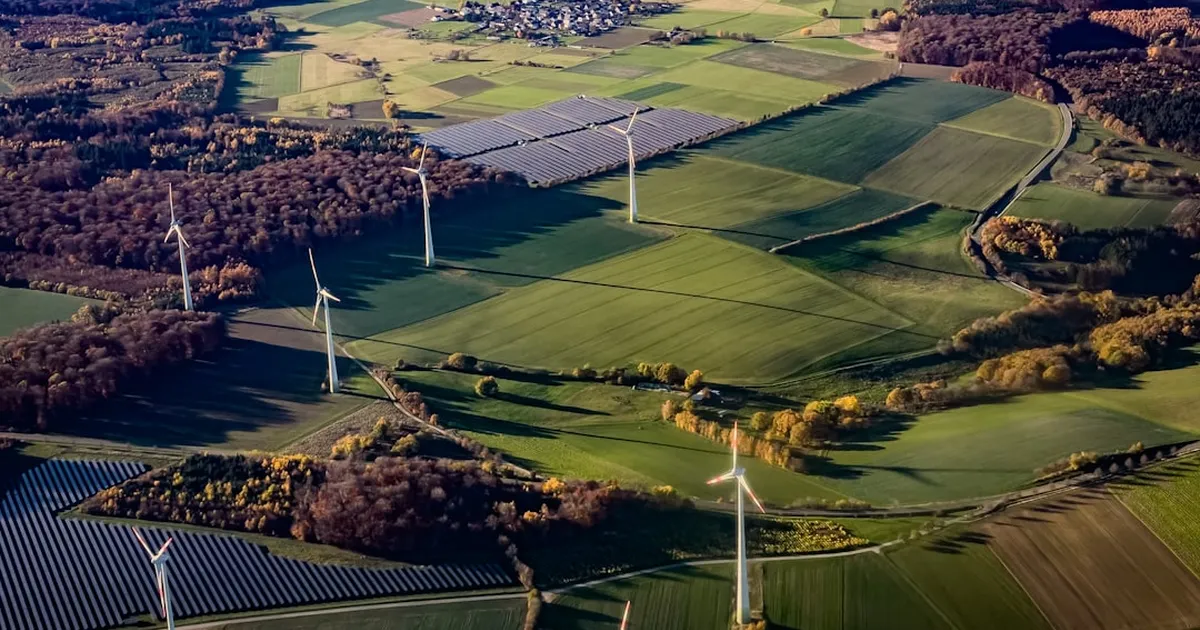
The world built more solar and wind capacity in 2025 than in any previous year: 814 gigawatts of new installations, 17 percent above the 696 gigawatts added in 2024. The London-based energy think tank Ember, which compiled the data, calculates that this single year's additions could replace gas imports worth roughly $138 billion annually. The world's cumulative solar and wind capacity crossed 4,000 gigawatts for the first time.
Solar Leads, Wind Surges
Photovoltaic installations accounted for 647 gigawatts, nearly four-fifths of total additions, up 11 percent from 2024. Wind grew far faster: at 167 gigawatts, it jumped 47 percent compared to 113 gigawatts the year before. Wind is now expanding three times as fast as solar, though from a lower base.
China dominated both categories. The country installed 378 gigawatts of solar in 2025, accounting for 58 percent of all global solar additions. In wind, Chinese dominance was even more pronounced: 119 gigawatts, or 72 percent of global installations. The European Union contributed an additional 60 terawatt-hours of solar generation. In June 2025, solar became the EU's single largest electricity source for the first time, surpassing gas, nuclear and coal.
$138 Billion Less for Gas
Ember's most striking figure is economic: the 814 gigawatts installed in 2025 alone can, at current gas prices, displace imports worth around $138 billion a year. That is more than one and a half times Qatar's entire annual liquefied natural gas export revenue.
The numbers reflect a structural shift in the global power system. Solar and wind covered 33.8 percent of global electricity generation in 2025, surpassing coal at 33.0 percent for the first time. Renewables absorbed all growth in global electricity demand, preventing any increase in gas-fired generation. The long rise of fossil fuel power output came to a halt.
On Track to Triple?
At the COP28 climate summit in 2023, around 130 countries committed to tripling global renewable capacity by 2030 relative to the 2022 baseline. Hitting that target would require annual additions of roughly 1,100 gigawatts. With 814 gigawatts in 2025, the world is about a quarter short, but the growth curve is steep enough to put the target within reach.
What often goes unnoticed: capacity additions alone are not enough. In many countries, permitting for power grid upgrades is moving far more slowly than the pace of new clean energy installations. Without sufficient transmission lines, newly installed capacity cannot reach the places where electricity is needed. Grid planners describe this as the single most critical structural bottleneck for the energy transition over the next several years.
What Comes Next
Ember publishes its Global Electricity Review annually; the next edition, with final data for 2026, is expected in early 2027. Interim signals will arrive in mid-year reports this autumn. For project developers worldwide, manufacturing data matters as much as deployment figures: continued expansion of Chinese production is keeping module prices on a downward trajectory, making each new solar installation cheaper than at any point three years ago.