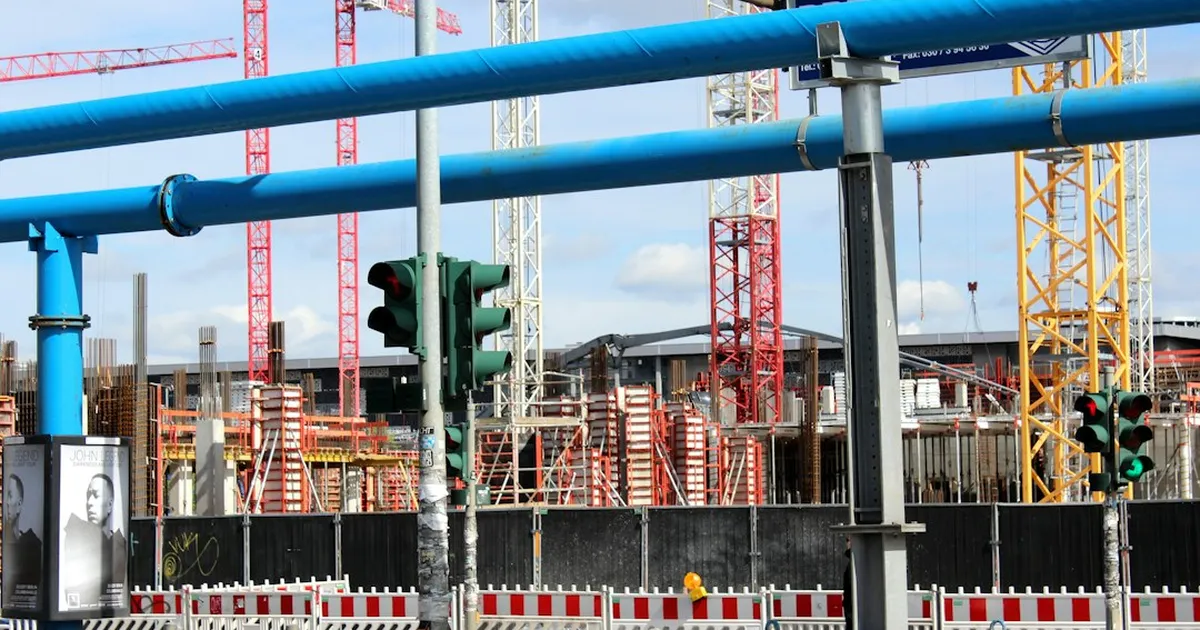
Federal Network Agency President Klaus Müller had announced that initial pipelines would be converted in the following year.
What the core network aims to achieve
The core network consists of 9,040 kilometers of pipelines, with approximately 60 percent converted from natural gas to hydrogen and 40 percent newly constructed, according to the Federal Network Agency. The investment costs were estimated at 18.9 billion euros at approval. The network connects hydrogen clusters nationwide, bundling regional projects in industrial and commercial parks, and includes connections to neighboring countries.

First pipelines operational
Since summer 2026, hydrogen has flowed through pipelines along the Baltic coast, from the Emsland to the Ruhr region, and in eastern Germany's chemical industrial area. The largest section is a 400-kilometer pipeline from Lubmin on the Baltic coast through Brandenburg to Bobbau in Saxony-Anhalt, which GASCADE filled with hydrogen in December 2025. Industry publication ingenieur.de confirmed in early October 2026 that more than 500 kilometers of the core network are operational, with around 140 additional kilometers expected in 2026. Planning data from FNB Gas suggests more than 1,000 additional kilometers for 2027, primarily through conversion of existing natural gas pipelines.
In comparison: a functioning supply chain
For the first time, hydrogen production, transport, and consumption are working together in real operation. An RWE electrolyzer facility in Lingen produces renewable hydrogen, which reaches the Marl chemical park through pipelines operated by Nowega, OGE, and Evonik subsidiary SYNEQT. Ingenieur.de confirms that since August, hydrogen from the Lingen electrolyzer flows approximately 120 kilometers to Marl, but notes that few other real-world examples exist for such an integrated supply chain. ONTRAS transports approximately 2,700 tons of green hydrogen annually from the Bad Lauchstädt energy park to TotalEnergies' Leuna refinery. By comparison, the 2024 approved plan foresaw 9,040 kilometers of pipelines by 2032. The second draft of the gas and hydrogen network development plan extends to 2037 and includes 9,241 kilometers of pipelines. An additional 291 kilometers represent new measures beyond the original core network, with total investment volume for network planning through 2037 reaching 24 billion euros.

Current bottlenecks
Reserved capacity commitments are non-binding. Since March 2026, companies can reserve transport capacity with payment commitments, with nearly 6 gigawatts reserved by August, though not yet confirmed as binding bookings. Refinery operator Bayernoil lacks a supplier capable of consistently delivering required volumes, a prerequisite for converting reservation into firm booking. Copper group Aurubis identifies missing network connections, competitive pricing, and especially reliable supply as preconditions. Network operators have hinted in consultations at possible supply disruptions in the initial years. RWE manager Christian Sander stated that the industry is off schedule and the 2030 target of 10 gigawatts of electrolyzer capacity is not achievable. Federal Network Agency advisor Rafael Gralla disputes concerns about stranded investment, noting that if demand fails to materialize, construction will not proceed, with the network's flexibility being precisely its advantage.
Conditions for success
FNB Gas CEO Barbara Fischer highlights the interdependence at stake: every new pipeline requires customers, every new customer requires sufficient hydrogen. Success depends on sustained growth in both supply and demand. She calls for reliable financing conditions along the entire value chain: continuation and expansion of climate protection contracts, financial backing for import corridors, and financing conditions for the core network that adequately reflect the ramp-up risks faced by network operators.