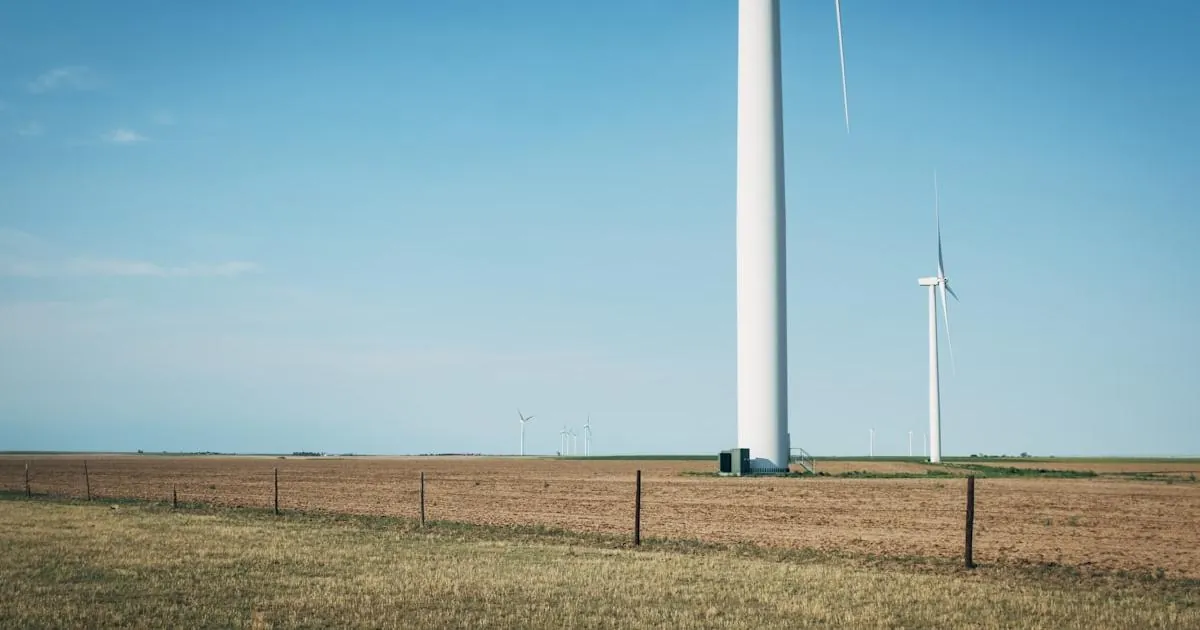
On Easter Monday, 7 April 2026, power producers in Germany had to pay for someone to take their electricity off their hands. The wholesale price fell briefly to minus 323.96 euros per megawatt-hour. That is not a technical glitch but a concrete outcome: wind generation in Germany rose 27 percent in the first quarter of 2026 compared to the same period a year earlier, and the grid reached limits on peak days.
What the Numbers Show
The Institute for Competition Economics and Regulation (IWR) in Munster analyzed the data at quarter-end. Onshore wind grew 23.1 percent to 33.1 billion kilowatt-hours. Offshore jumped substantially more: plus 44.8 percent to 9.7 billion kilowatt-hours. Together that is 42.8 billion kilowatt-hours of wind power in just three months. IWR director Dr Norbert Allnoch explained the effect: the strong rise in wind generation noticeably eased the electricity market; without this growth, Germany would have had to rely far more heavily on comparatively expensive gas-fired plants. The quarterly average wholesale price was 10.2 cents per kilowatt-hour, roughly nine percent below the previous year.
Easter Monday as an Extreme Event
What happened on 7 April is the peak of this trend. High wind output met weak holiday demand. The result: Germany exported power heavily into the European grid and yet prices still fell to record lows. France also saw negative prices, at minus 3.56 euros per megawatt-hour. The daily average in Germany was minus 16.34 euros per megawatt-hour, the lowest since July 2023.
Technically, negative prices mean supply exceeds demand to an extent that the grid must be stabilized. Large industrial consumers like aluminium smelters or chlor-alkali plants welcome such days. Households on dynamic tariffs can also benefit. These prices are not the rule, but they occur more often than just three years ago, pointing to a structural shift in the German power mix.
The Longer Trend
Fraunhofer ISE's full-year 2025 analysis, published in January 2026, was a first: wind and solar were the most important electricity sources in Germany. Renewables covered 55.9 percent of public net generation. Solar overtook lignite in the annual balance for the first time.
At EU level the shift is even more visible. Solar produced 275 terawatt-hours across the bloc in 2025, while lignite and hard coal together managed only 243 terawatt-hours. CO2 emissions from German electricity stood at 160 million tonnes in 2025, 58 percent lower than in 1990.
What Drives the Rise
The acceleration has two causes. First, new wind turbine additions exceeded 5,000 megawatts in 2025, more than in most previous years. Second, wind conditions in the first quarter of 2026 were above average. The second factor is variable. The first creates structural capacity that still works in weaker wind quarters.
The German Wind Energy Association has projected another record year of additions in 2026, citing faster permitting due to recent legal changes. Whether that projection holds depends substantially on grid expansion: new capacity in the north needs transmission corridors south, and line construction has lagged turbine additions for years.
What Comes Next
For the second quarter of 2026, IWR expects wind's share to drop, since spring and early summer are traditionally lower-wind periods. Solar generation will rise and is likely to generate further spells of negative prices over the summer.