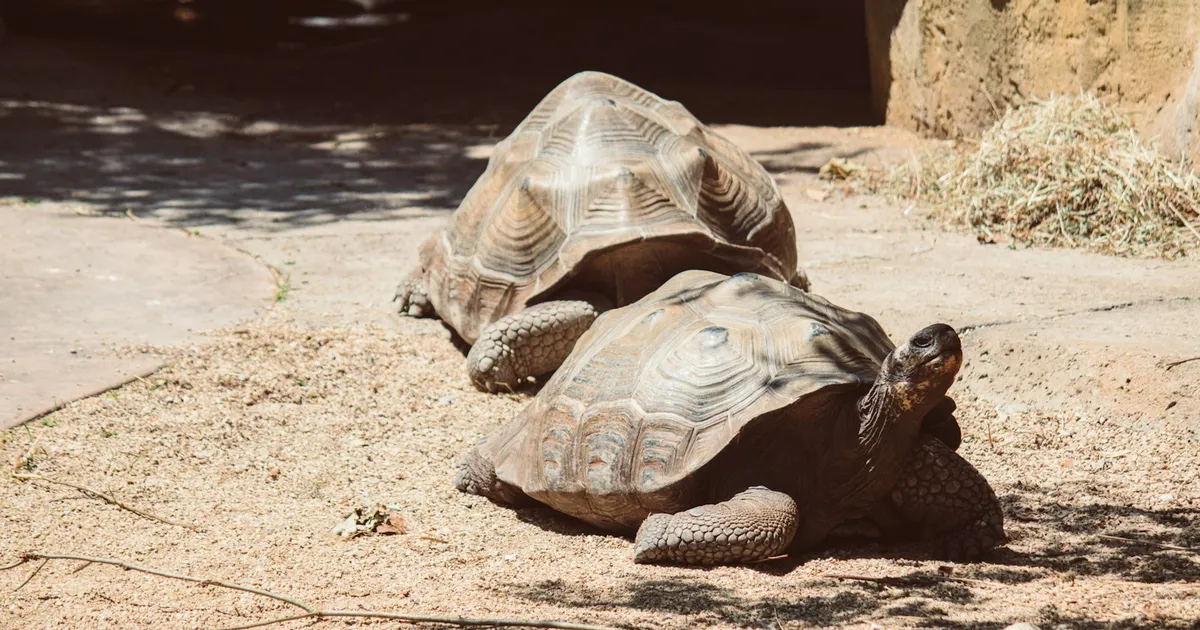
In February 2026, 158 giant tortoises set foot on Floreana for the first time in over 175 years. The island had lost its original tortoise population in the 19th century through whalers, fires and invasive predators. Their return marks the beginning of one of the most ambitious rewilding projects in conservation history.
An Island Without Its Keystone Species
Floreana was once home to an estimated 20,000 giant tortoises. From the early 19th century, whalers systematically took the animals aboard as provisions for long voyages. Giant tortoises can survive for months without water or food, making them ideal living stores for lengthy journeys. Settlers also cleared land with fire, while introduced rats and cats ate hatchlings. By around 1850, the species had vanished from Floreana.
What science discovered decades later came as a surprise: the Floreana lineage was not entirely lost. On the neighboring island of Isabela, animals lived that carried genetic material from the Floreana subspecies. Whalers had mixed tortoises from different islands aboard their ships, and some of these hybrid animals had survived. Genetic analyses by the Charles Darwin Foundation identified them. A breeding program worked to recover as much of the original genetic material as possible, selecting over generations for individuals with the highest proportion of Floreana ancestry.
A Project That Required Years of Preparation
The 158 tortoises released on Floreana on February 20, 2026, are between twelve and fourteen years old and stable enough to survive in the wild. The project was coordinated by Ecuador's Ministry of the Environment, with contributions from the Charles Darwin Foundation, Island Conservation, Ecuadorian conservation organization Fundación Jocotoco and the Galápagos Conservancy.
Before reintroduction, the island had to be made ready. A multi-year campaign eradicated rats and feral cats, the main threats to hatchlings, from Floreana. Without this step, reintroduction would have had little prospect of success: giant tortoises lay their eggs in sand, and newly hatched young would be easy prey for introduced predators.
Why Tortoises Shape an Entire Ecosystem
Giant tortoises are what ecologists call keystone species, whose influence on an ecosystem far exceeds their raw numbers. As they move through vegetation, they open trails that allow smaller animals to reach food. They eat fruit and excrete seeds intact, often far from the original plant. On islands where this function was absent for decades, plant communities and species composition changed profoundly.
The comparison with neighboring Española shows what is possible: its tortoise population fell to just twelve individuals in the 1960s. Today it numbers more than 2,000 again. Española's vegetation has visibly recovered. The difference on Floreana is that the original subspecies was completely extinct there. The tortoises now released carry Floreana genes but are biologically hybrids. The Charles Darwin Foundation regards the functional restoration of the ecosystem as the primary goal and considers genetic approximation sufficient.
More Than Tortoises: A Model for Island Restoration
The return of the tortoises is part of a larger restoration program. Floreana is set to receive twelve endemic species in total that have gone extinct or are under severe pressure there. The tortoise is the first and ecologically most important of them. Which species follow, and in what order, depends on how vegetation develops under the tortoises' influence over the coming years.
The project also carries methodological significance for international conservation. It shows that reintroduction is possible even after more than a century, provided genetic material is preserved and habitat is deliberately restored. Similar programs are running on islands in the Indian Ocean, in New Zealand and in the Canary Islands.
What Comes Next
A portion of the released tortoises carry GPS transmitters. Scientists from the Charles Darwin Foundation are monitoring how the animals spread across the island, how they interact with existing vegetation and whether they breed successfully. The first data are due for publication in late 2026. The next phase, reintroducing further endemic species to Floreana, is planned for 2027.