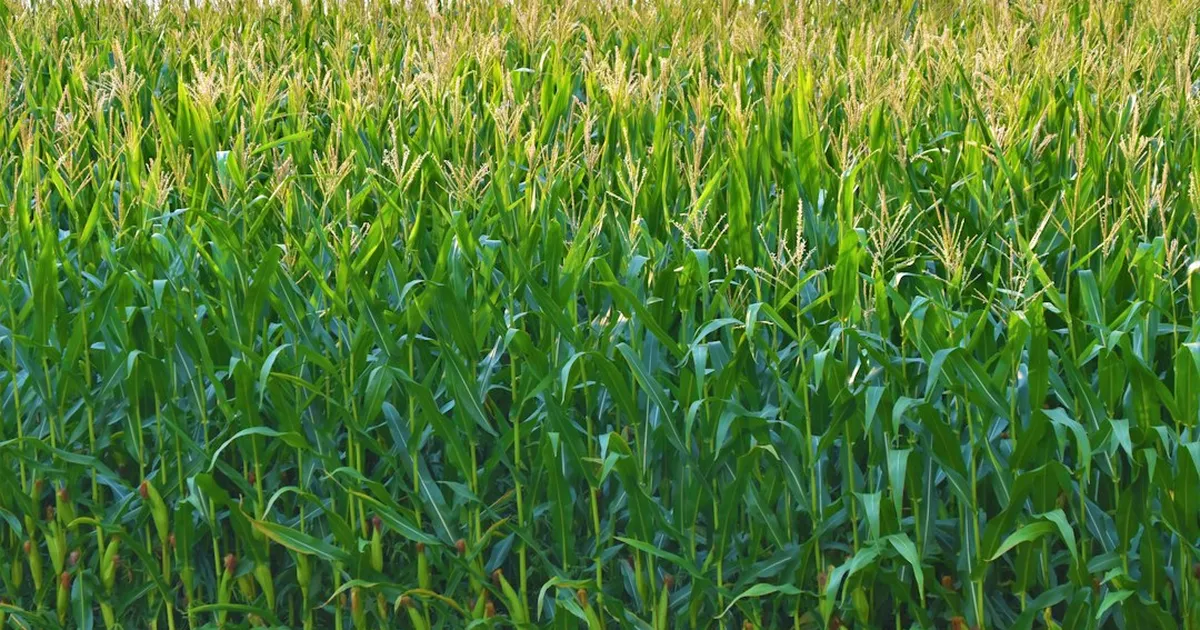
According to Fast Company, the area treated with Holganix products stood at 300,000 acres in 2023. In 2025, the treated area was about three times the size of Rhode Island, according to Fast Company. Over the same period, the company's revenue grew from $16 million to $70 million. At the center of its offering is Bio 800+, a microbial product that, according to Fertilizer Daily, contains more than 800 species of bacteria, fungi, protozoa and nematodes and is marketed as a “probiotic for the soil.”
What Holganix promises
The company says farms could use its programs to reduce fertilizer use by up to 40 percent while maintaining or increasing yields. Holganix chief strategy officer Tim Weaver told Farm Progress that farmers had stored up to ten times as much carbon in the soil as with other programs. At the same time, he said, fertilizer use had fallen by 40 percent and yields had increased by 10 percent. Company founder and CEO Barrett Ersek said the offering, which originally began as a pilot program, was now providing farmers with a steady income stream. According to a 2024 Holganix program fact sheet, participants must commit to applying Bio 800+ for three years and maintaining sustainable farming practices for ten years. In an interview with AgNavigator, Weaver described a product he called “Bio 800” as “penicillin for the soil” and said Holganix wanted to bring it to at least 2 billion acres worldwide.
What the trial data described as third-party research show
A 2021 corn trial in Iowa described as third-party research used a control area of 89.2 acres, according to Holganix's third-party trial data booklet. A dry yield of 211.0 Bu/Acre was measured there. The significantly smaller plots treated with Bio 800+ achieved between 212.4 and 217.6 Bu/Acre, depending on the reduction in fertilizer. In another trial in Iowa in 2020 reported by Holganix, yield differences in individual sub-trials varied considerably. They ranged from -29 to +43 Bu/Acre. Another strip trial took place in Wisconsin in 2021. The control achieved 178.7 Bu/A, while the strips treated with Holganix achieved 182.9 Bu/A. The standard deviations reported by the company were 22.57 and 20.83. These considerably exceed the measured difference of 4.2 Bu/A between the two groups.
What a study shows compared with the control
The study with seven replications on no-till land planted with the Channel 209-50 variety also found no statistically significant difference in grain moisture or net returns between Bio 800+ and an untreated control. The control achieved 225 Bu/Acre, while the area treated with Bio 800+ achieved 222 Bu/Acre. The P-value of 0.421 was well above the threshold for a difference considered statistically significant at the 90% confidence level. The product was applied in the seed furrow at planting at a rate of 0.5 gallons per acre, the same application rate Holganix specifies in its own application guidelines for row crops. The trial dates from 2019, with planting in April and harvest in October of that year. The trial was conducted with nitrogen fertilization of 150 pounds per acre in the fall and a further 54 pounds as a subsequent application.
What the debate over carbon markets shows
In forestry projects and projects to sequester carbon in agricultural soils, stored carbon can be released again through changes in tillage or through fires, storms and insect infestations, according to the GAO. Holganix requires participants to refrain from conventional tillage for ten years. Fertilizer Daily notes that carbon markets face criticism over inconsistent methods, weak verification standards and uncertainty about the permanence of carbon storage. Holganix says it addresses this criticism with direct soil measurements repeated annually and soil samples taken to a depth of 18 inches. The magazine also leaves open how quickly voluntary carbon markets will grow and whether environmental assets can become a reliable source of income for farms.
What participation requires of farmers
According to Farm Progress, farmers are to receive $70 per acre for their verified environmental goods. The report says farms with at least 500 acres that also commit to reducing their nitrogen use can participate for 2027. According to the report dated March 19, 2026, enrollment for 2026 was closed; enrollment for 2027 was scheduled to open later in the summer of 2026. Holganix also notes that its own return calculations are solely for planning purposes and do not represent guaranteed results.