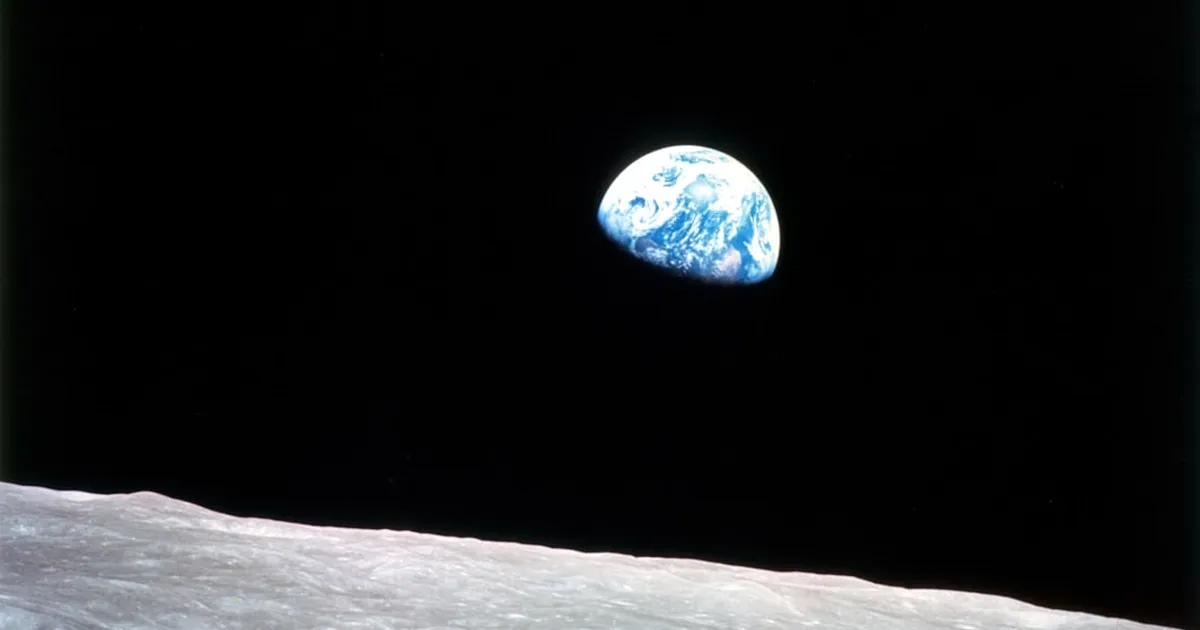
Just days after Artemis 2's crew landed in the Pacific, the European Space Agency has unveiled its most ambitious lunar programme since its founding. ESA chief Josef Aschbacher announced: before 2030 a European astronaut will fly to the Moon. The overarching goal by 2040: a permanent European research station on the Moon. Europe wants to move from being a supporting partner to an independently acting lunar player.
Europe's Quiet Contribution Now Asks for Autonomy
Without Europe, Artemis 2 would not have flown. The European Service Module (ESM), developed and manufactured by Airbus at its Bremen site, supplied the Orion capsule with propulsion, electricity, drinking water and breathable air across nine days in space. The ESM is not an accessory but one of the four indispensable system components of the Artemis architecture. In the global attention following the mission's return, this contribution remained largely invisible.
ESA astronaut Alexander Gerst described what has fundamentally changed: this is no longer about planting flags; Europe can be permanently present on the Moon and study it more thoroughly than ever before. ESA thus positions itself no longer as a NASA subcontractor but as an actor with its own strategic horizon.
The Argonaut Lander
The core of the European lunar strategy is the logistics lander Argonaut, whose unmanned first mission is planned for 2030. The lander will deliver equipment, laboratory instruments and supplies to the lunar surface for later crewed missions. It gives Europe an independent supply capacity that does not depend on private US providers like Intuitive Machines or Astrobotic.
On the personnel side, Aschbacher made a concrete priority public: a European astronaut should travel beyond low Earth orbit to the Moon before 2030. The current Artemis schedule makes Artemis 4, planned for late 2028 or 2029 at earliest, the target mission. The long-term goal goes further: before 2040 ESA wants to operate a permanent European research station on the lunar surface, not an occasionally visited facility but a continuously operated one.
Why Independence Is Strategically Necessary
There is more behind the course than the spirit of exploration. NASA's Artemis programme is chronically behind its original schedule. Artemis 3, the first Moon landing since 1972, was announced for 2025 and is now internally seen as realistic by the end of 2027 at the earliest. Budget debates in the US Congress and technical problems with the SLS rocket system delay mission after mission.
For ESA, this is a structural lesson. Acting only as a partner organization means depending on political decisions in Washington. The first Trump administration had already shifted NASA priorities. Europe's strategy of building its own launch and landing capacities is also a hedge against political disruption from Washington. Add to this the competition with China: the CNSA plans a crewed Moon landing by 2030 and is steadily expanding its lunar research programme. Europe faces the choice between being a junior partner of the US or acting as a third independent player in the competition for lunar presence.
Funding as the Decisive Hurdle
The ambitious plans cost money that has not yet been firmly committed. By the ESA ministerial council conference at the end of 2026, member states must make concrete budget commitments to keep the Argonaut schedule. Germany, as the largest ESA contributor, is the key actor. The DLR has signalled willingness, but formal decisions are still pending. If Argonaut funding fails, the entire timeline for permanent lunar ambitions slips.
The next concrete milestone is Artemis 3, which is meant to put humans back on the Moon for the first time since 1972, at earliest by the end of 2027 on NASA's current schedule. Europe will again contribute another ESM. Whether a European astronaut stands on the Moon after that depends on decisions being taken in the next twelve months in Houston as well as in Paris, Cologne and Berlin.