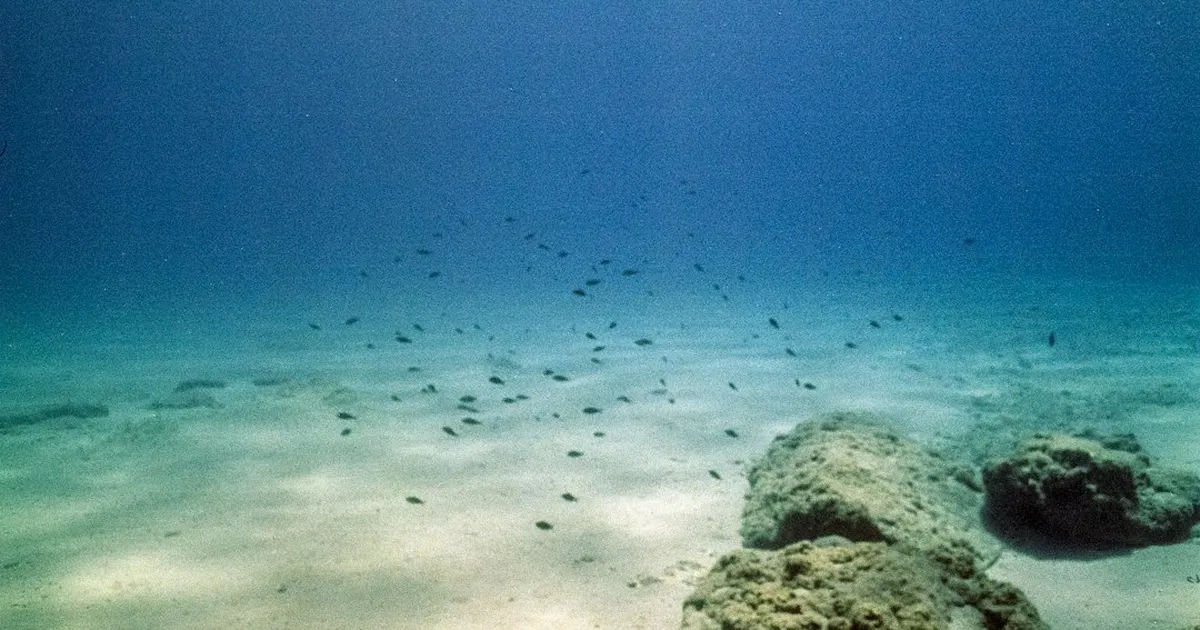
The document sets out eight specific recommendations for policymakers, managers and funders to reverse the decades-long decline of underwater meadows. According to ESRA, the recommendations respond to a dramatic decline in the meadows caused by poor water quality, coastal development, disease, invasive species and unsustainable use, while protection and funding have so far been insufficient.
Eight recommendations for the entire restoration process
According to ESRA, the recommendations also call for reducing human pressures, large-scale active planting and sustainable supply chains for donor material. They also call for closer coordination between European environmental policy and restoration practice, simplified permitting procedures and substantially more long-term funding, as well as community participation, ethical standards and open data sharing. According to the Zenodo publication of the consensus paper, restoration should complement protection, not replace it. The recommendations apply to all four European seagrass species, Posidonia oceanica, Cymodocea nodosa, Zostera marina and Zostera noltii, in the North Sea, Atlantic, Baltic Sea and Mediterranean.
Why seagrass matters for coastlines
Seagrass meadows support coastal fisheries, filter water and store substantial amounts of carbon, according to ESRA. According to the GEOMAR Helmholtz Centre for Ocean Research Kiel, they also provide habitat and nursery grounds for numerous species and help reduce wave energy along coastlines. GEOMAR says rising water temperatures, eutrophication, coastal construction and intensive use continue to increase pressure on these habitats. The CEAB research institute adds that climate change is also among the pressures that have dramatically reduced the extent of meadows in Europe.
Two workshops, one EU framework
According to ESRA, the recommendations were developed after the second European Seagrass Restoration Workshop in April 2025 and finalized at a working workshop hosted by the University of Groningen on Schiermonnikoog in February 2026. They are intended to support implementation of the EU Nature Restoration Regulation and also apply to non-member states, according to ESRA. According to a European Commission working document dated February 12, 2026, the regulation aims to initiate restoration measures on at least 20 percent of the EU's land and sea areas by 2030; the target is not specifically directed at seagrass meadows. According to ESRA, the document is also aligned with the UN Decade on Ecosystem Restoration and the Kunming-Montreal Global Biodiversity Framework. Marine biologist Esther Thomsen of GEOMAR, who was involved in the project, said the science, tools and drive to reverse the trend were now in place.
Studies on seagrass and restoration
A study published on July 26, 2019, in Nature Communications analyzed data on European seagrass meadows from 1869 to 2016 and found that a third of their area had been lost to disease, poor water quality and coastal development, with losses peaking in the 1970s and 1980s. Losses then slowed for most species, and fast-growing species recovered in some places. The net rate of change in area reversed in the 2000s; the authors concluded that decline was no longer a general condition and that trends could be reversed. For kelp forests and seagrass, median survival was 50 to 57 percent, while tropical coral reefs and habitat-forming species on hard substrates reached 66 to 70 percent; the authors also warn that a simple survival threshold can obscure differences between species. Before the 2019 study, it was unclear how seagrass extent and density had changed overall at the continental level.
A study on carbon finance published on May 3, 2025, modeled which management approach delivers the greatest carbon benefits using data from a Zostera marina meadow at Virginia LTER: transplanting produced greater carbon gains than seeding because transplanted meadows spread faster. Scenarios involving sediment addition or protection against sediment loss had the greatest effect: both approaches delivered about 13 to 33 times as much carbon benefit over 10 years as seeding or transplanting without moving sediment. Estimated revenue from voluntary carbon credits in the model ranged from $198 to $15,337 per hectare depending on project size, approach and carbon price, while implementation and monitoring costs were not included. According to the authors, the model is based primarily on data from a single site, but can be reparameterized using input data from similar meadows. By the time the study was published in 2025, no seagrass projects had received credits under international voluntary carbon standards, according to the authors; whether and how carbon finance can support restoration requires careful, case-by-case assessment.
Maike Paul of the Ludwig Franzius Institute at Leibniz University Hannover said success required political will, sustained investment and governance frameworks that enabled restoration rather than hindering it; the recommendations provided an evidence-based roadmap for this. According to the Air Pollution & Climate Secretariat, these investments are also intended to help strengthen the resilience of European coastlines in a warmer and increasingly acidic ocean. According to GEOMAR, researchers from the institute and the SeaStore collaborative project contributed to the German contribution, while Thorsten Reusch of GEOMAR supported the process as a scientific reviewer.