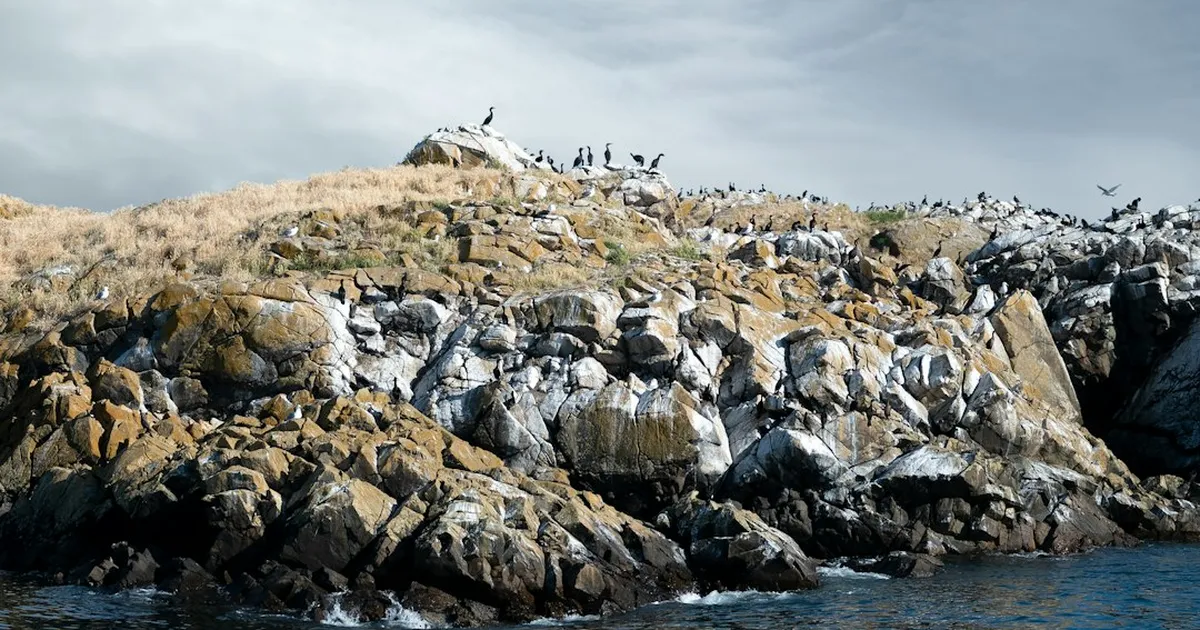
The Peruvian diving petrel is a small seabird that nests in burrows in the ground and is called potoyunco in Peru and yunco in Chile. The population figure comes from a count in November 2024 on the island, Cooperativa Ciencia reported, citing a new study. In 2013, the year the rabbits were removed, there had been 11,934 pairs. According to Island Conservation, the underlying study was led by marine biologist Marián Méndez of the Universidad Católica del Norte and was published in the journal Marine Ornithology.
Rabbits gone, nesting burrows back
The removal of invasive European rabbits from Choros in 2013 was led by the U.S. organization Island Conservation, according to Cooperativa Ciencia. For decades, the rabbits had occupied a substantial part of the breeding colony, trampled and enlarged nesting burrows and damaged nesting habitat, according to study co-author Nicolás Luna. He said these areas had recovered since the eradication and the colony's area had almost doubled. According to Luna, more available nesting burrows had allowed more birds to reproduce, which he considers the main reason for the growth. Island Conservation said population growth had accelerated significantly after the rabbits were removed. According to Discover Wildlife, the nesting area grew from 3.2 hectares in 2010 to more than 10 hectares in 2024. The project was funded by the David and Lucile Packard Foundation, Bell Laboratories, the Mohamed bin Zayed Species Conservation Fund, Patagonia and CONAF.

In comparison
A study published in Bird Conservation International in 2019 had already described a similar trend for the years 1980 to 2014: the estimated number of breeding pairs on Choros had risen from 300 in 1980 to 10,789 in 2014, peaking at 11,934 pairs in 2013. The increase between 2010 and 2014 amounted to 43 percent, according to the authors, with a wide confidence interval of 2.5 to 93 percent. At that time, Choros already accounted for around 95 percent of the species' entire Chilean breeding population, which was estimated at about 12,500 pairs in total, around a third of the estimated 36,450 pairs in Peru. Chañaral Island shows the other side: according to the American Bird Conservancy, it once hosted the world's largest breeding population of the species, estimated at more than 100,000 pairs, before rabbits drove the birds away and Choros remained the only colony in the reserve. Cristofari and co-authors conclude from their genetic study that immigration does not play a substantial role in recovery, which they say underscores the positive effect of local conservation measures but also casts doubt on assumed positive population trends across the species' entire range.
What could threaten the trend
According to Cooperativa Ciencia, the authors of the new study warn that conservation efforts must continue: the species still breeds in only a few places and remains vulnerable to several human-made threats. According to Cooperativa Ciencia, the new study identifies a specific danger: proposed mining and port projects directly beside the island, especially the Dominga project by the company Andes Iron, could weaken the recovery and undo decades of progress. The sources reviewed contain no statement from Andes Iron on this assessment.