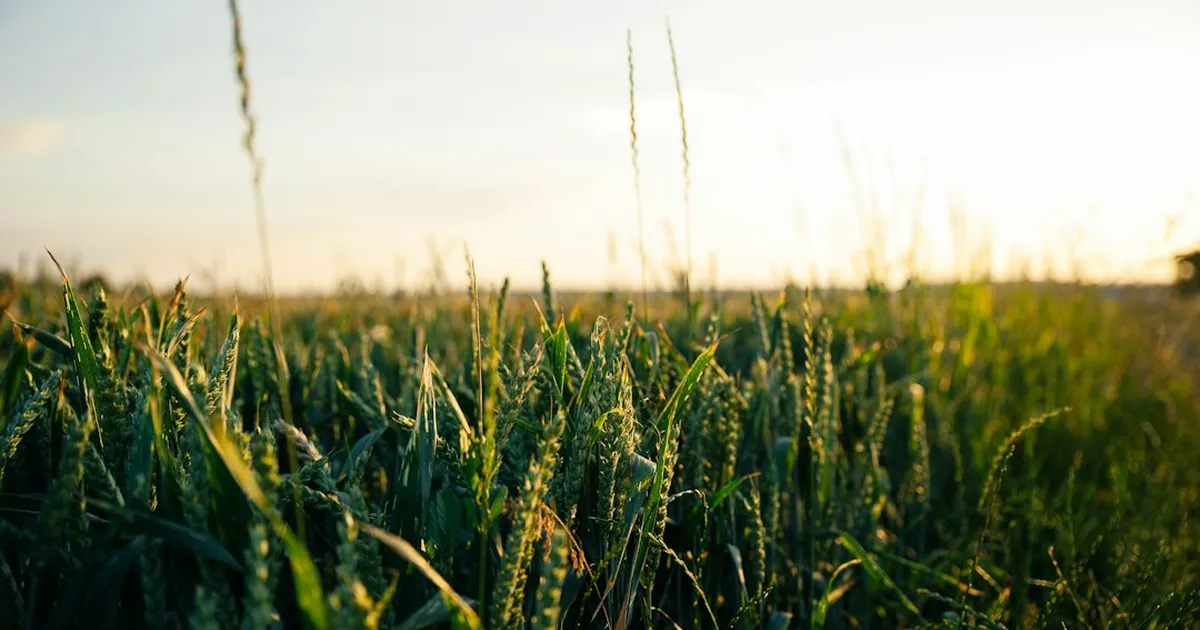
Researchers at Rothamsted Research have developed CRISPR-edited wheat that substantially reduces free asparagine in grain, cutting levels by 59 percent in standard edits and up to 93 percent in double-edited varieties. Field trials spanning two years confirmed stable yields despite the genetic changes. When baked, asparagine converts to acrylamid, a toxic and probable carcinogen. Bread and biscuits made from the edited wheat contained significantly less acrylamid; some bread samples fell below detection limits.
The field trial site is located in Harpenden, Hertfordshire. The project represents one of the most advanced applications of precision gene editing in staple crops aimed at improving food safety.
Why Asparagine in Bread Matters
Project leader Professor Nigel Halford explained that acrylamid causes cancer in rodents and is classified as a probable carcinogen for humans. The compound develops in bread and increases sharply with toasting. It also appears in other wheat products and in fried, baked, roasted, or toasted foods such as chips, french fries, and coffee. The wheat was edited using CRISPR-Cas9 to introduce point mutations in one or both asparagine synthetase genes TaASN1 and TaASN2.

Outperforming Classical Mutation Breeding
Alongside edited plants, the trial included wheat lines created with classical TILLING, a technique using chemicals to trigger random genetic mutations. Classically mutated wheat achieved a 50 percent reduction in free asparagine but lost nearly 25 percent of its yield, likely from unintended mutations elsewhere in the genome. Rothamsted researchers estimate that conventional breeding would struggle to achieve comparable results. Partners include the Karlsruhe Institute of Technology, Leibniz Institute for Food Systems Biology, Technical University of Munich, University of Reading, and Curtis Analytics Limited. Halford noted that low-acrylamid wheat could help food companies meet evolving safety standards without sacrificing product quality or incurring high production costs. It also offers a way to reduce acrylamid intake for consumers through diet.
Other CRISPR Crop Projects Under Way
A study on salt-tolerant rice modified the OsRR22 gene using CRISPR/Cas9. In greenhouse tests at the seedling stage, mutant lines showed significantly higher salt tolerance than wild-type plants. In a trial of ten plants per line, the shoot fresh weight of wild-type plants under salt stress dropped 50.3 percent, while edited mutants declined only 10.1 and 2.1 percent respectively. Under normal field conditions, however, the same study found no significant differences between edited and wild-type plants in yield and other agronomic traits. Another study on root growth and yield found that near-isogenic rice lines with a non-functional qSOR1 allele and roots at the soil surface achieved higher yields on saline fields than parent varieties lacking these roots. CRISPR was used to explore how the DRL2 gene controls root growth angle.
What Regulators Are Scrutinizing
A June 2026 statement from the advocacy group Beyond GM noted that the UK High Court found the responsible minister was given incorrect legal advice and made decisions that were irrational and unlawful. According to Beyond GM, the government had not fully assessed the consequences of deregulating gene-edited organisms before removing safeguards for transparency, traceability, labeling, and regulatory oversight. Director Pat Thomas stated the case centered on whether the government had thoroughly examined the impact of missing labeling and traceability for precision-bred organisms and presented Parliament and the public with an accurate picture of options. The government had prioritized relief for biotech developers before fully examining consequences for others, Thomas argued. Under pressure from the case, the government conceded that precision-bred organism seed should be labeled, but resisted labeling at all stages through the supermarket shelf. The 2026 regulations applied to England; Scotland and Wales had rejected the underlying law, and Northern Ireland followed EU rules. A new EU gene-editing regulation was under consideration at the time, with implementation expected in 2028.
What It Takes to Reach Store Shelves
Rothamsted's original trial announcement outlined a project timeline extending up to five years through the end of 2026, with annual planting in September or October and harvest the following year. The first year was funded; the institute sought additional support for subsequent years. As of June 2026, the promised labeling requirement for precision-bred organism seed had not yet been legally implemented.