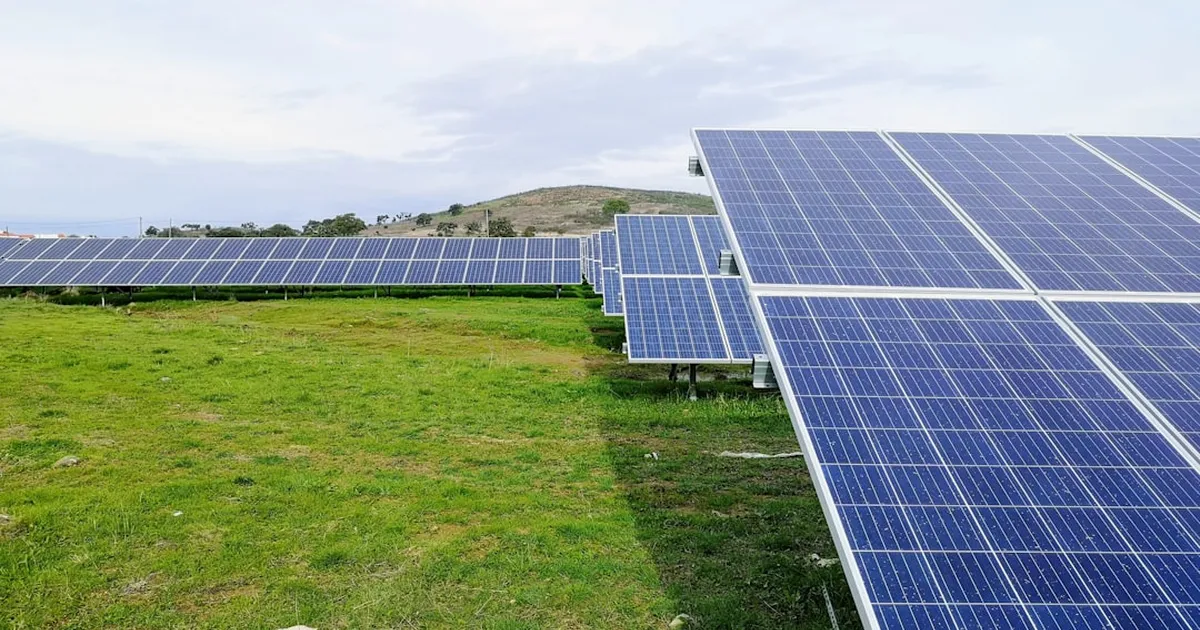
68 gigawatts of solar modules in a single month: Chinese solar exports broke all previous records in March 2026. That is equivalent to Spain's entire installed solar capacity, shipped in one month. Ember's analysis of Chinese customs data shows that exports exactly doubled compared to February and were 49 percent above the previous record set in August 2025. What makes these numbers particularly notable is that the boom is not mainly reaching wealthy industrialised nations but countries that had until recently barely participated in the clean energy transition.
Africa's Leap into a New Energy Era
The most striking shift is happening in Africa. According to the Ember report, African solar imports from China rose 176 percent in March compared to the previous month, reaching 10 gigawatts, also a new record. Three countries crossed the one-gigawatt threshold in a single month for the first time in their history: Nigeria with a 519 percent increase, Ethiopia with 391 percent and Kenya with 207 percent. Across the continent, 50 countries set new all-time records for solar imports; another 60 reached six-month highs.
Asia also recorded a doubling to 39 gigawatts. India grew by 141 percent, Malaysia by 384 percent and Laos by 108 percent. The figures point to a broad acceleration in the energy transition, driven by two factors that converged in March.
Two Drivers, One Result
The first driver is geopolitical: the conflict between the United States, Israel and Iran pushed energy prices higher worldwide, making dependence on fossil fuel imports noticeably more expensive for many countries. Affordable solar panels from China offer a way to reduce that dependence.
The second driver was a calendar date: on 1 April 2026 China removed certain export tax rebates for solar products, raising the price of panels by around nine percent. Importers worldwide stockpiled in March, a classic frontloading effect. Ember and other analysts note, however, that a significant portion of the demand increase reflected actual infrastructure buildout, not just hoarding.
For comparison: in 2010 China exported around five gigawatts of solar modules per year in total. Sixteen years later, that is 68 gigawatts in a single month. Prices fell over this period from around 2.50 dollars per watt to under 0.12 dollars, a factor of more than 20.
What the Numbers Mean for Climate Targets
Not all of these 68 gigawatts will be connected to grids immediately. Between delivery and commissioning, months or sometimes years pass in many countries due to missing grid infrastructure, financing and permits. The International Energy Agency flagged exactly this bottleneck in its 2025 solar report: solar module manufacturing has long outpaced global grid infrastructure.
The March exports nonetheless signal something structural. Countries that were barely part of the global energy transition are now buying in. Nigeria, with 220 million inhabitants the most populous country in Africa, has suffered from chronic electricity shortages for decades. Millions of households and businesses run diesel generators. Affordable solar panels can break that cycle on a small scale even without a stable grid, through decentralised installations.
A Pace That Could Continue to Accelerate
Whether the March record proves a spike or the start of a new baseline depends on how quickly recipient countries can actually install the modules. Ember analyst Jenny Chase expects global solar capacity to exceed the 10-terawatt threshold by 2030, more than double the current level of around four terawatts. Reaching that path would require installation rates to keep rising over the next four years.
The March exports alone amount to roughly one-tenth of the previous year's total new installations worldwide. If even half of them come online within twelve months, they would meaningfully lift solar capacity growth in 2026. That is not a guarantee, but a pace that would have seemed impossible just two years ago.