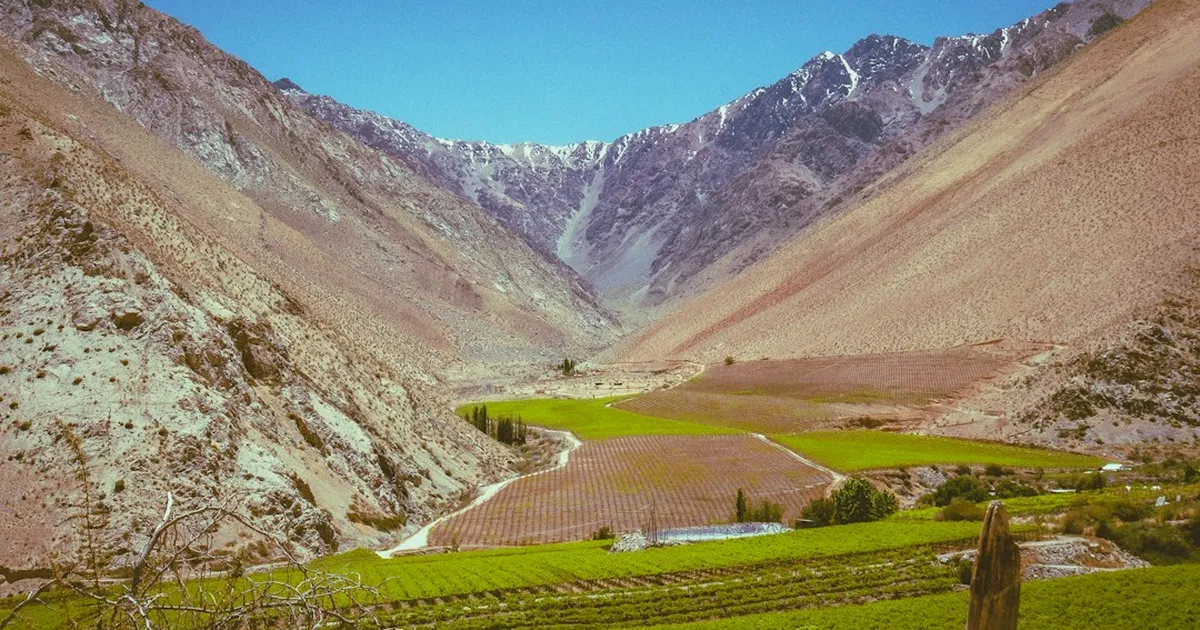
The purchase of Fundo Puchegüín covers an area of 133,000 hectares in northern Chilean Patagonia. According to La Tercera, businessman Roberto Hagemann and foundation representative José Claro completed the sale on December 1 for US$63 million. According to La Tercera, the alliance raised around $78 million to purchase and manage the area. Of that, $63 million went to Hagemann and Muñoz, while the remaining $15 million is intended to form a fund whose interest will finance park management in the future, according to La Tercera.
The conflict goes back many years: in 2008, Hagemann bought the water rights to the Río Manso near the border with Argentina. In 2011, together with former business partners of Sebastián Piñera, he formally announced his plan for a $400 million run-of-river hydroelectric plant. Opponents of the project founded Fundación Puelo Patagonia, led by Claro, because they believed the region's biodiversity and tourism development were at risk. According to Mediterráneo S.A.'s account of the grounds, reproduced in the Energy Ministry's decree, the Third Environmental Court revoked the environmental permit on November 17, 2016. The Supreme Court upheld the decision on December 29, 2017, thereby ending the power plant project, according to La Tercera. Hagemann and co-owner Muñoz put the property up for sale in 2018, then paused because of social unrest and the pandemic. In December 2021, Hagemann listed it with Christie's for $150 million. According to La Tercera, the seller's lawyer, Aninat, said almost all interested parties had ties to conservation and Hagemann had decided to sell because of the institution's credibility.
How the purchase of the area was financed
Puelo Patagonia and the Freyja Foundation sought allies; the Swiss Wyss Foundation provided the first $15 million after Puelo Patagonia submitted a 140-page document containing biological, social and economic data. At Wyss's suggestion, The Nature Conservancy and the Patagonia brand, through its Holdfast Collective foundation, also joined. In January 2024, the government designated the Cochamó valley a “nature sanctuary”; in April 2024, the alliance launched its fundraising campaign under the name Conserva Puchegüín. According to La Tercera, around 1,500 donors from 21 countries contributed. According to The Nature Conservancy, the Conserva Puchegüín alliance established the Chilean foundation of the same name with an independent board in August 2025, and it was considered the landowner at the time of reporting in December 2025. In March 2026, the Wyss Foundation publicly highlighted its $15 million contribution to saving the area.
What the purchase price and figures leave unresolved
The purchase price of $63 million is significantly below the previous asking price of $150 million. Figures for the size of the emerging conservation corridor differ depending on their scope: La Tercera gives 1.7 million hectares for the corridor between Puyehue and Pumalín, with Argentina's Nahuel-Huapi added to it; Diario UCHILE gives a total of 1.6 million hectares of protected areas in Chile and Argentina. The Nature Conservancy describes a network of four million acres in Chile and Argentina, while the Wyss Foundation gives more than four million acres. La Tercera gives April 2024 as the campaign's launch, while The Nature Conservancy and Gripped magazine give August 2025 as the month in which the eventual landowner was established. In March 2026, the Wyss Foundation described the national park, which is intended to cover at least 80 percent of the area, as a project for the coming years. For the remaining up to 20 percent of the area, the plans envisage sustainable uses such as agriculture and low-impact tourism. According to an Energy Ministry decree, the company Mediterráneo S.A. had requested a deadline extension for its project in November 2023. Mediterráneo cited outstanding procedural steps at the environmental authority SEA and the same court decisions from 2016 and 2017 that had also ended the original project.
According to BioBioChile, Andrés Diez, executive director of Puelo Patagonia, announced in December 2025 a study of traditional activities and inhabited areas over the following two years, intended to establish which part will be strictly protected and which will be used for ecotourism. He gives 2032 as the target for advancing the project far enough for it to be handed over to the state as a functioning park for incorporation into the national park network. He considers a public-private alliance essential to this: Puelo Patagonia is already working closely with the municipality of Cochamó and has held talks with the regional government of Los Lagos. Diez himself describes cooperation between such different organisations as a central challenge, but also an opportunity, and stresses the importance of local knowledge.