
Among the 194 children with relapsed or treatment-resistant B-cell leukemia in the phase II study of CD19 and CD22 CAR-T cells published in November 2022, all complete remissions were free of measurable residual disease. Estimated event-free survival in this group at 12 months was 73.5 percent. A follow-up by Zhou and colleagues from April 2026 examined 12 patients with Philadelphia chromosome-positive ALL.
How the disease develops and what CAR-T cells are intended to do
According to the National Cancer Institute (NCI), childhood acute lymphoblastic leukemia develops from B or T lymphoblasts in the bone marrow and thymus. According to the NCI, about 98 percent of children with ALL achieve remission. Among newly diagnosed patients aged 1 to 18 treated with current treatment regimens, more than 90 percent are alive after five years, according to the NCI. In CAR-T cell therapy, immune cells are modified in the laboratory to recognize and attack specific proteins on cancer cells, according to St. Jude Children's Research Hospital. The combination of CD19- and CD22-directed CAR-T cells was studied in patients with B-cell acute lymphoblastic leukemia and refractory disease, high-risk hematologic relapse or isolated extramedullary relapse. For a relapse outside the bone marrow, known as an extramedullary relapse, radiation is the usual treatment, which, according to St. Jude, can have late effects such as secondary brain tumors following relapses in the central nervous system or infertility following testicular relapses. According to St. Jude, Pui said the combination could spare many patients with such a relapse from damaging radiation. He recommended that doctors first attempt treatment with CAR-T cells.
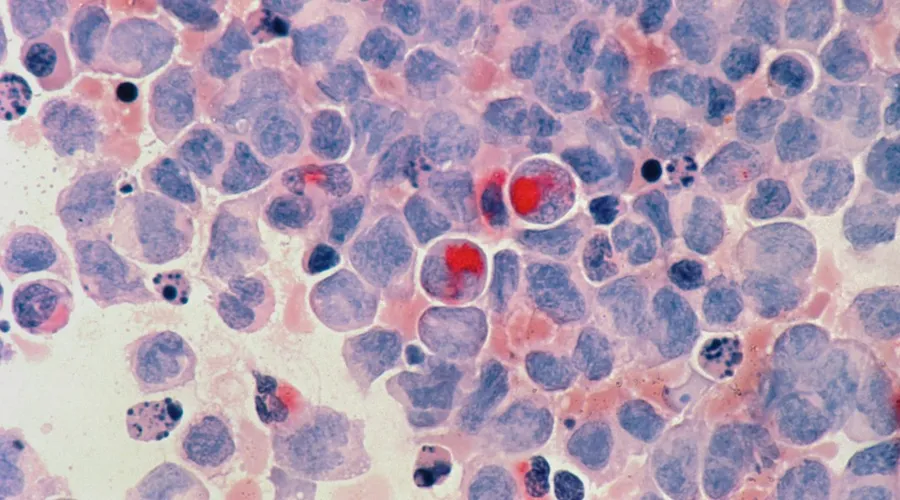
192 of 194 children achieve remission (2022)
The study had a single-arm, multicenter design and enrolled 225 evaluable patients up to 20 years of age. The researchers first determined the recommended dose in a preliminary safety phase; an interim analysis of the first 30 treated patients assessed the approach as safe and effective before more patients were enrolled. In the group of 194 patients, leukemia returned in 43 patients. In most of these, at least one target protein was detectable: 24 relapses were CD19-positive and CD22-positive, and 16 were CD19-negative and CD22-positive. Patients who also underwent consolidative transplantation had 85.0 percent event-free survival at 12 months (78 patients). Without transplantation, the figure was 69.2 percent (116 patients); the study considers the difference statistically significant without establishing a causal benefit. For isolated testicular relapse, 12-month event-free survival was 95.0 percent (20 patients); for isolated relapse in the central nervous system, the proportion was 68.6 percent, with a considerably wider confidence interval (10 patients).
According to a 2022 report by Targeted Oncology, cytokine release syndrome occurred in 198 of the treated children (88.0 percent). Neurotoxicity also occurred in 47 children (20.9 percent); the report cites a total of three deaths in connection with the two adverse effects. The same report puts the cumulative relapse risk in the group of 194 patients at 22.2 percent after a median of 11 months. A report by the Alliance for Cancer Gene Therapy cites a relapse proportion of 25 percent within one year. The study itself applies the 99 percent figure to the 194 patients with refractory disease or hematologic relapse, not to the entire study group. The two relapse figures are close to each other but refer to different measures and populations.
The children in the follow-up by Zhou and colleagues were selected retrospectively. After a median follow-up of 54.93 months, estimated overall survival at four years was 91.7 percent. Estimated relapse-free survival at four years was 66.7 percent. The authors describe these results as preliminary and hypothesis-generating. The subgroup was not prespecified in the original study protocol; the results would also need to be confirmed in larger controlled studies.
What limits the successes so far
The main questions that remain are therefore whether the preliminary long-term results for pediatric Ph-positive ALL can be confirmed in larger controlled studies and whether antigen-negative relapses can be prevented in the future, as these cannot yet be fully ruled out, according to the review in Blood Advances. For children with relapsed or refractory Philadelphia chromosome-positive ALL, this means that sustained remissions are possible, according to the available data.