Governor Gavin Newsom announced the launch on October 16, 2025: CalRx insulin glargine pens, a long-acting insulin analogue for treating diabetes, were to become available in California from January 1, 2026, interchangeable with the reference product Lantus, through an agreement with Biocon Biologics negotiated by Civica Rx. CivicaScript, Civica's unit specializing in outpatient medications, confirmed on January 5, 2026, that the product was available: The company markets its insulin glargine-yfgn nationwide in the United States, and it is intended to carry the state's brand name in California pharmacies because of the partnership with the CalRx program.
In March 2023, Newsom announced a contract with Civica: A vial was to become available for no more than $30, and a pack of five pens for no more than $55. At the time, Civica was working with the California Health and Human Services Agency to find a production facility within California, for which $50 million had originally been earmarked; these funds were cut in the 2025/26 fiscal year because of budget cuts, according to CalRx. Generic versions are usually cheaper than patent-protected brand-name drugs because they often require less research and development and their market entry creates competition that drives down prices, according to the Legislative Analyst's Office.
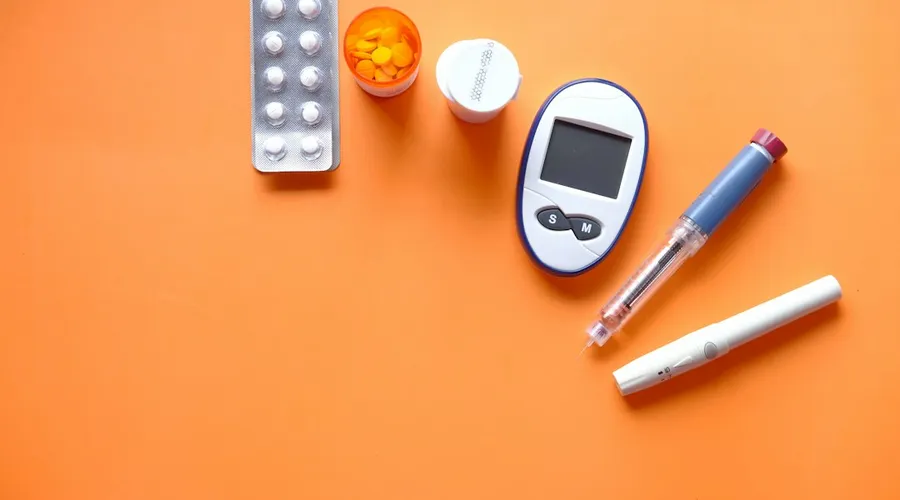
People who need the medication do not have to apply, meet any special requirements or provide proof of insurance, according to a KQED report. Because CalRx insulin is interchangeable with other brand-name products, patients can ask their pharmacist or doctor whether they can switch their prescription, according to California's health agency HCAI; a new prescription from a doctor is then unnecessary. Depending on the insurance plan, the actual out-of-pocket cost may be below the recommended maximum consumer price. However, the state cannot mandate a final price because doing so would violate antitrust and competition law, an HCAI spokesperson told KQED. Civica therefore planned a QR code on the packaging that customers could use to report having paid more than $55; the company intended to contact the pharmacy concerned to remedy the situation. In addition, SB 40, signed into law by Newsom, provides for capping copayments for a month's supply of insulin at $35. According to KFF Health News, the insulin was available in August 2026 at Amazon and Costco as well as at CVS, Walgreens and Walmart stores; four insurers, including Anthem Blue Cross and Blue Shield of California, had also agreed to add it to their formularies.

CalRx was expected to be significantly cheaper than other insulin brands, according to information from California authorities cited by Healthline: Pharmacies paid $88 for a five-pack of Eli Lilly's Rezvolgar and $92 for Sanofi's Lantus. According to the same information, pharmacies paid $313 for Eli Lilly's Basaglar and $411 for Sanofi's Toujeo Solostar. In August 2026, California health authorities reported that the state had distributed more than 120,000 five-packs at $55 each, according to KFF Health News. The state did not know at that point how many of these packs had actually been dispensed to patients; Elizabeth Landsberg, head of California's health agency HCAI, considered the agreements with three major pharmaceutical wholesalers more meaningful than the number of packs dispensed. Patient advocates also reported that many people with diabetes were still unaware of the offer; pharmacist Margaret On at a Walgreens store in San Francisco's Japantown had two packs in stock but had not yet dispensed any. Geoffrey Joyce, director of health policy at the University of Southern California's Schaeffer Center, described California's generic drug initiative in August 2026 as largely symbolic, although individual diabetes patients could benefit from CalRx insulin. In October 2025, by contrast, Christine Fallabel, director of state government affairs at the American Diabetes Association, had described the initiative as an important incremental step toward more affordable insulin options.
More than $155 million for Civica's insulin initiative
The glargine pen is not the initiative's ultimate goal: According to the governor's office, the agreement with Biocon Biologics complements Civica Rx's broader insulin development strategy, under which, as of October 2025, the company was working to independently manufacture interchangeable biosimilar versions of insulin glargine and rapid-acting insulin under the CalRx brand. According to the Civica Foundation, more than $155 million was invested to launch the overall insulin initiative. The foundation said $53.7 million was still needed to reach the overall target of $209.4 million. The money is intended to enable Civica to also develop insulin aspart and insulin lispro, for which the company is aiming for a recommended maximum price of no more than $30 per vial or $55 per pack of five prefilled pens, without hidden rebates.