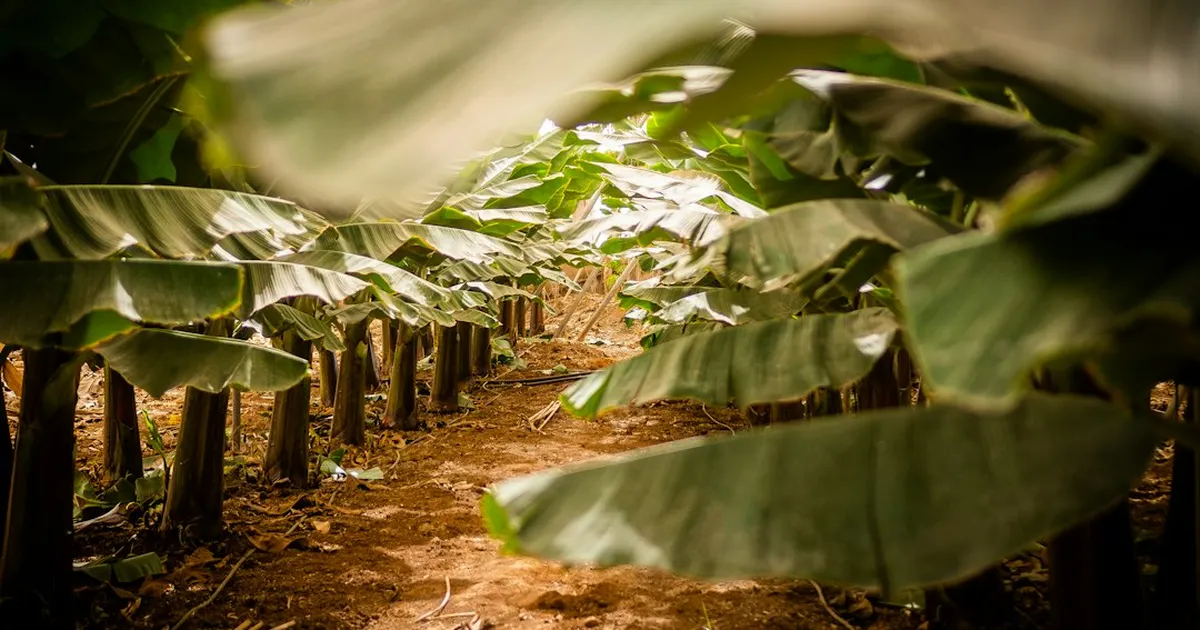
The UK's environment authority Defra published a precision bred organism marketing notice on 25 September 2026 with reference PBM/26/MUAC/001, confirming the special breeding status of a banana plant. The published documents contain the submitted notification, additional information requested by ACRE, the recommendation of the Advisory Committee for Releases to the Environment, and the Secretary of State's decision on the plant's "precision bred" status. Approval for sale as a food product is not yet at hand: the Food Standards Agency register for precision bred food and feed products currently lists no approvals.
What a precision-bred confirmation means
Under the Genetic Technology (Precision Breeding) Act 2023 and associated 2025 Regulations, only plants classified as precision bred may currently be released or marketed in England. According to Food Standards Agency guidance, precision bred plants or animals are those whose genome has been modified using methods such as gene editing in a way that the same change could have been achieved through conventional breeding. Before such a product may be sold as food or feed, the Secretary of State for Environment, Food and Rural Affairs must first issue a precision bred confirmation, requiring a marketing notice to be filed with Defra. The Advisory Committee on Releases to the Environment reviews such a notice within a statutory 90-day period before making a recommendation to the Secretary of State. All confirmed precision bred organisms are subsequently published by Defra in a public register, as occurred on 25 September 2026 for reference PBM/26/MUAC/001.

The second step: approval for food and feed
Applications to the FSA for food or feed approval without such a Secretary of State confirmation are considered invalid. Once confirmation is issued, an application under Regulation 20 or 22 may follow. For simpler Regulation 20 applications, the FSA expects a recommendation to the Secretary of State in roughly two months from receipt. Less complex Regulation 22 applications typically take about 12 months, with more complex cases taking up to 24 months. Only when a precision bred organism has been approved this way and entered in the public register may it be marketed in England, provided all approval conditions are met. Since reform regulations took effect on 1 April 2025, such register entries are no longer set by Statutory Instrument but are updated as soon as a ministerial approval decision becomes effective.
Why searching for such bananas matters
The backdrop for such approval procedures are diseases threatening global banana cultivation. Black Sigatoka disease forces farmers to spray banana leaves 30 to 60 times yearly with pesticides, costing more than 2,000 USD per hectare per year according to Tropic. The company stated it uses genome editing to improve yield, durability, and natural disease resistance, thereby reducing land use, chemicals, food waste, and producer costs. Independent verification of these figures was not found in the reviewed sources.
Comparison: Japan and Brazil are further ahead
For a different Tropic banana variety, a non-browning sort, Tropic Biosciences has already obtained broader approvals in other countries than in the UK, according to Agronomics. Brazil produces roughly 10 percent of global banana production according to Tropic. Together with other target markets, the approved countries represent more than 70 percent of the production market and over 30 percent of the banana consumption market, according to the company. Tropic has also commercially introduced a variety with extended shelf life that extends green storage time by an additional twelve days and is said to reduce transport waste by up to 50 percent. For 2027, the company announced a variety resistant to Panama disease TR4.
What remains before sale in the UK
Until comparable approval for food sale in the UK is obtained, a precision bred confirmation must first be issued before an application under Regulation 20 or 22 may follow to the FSA. Depending on complexity, this second step may take roughly two months to up to 24 months according to the FSA. As long as no such approval is listed in the register, marketing as food remains prohibited in England. Should any further notices regarding revocation, enforcement, appeals, or withdrawal become necessary for reference PBM/26/MUAC/001, Defra will supplement them on the same page. For UK consumers, the 25 September confirmation means that a hurdle in the multi-step process has been cleared, not that a new banana is already on supermarket shelves.