The drivers, according to Bloomberg, are a race among developers to secure expiring federal tax credits and sharply rising electricity demand from data centers.
Background: a deadline in tax law
The background is a statutory deadline explained by the IRS, the U.S. tax agency, in a notice published in 2025: According to the IRS notice, construction of the wind and solar facilities concerned must have begun before July 5, 2026, if they are to enter service after December 31, 2027, to remain eligible for the tax credit. According to the notice, construction was considered to have begun when physical work of a significant nature began; preliminary activities were not sufficient, even if their costs were included in the facility's depreciable basis. The agency also requires a continuous program of construction; in an IRS example, this continuity requirement is considered met if construction begins on August 20, 2025, and the facility enters service by December 31, 2029.

Solar and storage drive expansion
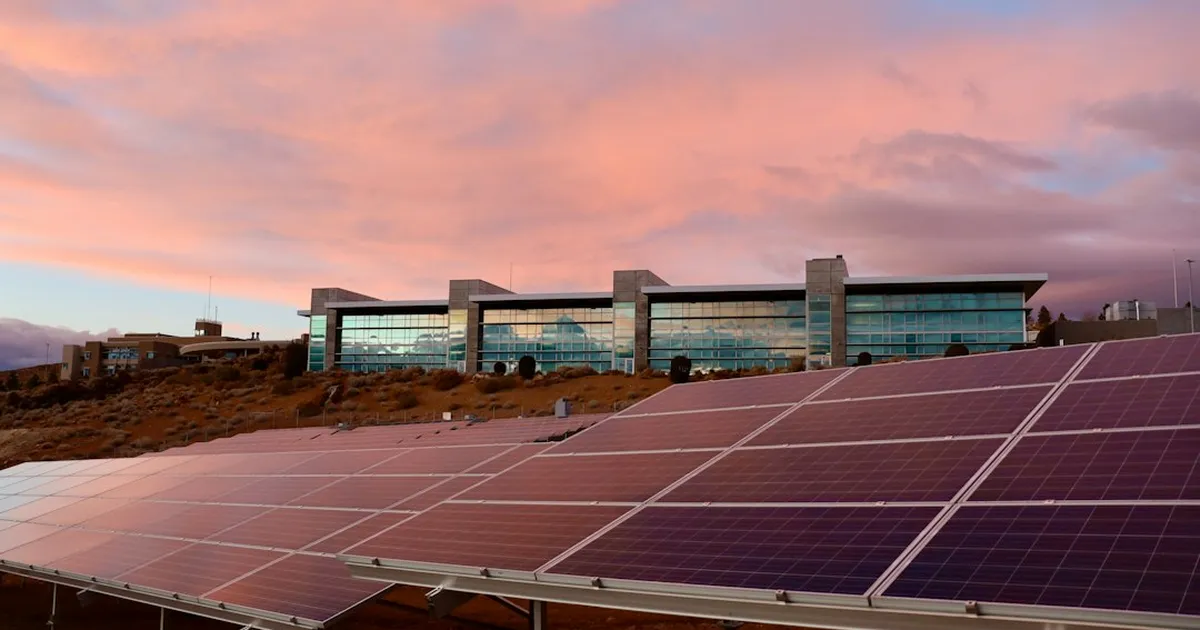
According to Bloomberg, solar power is expected to account for the largest share of new clean power generation in 2026 as well, with analysts expecting installations of 48.9 gigawatts for this year alone. By comparison, a total of 29.644.6 megawatts of utility-scale solar thermal and photovoltaic capacity was added in 2025, according to the annual report by the EIA, the U.S. Energy Information Administration. BloombergNEF raised its forecast through 2036 for onshore wind power by 15 percent to 99.7 gigawatts and for battery storage by 35 percent to 383 gigawatts; according to the report, federal incentives for storage remained in place while support for some renewable energy projects was expiring. Announced corporate contracts for clean electricity totaled more than 15 gigawatts through August, according to BloombergNEF, with Meta Platforms and Google accounting for almost three-quarters of that.
Solar and storage are increasingly expanding together: According to an EIA analysis, as of September 2026, more than 16 percent of utility-scale solar capacity added in 2026 was paired with operational battery storage at the same site, compared with just 2 percent in 2017. According to the EIA, reported plans for solar additions in the final quarter of 2026 indicate that the share could rise to 19 percent for the full year; plans submitted for 2027 and 2028 already put the share above 30 percent. Operators can direct solar output to the grid or into the battery depending on wholesale prices, allowing them to manage the facility's economic value as prices change. Photovoltaics now account for 13 percent of total U.S. utility-scale generating capacity, 18 percent of which is paired with storage.
Natural gas is also growing strongly
Natural gas expansion reduces the climate benefits of renewable energy expansion, according to Bloomberg. The 67.8 gigawatts of potential new gas capacity cited by BloombergNEF cover the period through 2030, while the expected 89 gigawatts of solar, wind and storage capacity refer to 2026 alone. Report author Hall Welborn continues to see data centers as a tailwind for renewable energy overall, though one clouded by the growing pipeline of gas projects. A separate analysis by Environmental Defense Fund and Atlas Public Policy recorded an increase of 23.5 gigawatts to 68.3 gigawatts in gas power plant capacity planned and under construction in the first half of 2026; fossil fuels thus accounted for 29 percent of planned power plant capacity, compared with 9 percent at the end of 2022. In the same half-year, developers canceled 14.9 gigawatts of clean power capacity planned or under construction, according to Environmental Defense Fund, with solar and battery projects accounting for almost all the canceled capacity. BloombergNEF also lowered its forecast for utility-scale solar installations from 2026 through 2036 by 7.5 percent to 430 gigawatts because of new tariffs and the expiration of tax credits.
What could slow capacity additions
Developers are also grappling with more expensive financing, trade barriers and uncertainty over equipment costs and availability, according to Bloomberg. BloombergNEF also expects that demand from data centers could cause the U.S. gas industry to shift from a production surplus to a deficit as early as 2028, even though the United States is the world's largest natural gas supplier.