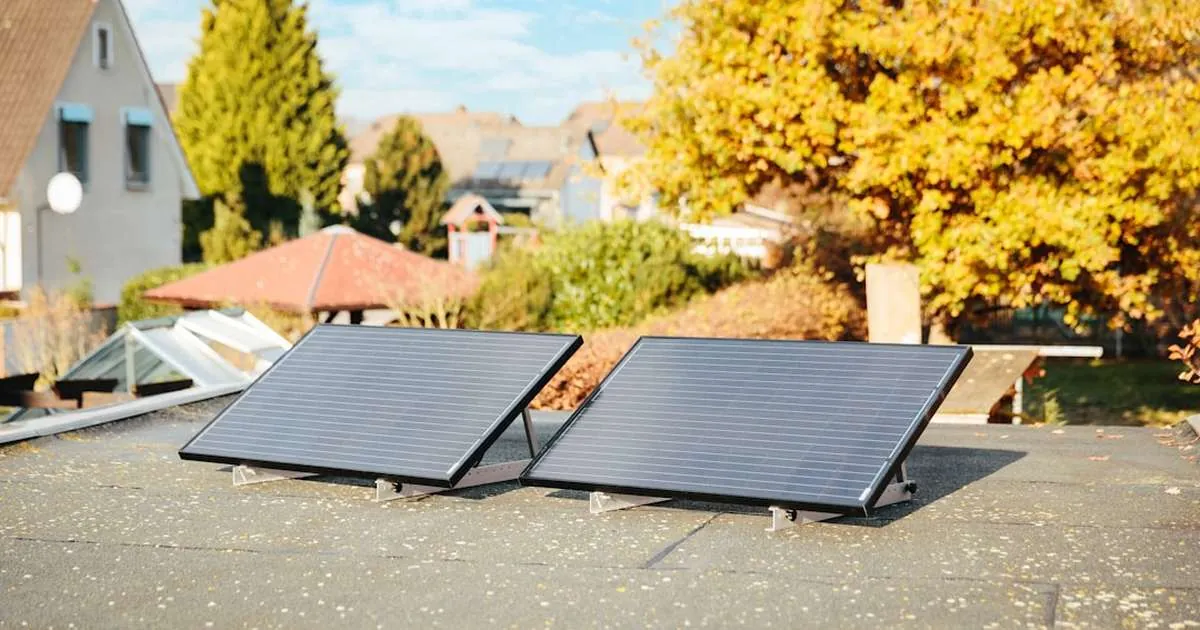
A quiet revolution is happening on German balconies. More than 1.2 million households have now registered a balcony power plant with their grid operator, a number that has more than doubled in just 18 months. The devices look simple: a panel or two mounted on a railing, plugged into a standard household socket. But collectively, they represent a shift in how ordinary citizens are engaging with the energy transition.
How They Work
Balcony power plants, known in German as Balkonkraftwerke, consist of one to two photovoltaic panels connected to a microinverter that converts solar energy into standard household current. The setup plugs directly into a wall socket and immediately reduces consumption from the grid. Under German law, installations of up to 800 watts no longer require a special permit or an electrician, dramatically lowering the barrier to entry. A basic setup costs between €300 and €600 and typically pays for itself within four to six years.
Who Is Installing Them?
The boom is particularly visible among renters, who have historically been excluded from rooftop solar. A 2024 reform to German tenancy law gave renters the explicit right to install balcony panels without needing landlord approval, provided the installation does not permanently alter the property. This change catalyzed adoption in apartment buildings across major cities. In Munich and Berlin, waiting lists for the devices emerged at hardware stores in the months following the reform.
Consumer advocacy group Verbraucherzentrale reports that the average balcony power plant reduces annual electricity costs by €150 to €250, depending on orientation and consumption. For households on fixed incomes, this is a meaningful saving.
A Signal Beyond the Numbers
Energy researchers at the Fraunhofer Institute for Solar Energy Systems see the phenomenon as more than a cost-saving measure. When citizens install their own generation capacity, their relationship to energy changes. They start noticing when the sun is shining, checking their production app, consciously running dishwashers in the afternoon. The psychological effect on energy literacy is significant.
Germany added roughly 3 gigawatts of balcony solar capacity through these small installations last year, a figure comparable to the output of two mid-sized conventional power plants. While grid operators initially expressed concerns about voltage stability, the widespread adoption of standardized microinverters with automatic shutoff has largely resolved these issues.
What Comes Next
The federal government's energy agency DENA has proposed raising the legal output limit from 800 to 2,000 watts per unit, which would significantly increase the potential generation per household. A vote in the Bundestag is expected before the end of 2026. If passed, the measure could trigger another wave of upgrades among existing owners and bring the technology within reach of even more renters and homeowners.