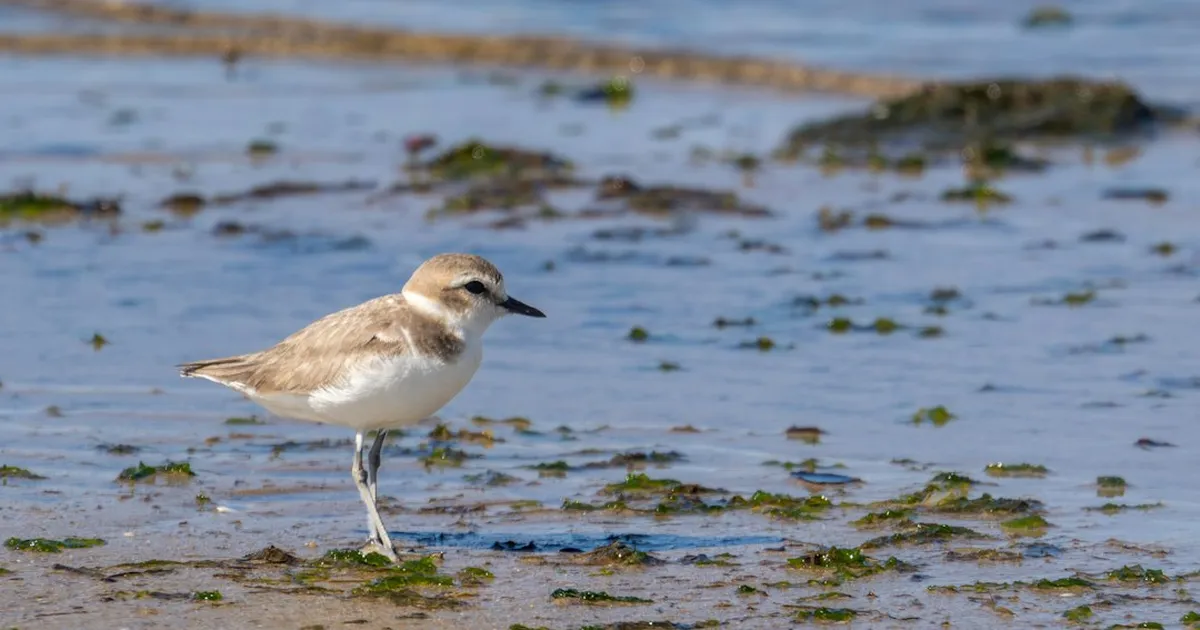
The 184 young birds that fledged were a record number, according to the conservation organization Audubon. The number of pairs was 11 higher than the 88 pairs recorded the previous year. According to broadcaster Michigan Public, it was also the fifth consecutive record breeding season for the endangered shorebird.
Protected status and population trends in the Great Lakes
The rule listing the piping plover for protection took effect on January 10, 1986, according to the U.S. Fish and Wildlife Service's five-year review; the Great Lakes population was classified as "endangered" in 2024, according to the report, while populations in other regions were classified as "threatened." By 1990, the Great Lakes population had fallen to about a dozen pairs, living exclusively in northern Michigan, according to Audubon. Sarah Saunders confirmed to Michigan Public that only around a dozen pairs remained in the late 1980s, mostly in northern Michigan. Seven pairs nested in Ontario in 2026, the most successful year since 2022 according to the organization Birds Canada. On Lake Erie, a pair built a nest near Long Point in the spring for the first time since 1977, before a so-called seiche, a fluctuation in water levels caused by sustained winds, flooded the nest on June 18.

Zoos, banding and the longest season in Erie
A captive-rearing program involving 13 zoos incubated 36 eggs in 2026; 26 chicks hatched, and 24 reared young birds were subsequently released into the wild. At Sleeping Bear Dunes National Lakeshore, the largest nesting site according to Sarah Saunders, Audubon recorded 32 pairs and 60 young birds that fledged in the wild. The Smithsonian Migratory Bird Center's banding team marked 43 adults and 204 wild-hatched chicks to track their migration routes. The Erie Bird Observatory also confirmed 99 pairs and 184 fledglings for the entire region and described the season at Gull Point, which ended only on October 12 when the last bird departed, as the longest documented to date.
The U.S. Fish and Wildlife Service's recovery goal is at least 150 breeding pairs, including 50 outside Michigan, according to Saunders. According to Audubon, those numbers must be maintained for five consecutive years; with 99 pairs, the population has reached almost two-thirds of the pair-count goal, Audubon said. A study published in 2018 modeled the growing population of merlins, a predator of adult plovers, as a risk and recommended considering systematic predator control. Audubon also cites severe storms, changing lake levels, increasing vegetation and growing recreational use of beaches as threats that could quickly undo progress. Michigan Public also reports delays in hiring seasonal conservation staff; according to Saunders, the situation in 2026 was somewhat better than in the previous two years, but delays continued in state parks and at Sleeping Bear Lakeshore. That is critical, Saunders said, because the birds establish territories as early as April and could lay eggs by the end of the month; without protective cages installed in time, early nests remain unprotected.