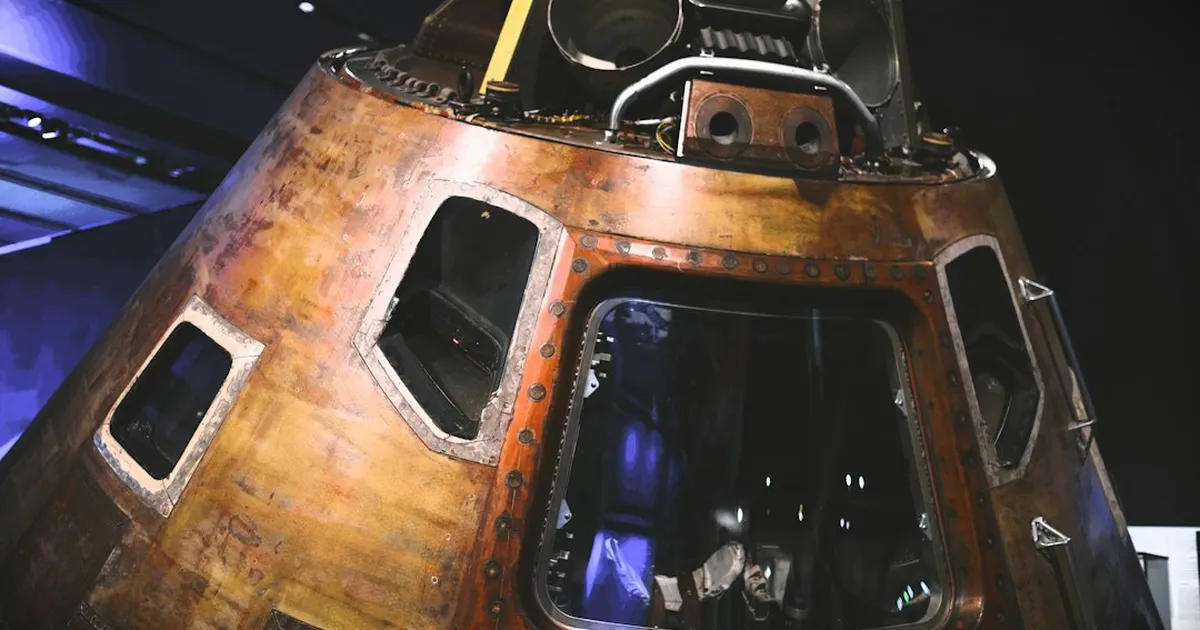
The Orion capsule carrying NASA astronauts Reid Wiseman, Victor Glover, and Christina Koch, along with Canadian Space Agency astronaut Jeremy Hansen, splashed down in the Pacific Ocean off San Diego on April 10, 2026 at 5:07 p.m. local time, according to NASA. The crew launched on April 1 aboard the Space Launch System (SLS) rocket from Kennedy Space Center in Florida. The entire mission lasted 9 days, 1 hour, and 32 minutes.
April 1: Communication Interruption After Launch
The SLS rocket lifted off from Launch Pad 39B with 8.8 million pounds of thrust and delivered the crew into the planned Earth orbit with high precision. About 51 minutes after launch, a temporary communication interruption occurred during a planned handover between satellites, according to NASA Administrator Jared Isaacman. The crew could hear Mission Control, but the center received no responses for a period. "There were no issues with the spacecraft itself," Isaacman explained, and connection with the crew was quickly restored.
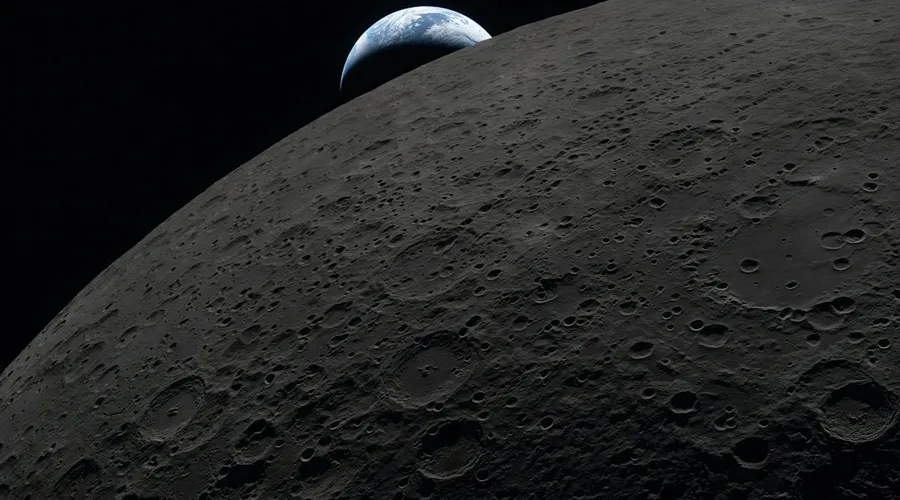
On the fifth flight day, the spacecraft entered the Moon's sphere of influence, where lunar gravity began to exceed Earth's pull. Mission Specialist Christina Koch described the moment as a remarkable milestone: "We're now falling toward the Moon instead of away from Earth." During several flight demonstrations, the crew manually piloted Orion to gather data for future docking maneuvers with lunar landing vehicles. NASA's life support system tests confirmed for the first time with a crew aboard that Orion can sustain humans in deep space.
April 10: Splashdown Off San Diego
Orion touched down 2.9 miles from the target location in the Pacific; the re-entry speed was within one mile per hour of predictions, according to NASA's initial assessments. A combined NASA and U.S. military team recovered the crew from open water and transported them via helicopter to the USS John P. Murtha for initial medical evaluations. NASA official Amit Kshatriya stated, "The Artemis II crew is home. The entry, descent, and landing systems performed as planned."
In Comparison: Apollo 13 and Artemis I Heat Shield
At a maximum distance of 252,756 miles from Earth, the Artemis II crew surpassed the previous record set by Apollo 13 astronauts, who reached 248,655 miles during their emergency return in 1970, according to NASA. The heat shield also showed significant improvement over the uncrewed Artemis I mission. According to NASASpaceFlight reporting on September 7, 2026, citing a member of the Aerospace Safety Advisory Panel, Artemis I's heat shield exhibited more than 100 spallation sites, while Artemis II's had only nine, a reduction of more than 90 percent achieved solely through the modified entry profile. For this steeper re-entry without atmospheric skip-out, NASA deliberately did not replace the already-installed heat shield, accepting higher thermal loads and a smaller recoverable landing zone as tradeoffs.
European Technology and Research Participation
European technology played a key role in the Artemis II mission. The Service Module, which supplies Orion with power, propellant, oxygen, and water, was built under the leadership of Airbus Defence and Space in Bremen, Germany, according to the German Aerospace Center (DLR). Scientific objectives included the AVATAR investigation, which used organ-on-chip technology derived from crew cells to study the effects of radiation and microgravity on human health.
Preparation for the Next Mission
NASA has already modified the manufacturing process of the Avcoat heat shield material to allow gases to escape more effectively during re-entry, with these improvements scheduled for the first flight on Artemis III. The mobile launcher, which sustained only minimal damage during booster ignition, was returned to the Vehicle Assembly Building for repairs and preparation for future Artemis missions.