
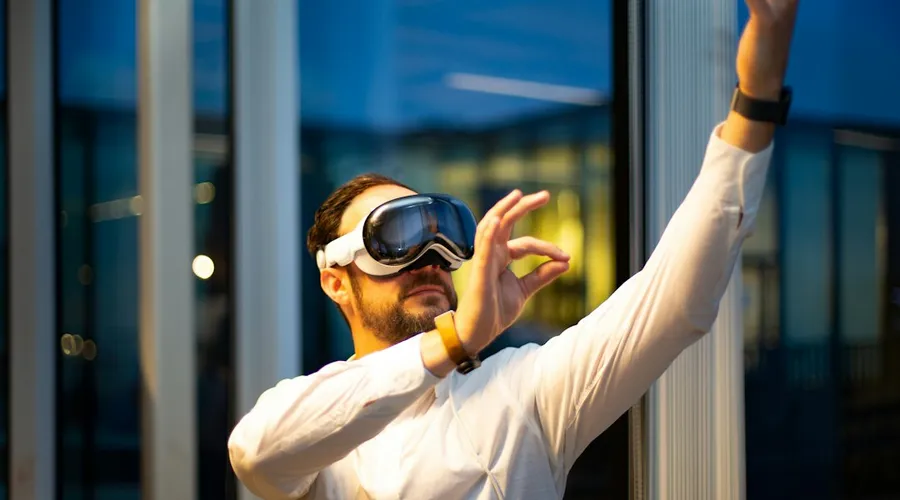
With the feature called “Look to Drive”, users look at a directional control to send a movement command to a power wheelchair with a compatible drive system. Guests can also do this during a Guest User session. In the English update overview for visionOS 27, the feature is named “Look to Drive” and, according to Apple, sends a movement command from Vision Pro to a connected wheelchair accessory.
Apple announced the power wheelchair control feature on May 19, 2026, and said it used Vision Pro’s precise eye-tracking system as an input method for compatible alternative drive systems. According to Apple, the feature is intended for people who cannot operate a joystick but for whom alternative controls can be an essential part of independent mobility. Tolt Technologies confirms that Apple has integrated Look to Drive and that it requires neither a separate eye tracker nor a mount or an additional app. According to Tolt Technologies, Ability Drive with Vision Pro requires an ADT for iOS with USB-C and 9-pin cables, as well as a compatible power wheelchair with a 9-pin port for alternative drive controls. According to Northwestern Engineering, the feature is technically based on software from Project DRIVE, which has been working on an open interface between input devices and wheelchair controls since its launch in 2023; Apple uses this technology instead of developing its own control system from scratch.
Pat Dolan, founder of GeoALS and a member of Team Gleason’s patient advisory board, had been living with ALS for ten years, according to Team Gleason, and called the ability to control his power wheelchair independently “gold,” according to Team Gleason. Team Gleason Executive Director Blair Casey described the use of Vision Pro’s eye tracking for eye-controlled wheelchair systems as a “major step forward.” Brenna Argall, lead researcher for Project DRIVE at Northwestern University, said many people with severe mobility impairments could not reliably use joysticks and that the technology created another path to independent mobility through natural eye movements.
How Look to Drive works in everyday use
According to Apple’s instructions, users look at the “Forward,” “Backward,” “Left,” “Right” or diagonal controls while driving to move the wheelchair in that direction. Because looking behind is not possible while driving, Apple recommends turning around instead of reversing whenever possible. The wheelchair is stopped by looking at “Stop,” “Pause” or “Exit,” or by closing the eyes for longer than a blink, while hand gestures such as tapping fingers together have no effect on movement. According to Apple, Look to Drive does not automatically contact emergency services, so in an emergency users should close their eyes, switch to the standard controls and call emergency services themselves.
Safety: a controlled environment and an attentive companion
Apple stipulates that Look to Drive must be used only in controlled environments such as indoors, on a private patio or in a garden, and not on roads or near traffic and pedestrians. According to Apple, an attentive adult companion should be present during every session. The feature is unavailable when Vision Pro’s battery charge is below 10 percent. It also stops automatically if the headset is removed from the head, disconnected from the wheelchair controls or not working properly. LUCI writes in its safety report that objects approaching directly at speed or crossing the path may not be detected in time, and that the system does not perform emergency braking during an evasive maneuver to prevent the wheelchair from tipping over.
In comparison: groundwork on eye control since 2014
According to Team Gleason, eye-controlled wheelchairs have a longer history: the organization began developing such a control system for people with ALS in 2014. With help from Tolt Technologies, a commercial version was available by 2019, according to Team Gleason. LUCI, one of the control systems supported by Apple, reports in its 2025 safety report that its users had already traveled more than 50,000 miles safely since deliveries began in 2021. According to Northwestern’s Project DRIVE, its partners include LUCI and LifeDrive Mobility; other input systems, such as head movements or brain-computer interfaces, can also be connected through its Wheelchair Digital Interface.
What the technology costs and where it still falls short
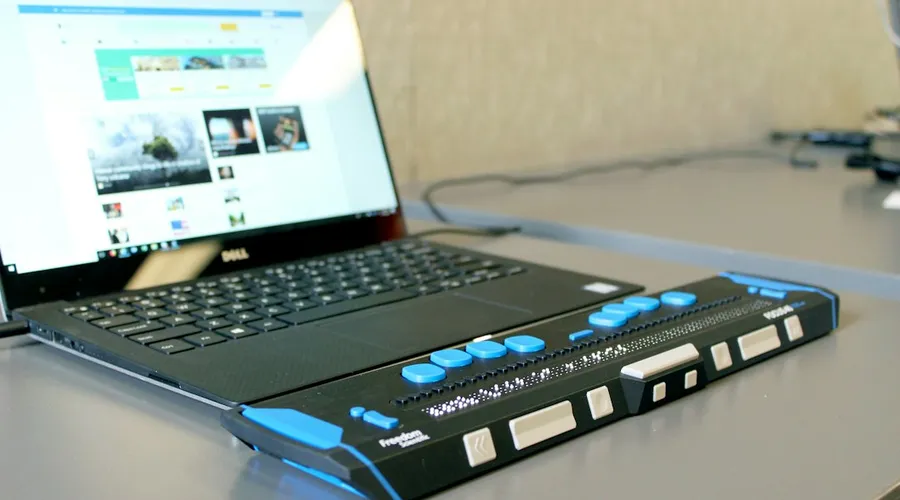
The technology is not free: according to heise online, Vision Pro alone cost at least 3,700 euros as of May 19, 2026, while Apple itself had not provided prices for the wheelchair control feature at that time. LUCI lists a suggested retail price of $9,854 for its system, including installation, hardware, software and wireless updates throughout the lifetime of the individual LUCI unit. LUCI says it cannot guarantee insurance coverage, although there have already been several successful approvals; only self-pay orders are reliably assured. According to Tolt Technologies, Ability Drive supports a limited list of Group 3 power wheelchairs with R-net, Q-Logic 3 or LiNX controls, while older Quantum wheelchairs with QLogic 2 or the Invacare Storm Series with MK6i electronics are explicitly not supported. According to Apple, a TOLT controller connects through the Developer Strap (USB-C), while a LUCI controller connects through Bluetooth.