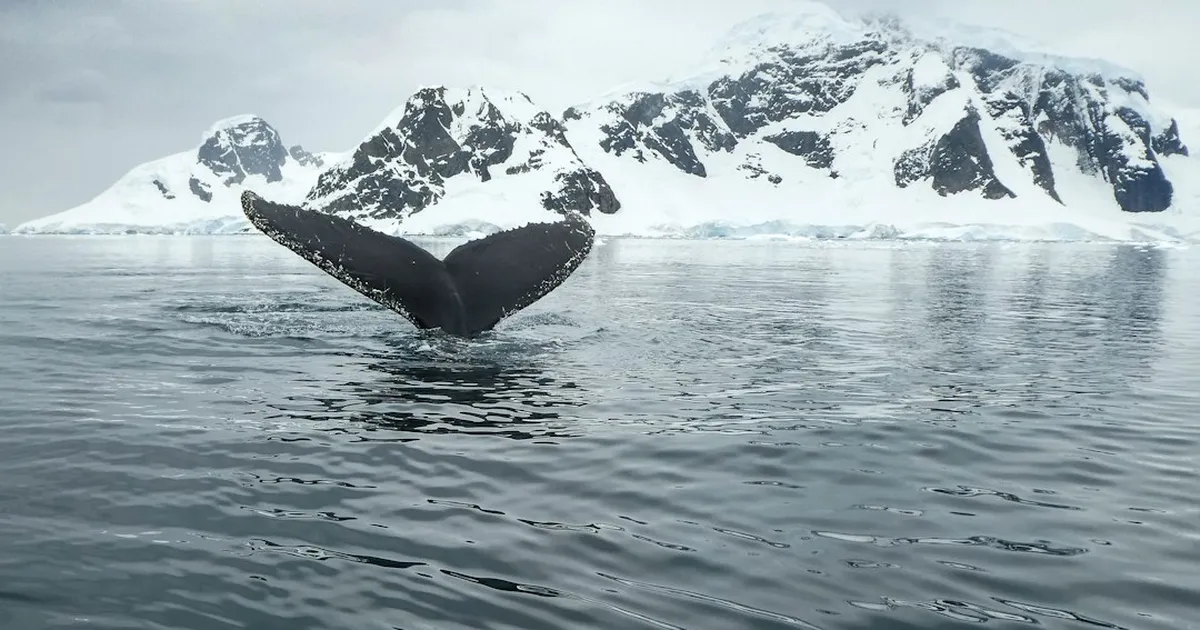
The study was published on November 5, 2026, in Endangered Species Research. According to the study, whaling reduced the population by 99.8%, and calculations indicate that the population is currently growing by 4.5% a year.
From the last reported catch in 1973 to 418 animals
The International Whaling Commission banned the killing of Antarctic blue whales as early as 1964, but Soviet fleets reportedly continued hunting them illegally for another ten years. According to the study, around 418 animals remained after the last reported catch in 1973. Internationally, blue whales received full legal protection from commercial whaling in 1966, according to NOAA Fisheries. A worldwide ban on commercial whaling followed in 1986, and maintaining it is a key strategy under the recovery plan revised in 2020.

Because the animals surface only briefly, researchers combine photo identification with line-transect surveys: a ship follows a straight course, and the number of sightings and their distance can be used to calculate density and, from that, the total population. Such surveys are imperfect and expensive. The most recent circumpolar population estimate is based on expeditions conducted up to 2004, and only a few further line-transect surveys have been completed since then. Rand described the estimated growth as relatively realistic.
By comparison: Other whales have recovered faster
Humpback whales in the Southern Ocean have recovered faster since the 1986 whaling ban, according to The Guardian: humpback whales have now almost returned to their pre-whaling population levels. According to the industry association ARK, the number of fin whales around the Antarctic Peninsula and in the Scotia Sea rose from around 3,400 to more than 18,000 between 2011 and 2023, while humpback whales worldwide reached around 80% of their former population. By contrast, according to the study, hundreds of thousands of blue whales swam in the Southern Ocean before whaling. Compared with that, 4,018 animals remain a vanishingly small number even after decades of protection. A regional study by the University of Cape Town observed substantially more blue whale and fin whale sightings off Namibia and South Africa since 2012; the statement puts the Antarctic blue whale population at around 3% of its former level, with annual growth of 5-8%.
What could put this success at risk
NOAA Fisheries lists vessel strikes and entanglement in fishing gear as the main threats to blue whales, alongside less well-understood risks such as ocean noise, pollution and climate change. A round of negotiations at the fisheries commission CCAMLR that concluded in October 2026 ended without agreement on any of the proposed marine protected areas in the Southern Ocean or new precautionary rules for krill fishing, according to the Antarctic and Southern Ocean Coalition. Nicholas Kirkham, a representative of Pew Bertarelli Ocean Legacy, criticised the 27 members for leaving Hobart for the tenth consecutive year without agreement on overdue protection measures for the western Antarctic Peninsula. The industry association ARK said as early as June 2026 that the krill population was large and stable and that the current catch limit in Area 48, at less than one percent of the surveyed biomass, was precautionary, but acknowledged that catches had so far been heavily concentrated in individual areas. Rand calls for more monitoring and for it to continue: Antarctic blue whales remain critically endangered; only regular counts show whether the recovery is continuing or stalling under new pressures.