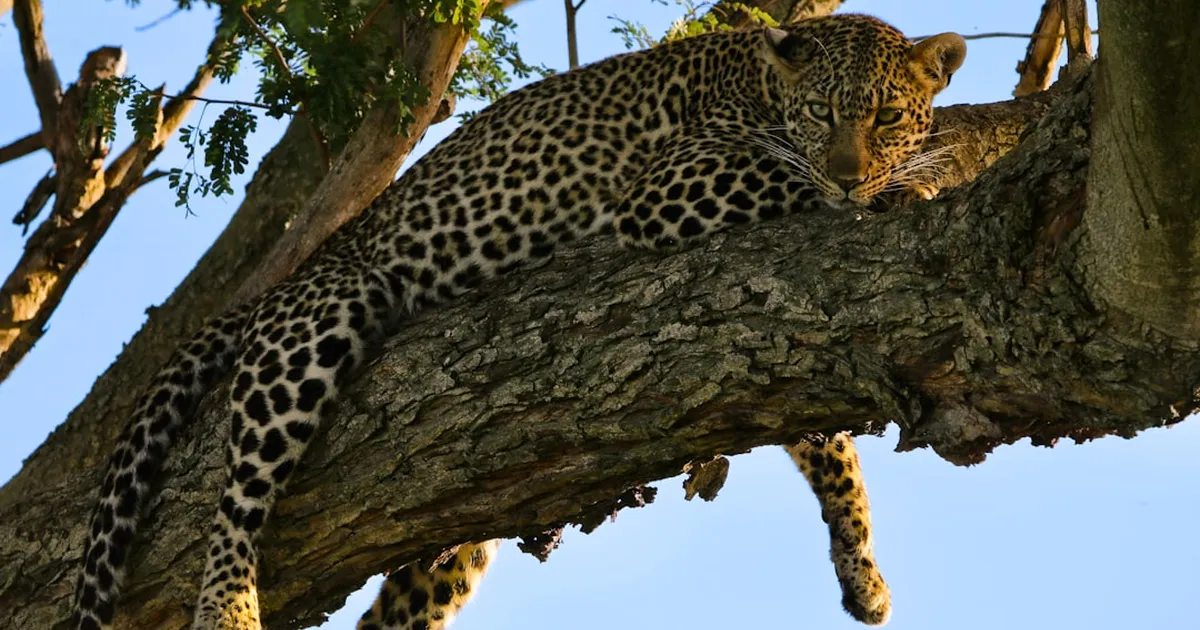
In the early 2000s, zoologists counted roughly 30 wild Amur leopards. Today there are 128 to 130, spread across the cross-border forest areas of Russia's Far East and northeast China. What reads as a dry statistic is one of the most remarkable conservation recoveries of recent decades.
The world's rarest big cat, once on the brink
The Amur leopard (Panthera pardus orientalis) is the northernmost subspecies of leopard and the rarest big cat on Earth. Its range is limited to a narrow corridor along the Russian-Chinese border, a forested region where winter temperatures plunge to minus 35 degrees Celsius. By the late 1990s, poaching, habitat loss from logging and expanding agriculture had pushed the population to a critical low.
Poaching was the core problem. Amur leopard pelts had been prized on East Asian black markets for decades. From the mid-2000s, Russia and China significantly stepped up enforcement: Russia raised fines for hunting protected big cats to the equivalent of several thousand euros per offense, with prison sentences for repeat violations. Poaching has since fallen sharply.
A single incident illustrates the scale of the historical threat: in 2007, a wildfire swept across 200 square kilometers of southwestern Primorye, destroying a substantial portion of the remaining leopard habitat. At that moment, there were fewer wild Amur leopards than rhinoceroses in some Central African national parks.
A national park and cross-border cooperation
The turnaround began with structural measures. Russia established the Land of the Leopard National Park in 2012 in southwestern Primorye, a 2,799-square-kilometer protected area designated specifically for the Amur leopard and the Amur tiger. Creating a contiguous protected zone free of logging and hunting proved decisive: in an intact habitat, populations of key prey species, mainly roe deer and sika deer, recover, and with them the ecological foundation for the leopard.
An international dimension was added in 2014. Russian and Chinese biologists signed a cooperation agreement and installed 214 camera traps on both sides of the border in the Changbai Mountains. Through genetic analysis and image matching, every individual animal can now be identified and tracked across the border. The Hunchun Nature Reserve on the Chinese side and the national park on the Russian side form a single connected protected landscape.
What the numbers conceal
128 to 130 animals sounds like a stable population. In population biology, however, a group below 500 individuals is considered fragile: genetic impoverishment and random events such as disease outbreaks or wildfires can rapidly destabilize a population. Scientists at the Russian Academy of Sciences warn that the animals remain concentrated in a geographically small area, and a single disease outbreak could have severe consequences.
This explains the second conservation goal: 60 more animals are to be settled in former range areas north of the current core population. Initial reintroduction efforts are underway at the Lazovsky Nature Reserve in central Primorye. Whether an independent second population can establish itself there remains open.
Captive breeding as a safety net
Alongside the wild population, the World Association of Zoos and Aquariums (WAZA) coordinates a global captive breeding program. Around 200 Amur leopards live in zoos worldwide. These animals serve as a genetic reserve if the wild population faces collapse, and are intended for reintroduction as wild numbers continue to grow. European zoos participate in the program.
What comes next
The International Union for Conservation of Nature (IUCN) has set a recovery target of at least 100 animals in the core range and 60 in a restored zone by 2030. Conservation efforts have already met the first goal. The second is only beginning. Russian-Chinese monitoring is set to expand to additional border sections in the coming years.
The world's rarest big cat is alive, and slowly becoming less rare.