Decades of mass antibiotic distribution, hygiene education campaigns, and investment in water infrastructure have produced a measurable result: the World Health Organization officially confirmed on April 23, 2026 that Algeria has eliminated trachoma as a public health problem. The country is the 29th worldwide and the tenth in the WHO African Region to reach this milestone. For communities in the southern provinces, it marks the end of a threat that has robbed people of their sight for millennia.
A Disease That Outlasted Civilizations
Trachoma is the oldest documented eye disease in human history, with the first descriptions dating to ancient Egypt. It is caused by the bacterium Chlamydia trachomatis, which spreads through direct contact with infected eye secretions, facilitated by lack of access to clean water and inadequate sanitation. Left untreated, repeated conjunctival inflammation leads to scarring of the cornea: the eyelashes begin to turn inward, scraping the eye with every blink until permanent blindness results.
Around 1.9 million people worldwide are visually impaired or blind as a result of trachoma. In Algeria, the disease was concentrated in the sparsely populated southern provinces until the 1980s. The decisive phase of elimination began in 2013 with a targeted strategy focusing on 12 southern wilayas (provinces): Adrar, Laghouat, Biskra, Béchar, Tamanrasset, Ouargla, El Bayadh, Illizi, Tindouf, El Oued, Naama and Ghardaïa.
Four Measures That Must Work Together
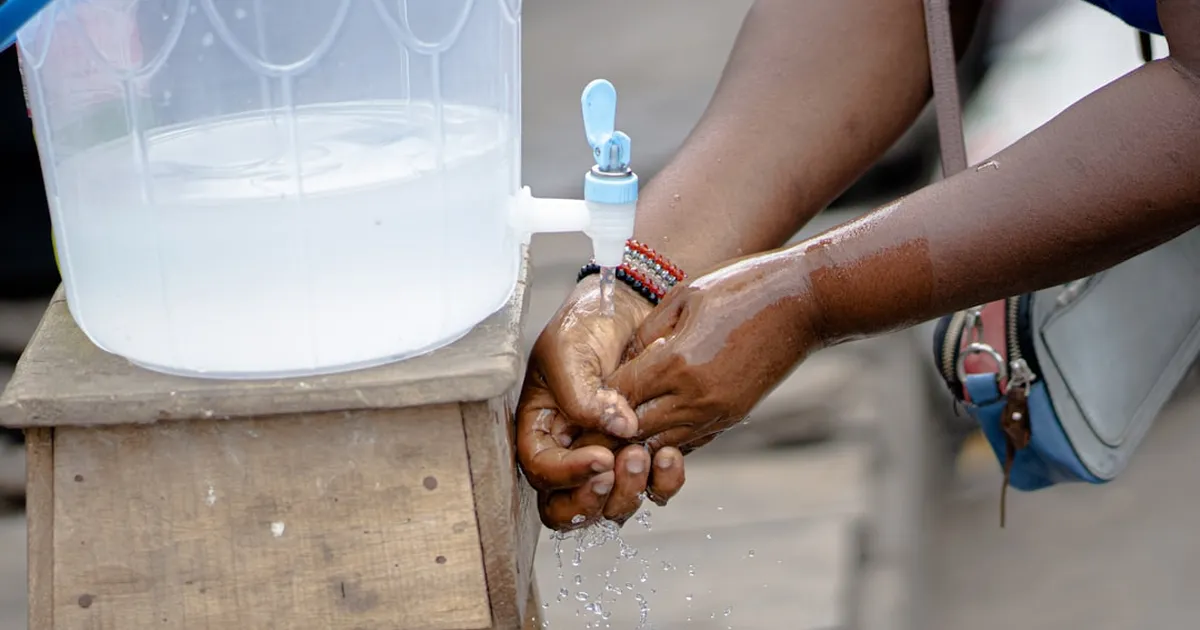
Algeria followed the WHO-developed SAFE strategy, a four-part approach in which no single component is sufficient alone. The four letters stand for: Surgery (operations for advanced cases where eyelashes have turned inward), Antibiotics (mass treatment with azithromycin), Facial cleanliness (education campaigns on face hygiene, particularly in schools) and Environmental improvement (expanding water and sanitation infrastructure in affected communities).
According to the WHO press release of April 23, 2026, Algeria's "well-functioning school system, broad access to water and sanitation, and extensive eye health services" were decisive. In concrete terms: millions of doses of azithromycin were distributed across the southern provinces, schoolchildren were systematically taught to clean their faces, and in remote villages wells, water pipes and sanitation facilities were expanded. Surgical teams operated on patients with trichiasis, the advanced form in which eyelashes turn inward and damage the cornea.
What made Algeria's success possible: the underlying conditions were already in place. A stable school system and a functioning state health infrastructure made it possible to deploy the campaign across a vast territory. In countries without this foundation, the SAFE strategy is considerably harder to implement.
94 Percent Fewer Affected People Worldwide Since 2002
Algeria's achievement is part of a remarkable global trend. Since 2002, the WHO has reduced the number of people worldwide requiring trachoma interventions from 1.5 billion to 97.1 million. That represents a 94 percent reduction in under 25 years. The 97 million still requiring treatment roughly equals the combined population of Germany, Austria and Switzerland. At the start of 2026, this figure fell below the 100-million threshold for the first time.
A comparison shows what coordinated global health programs can achieve. The poliovirus caused around 350,000 cases of paralysis per year worldwide in 1988. By 2024, fewer than 30 cases were registered globally, a reduction of 99.9 percent according to WHO. The Guinea worm was considered one of Africa's worst parasitic diseases in the 1980s, with 3.5 million people infected. In 2025, just ten cases were reported worldwide. Trachoma follows this pattern, but with a different profile: this is not an eradication campaign but an elimination campaign, built on coordinated improvements in living conditions.
In the WHO African Region, Senegal received WHO validation as the ninth country in July 2025, with Burundi following weeks later. Algeria is now the tenth. Morocco, Ghana, Mali, Benin and Mauritania had previously reached the milestone.
Who Follows Next: 29 Countries Still to Go
The WHO has set a target to eliminate trachoma globally as a public health problem by 2030. Twenty-nine countries have yet to reach this goal, most of them in sub-Saharan Africa. The most populous include Nigeria, Sudan, Ethiopia and the Democratic Republic of Congo.
The pace has accelerated in recent years. In 2015, just ten countries had received validation for elimination; by 2026, it is 29. This acceleration is not only due to more resources. Equally important has been a strategic shift: rather than treating individual communities, entire districts are now systematically surveyed, mass-treated and monitored over several years. Whether Nigeria or Ethiopia can follow by 2030 depends not only on funding but on whether governments and local authorities can sustain the necessary continuity over many years.