The Convention on Migratory Species (CMS) announced that governments agreed at the UN wildlife summit in Campo Grande, Brazil, to strengthen protections for 40 species and populations of birds, water animals and land animals. The decision came on 29 March 2026 at COP15, held from 23-29 March at the Bosque Expo venue. Nations expanded Annex I for endangered species and Annex II for species requiring coordinated international action. Both lists now include over 1,200 species under the agreement established 47 years ago. Nations where Annex I species live are required to provide strict protection through bans on intentional killing, capture or disturbance, while Annex II requires international cooperation on species protection through joint action plans and coordinated research. The agreement now includes 132 countries plus the European Union.
Beyond adding species to the annexes, the conference adopted 39 resolutions and 16 concerted actions, including one for giraffes, according to CMS. More than 2,600 people attended COP15.

Declining Populations at Conference Opening
COP15 opened with new findings showing that key indicators for many species protected by the agreement continue to decline. The findings reinforced warnings about habitat loss, overuse and infrastructure barriers accelerating the decline of migratory species that cross borders. At the start, CMS reported that 49 percent of all species listed under the agreement show declining population trends, and nearly one in four of these species faces global extinction.
Cheetah, Giant Otter, and Snowy Owl on the New List
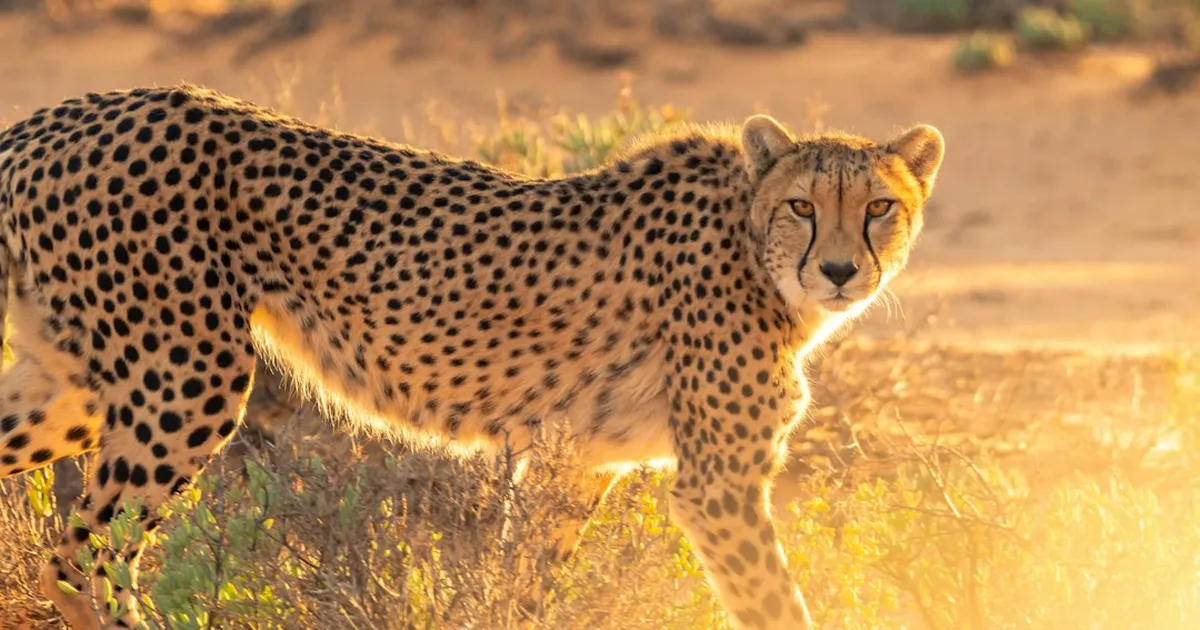
Among the newly protected or upgraded animals is Zimbabwe's cheetah population, estimated at 150-170 individuals, now listed in both Annex I and II. Other cheetah populations had been in Annex I previously. The striped hyena and the giant otter also received protection in both annexes. The great hammerhead shark, along with fox shark species (Alopias pelagicus, Alopias superciliosus and Alopias vulpinus) and the bigeye thresher shark were added to Annex I in addition to their existing Annex II status. The snowy owl, Audubon's shearwater and Sporophila iberaensis were newly added to Annex II, while certain populations of the whimbrel, hudsonian whimbrel, and lesser yellowlegs moved to Annex I. CMS Executive Secretary Amy Fraenkel said the expanded protections for cheetahs, snowy owls, giant otters, great hammerhead sharks and other species showed that nations can act when scientific evidence is clear.
First Time Recognizing Ocean Migration Routes
BirdLife International reported that governments formally recognized marine migration routes for the first time at COP15. Previously, the oceans represented a significant gap in recognized global migration routes. Delegates identified six major ocean migration corridors, including the Atlantic Ocean, northern and eastern Indian Ocean, western Pacific, Pacific Ocean and Southern Ocean, previously identified by BirdLife International as areas of concentrated seabird migration. BirdLife International said the new framework benefits seabirds as well as other migratory marine animals such as whales, sharks and sea turtles.

The updated report State of the World's Migratory Species presented at the conference opening showed 49 percent of the 1,189 species populations protected by CMS as of 2024 are declining, compared to 44 percent two years earlier. The pressure on individual species is evident in the data behind the proposals. CMS reported that Uruguay cited a 60 percent decline in the lesser yellowlegs over the last three generations, Chile a 70 percent decline in the hudsonian whimbrel over the past three generations. Brazil reported over 80 percent population decline in the Mustelus schmitti shark over three generations.
COP15 President Capobianco emphasized that the agreement is legally binding and signatory nations must follow its decisions. However, the agreement has been criticized for relying on voluntary and non-binding measures by countries and lacking adequate funding. Additionally, the US, China and Japan, major players in agriculture and fishing, are not party to the treaty.
Dana Tricarico of the Global Shark Conservation Team at the Wildlife Conservation Society said success of new shark commitments will depend on how quickly and effectively nations implement them domestically. Signatory nations agreed to develop a strategy for mobilizing resources to help developing countries fully meet their CMS obligations. With COP15's conclusion, Brazil took the presidency of the conference and will carry the meeting's momentum over the next three years. The next conference of parties will be held in Germany, with the German government offering to host it in Bonn in 2029, coinciding with the 50th anniversary of the Bonn Convention signed in 1979.