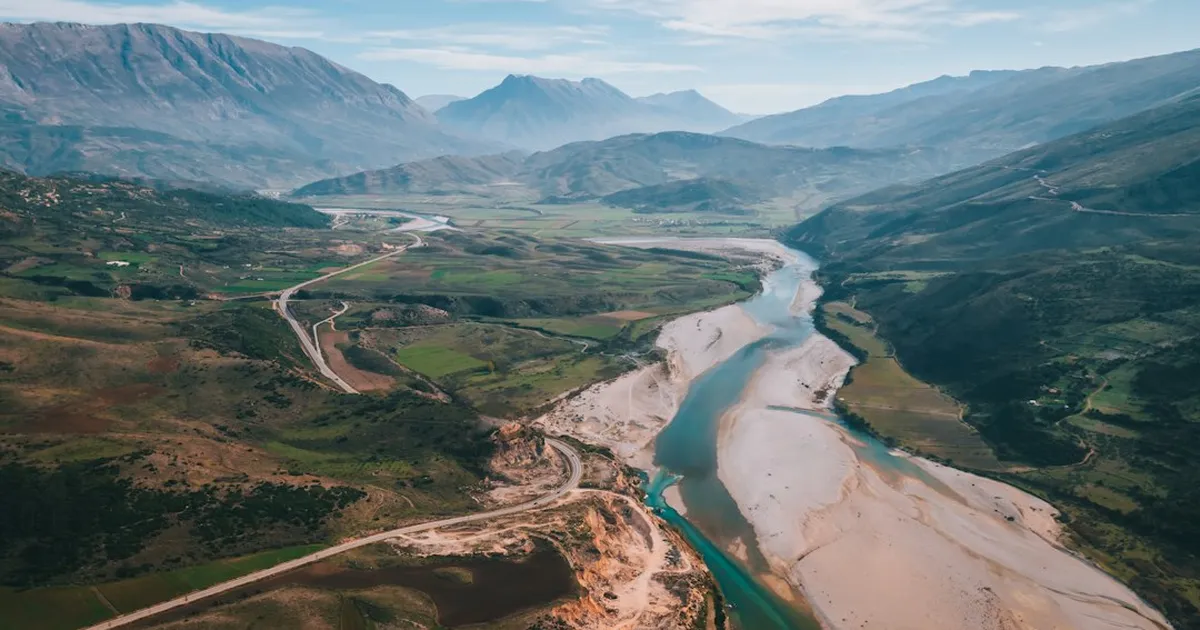
The program now supports 29 major projects, with its initiatives influencing an area of 9.7 million hectares of land and sea, a scale that the program equates to the area of Portugal. Arcadia's support enables projects to move from concept to implementation, said Program Director David Thomas. The new cohort supports partners prepared to restore ecosystems at a scale that can benefit nature, climate, and local communities. The program is financed by the Arcadia Foundation, which notes that more than 80 percent of European habitats are in poor condition.
Eight landscapes from Iceland to Armenia
In Poland, the Frankfurt Zoological Society will restore rivers and wetlands in the Białowieża Forest, home to bison, wolves, and rare birds whose hydrology has been damaged by centuries of river straightening, drainage, climate impacts, and a new border wall. The project funding began in 2026 with $4.6 million allocated. In Slovakia and Hungary, the organization BROZ will restore river channels, wetlands, floodplain forests, and grasslands across 165,000 hectares along the middle Danube, an area damaged by dams, drainage, and invasive species. In Belgium, the project office of the recently designated Entre-Sambre-et-Meuse National Park will promote natural forests and grazing across 56,070 hectares, an area home to 80 percent of Walloon species, including wildcats and returning wolves. In Armenia, the Foundation for the Preservation of Wildlife and Cultural Assets will restore forests and riverbank corridors in Vayots Dzor, home to the critically endangered Caucasian leopard. In Turkey, BirdLife Europe and Doğa Derneği will restore natural tidal patterns in the Gediz Delta through reopening abandoned salt marshes, a wetland with over 280 bird species. This project began in 2026 with $4.999.766 million allocated. In Iceland, RSPB and Fuglavernd will restore the Mýrar wetlands for migratory birds, brown trout, and the critically endangered European eel, working with landowners to demonstrate the ecological and recreational value of healthy wetlands. In Italy, Rewilding Europe and Rewilding Apennines will reconnect forests, grasslands, and river valleys in the central Apennines across 525,000 hectares, promoting nature-based economic models to strengthen biodiversity and climate resilience in landscapes home to Marsican bears and wolves.
This funding round is not the first of its kind. In June 2022, the program, then called the Endangered Landscapes Programme, announced a $31 million investment in eight landscape restoration projects scheduled to begin after successful completion of final planning phases in autumn of that year. In October 2023, the ELSP announced a further $72 million in funding, bringing Arcadia's total commitment to the program to over $138 million and expanding the program name to include seascapes. Arcadia has committed a total of $138 million to the program, a sum that includes funding for the eight new projects. Since its launch in 2018, the program has distributed a total of 93 grants.

What earlier projects have achieved so far
The impact of such initiatives is demonstrated by the first seven projects funded by the program, which completed their funding periods in 2026. In the Iori River valley, rotational grazing systems were established on 4,500 hectares, and in the Cairngorms, 1,462 hectares of blanket bog were restored to rebuild carbon storage and water cycles.
The ELSP describes its restoration projects as large and complex undertakings where results often take years or decades to become visible. At the same time, Europe still lacks sufficient studies documenting such restoration outcomes, making it difficult to ground policy and practice in solid scientific evidence, the program acknowledges. For this reason, the ELSP works with funded projects to develop effective monitoring and restoration techniques that allow for genuine assessment of intervention impacts.